Audi Duo: The Plug-In Hybrid Wagon America Never Got
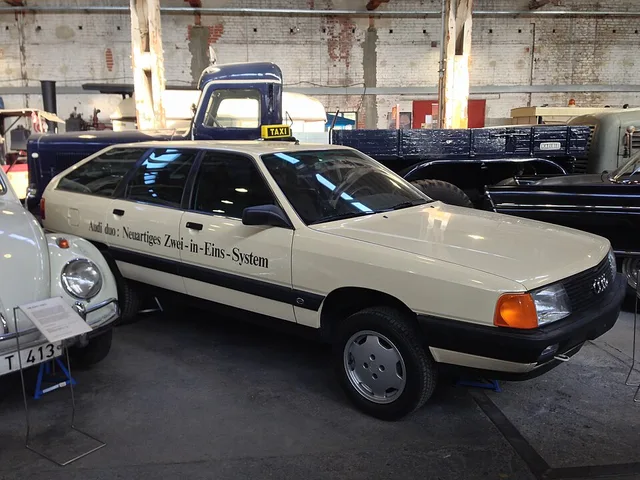
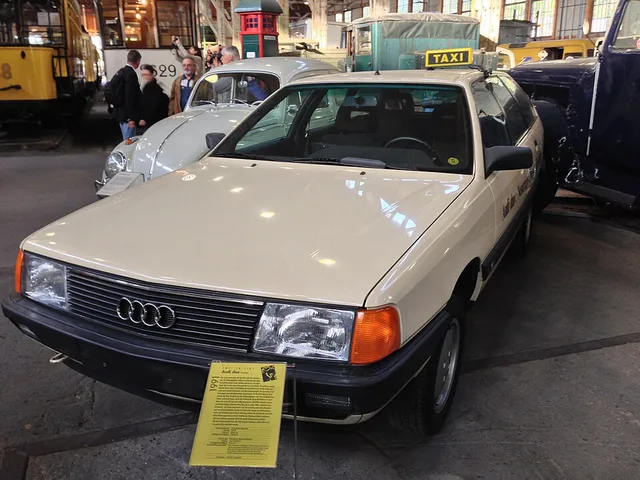
Ask an American who built the first hybrid and you’ll hear Toyota. Ask who sold it first in the United States and you’ll hear Honda. Nobody says Audi. Yet in 1989 Audi built a station wagon with a gas engine up front, an electric motor in the back and a cord you plugged into the wall at night. Ten were made. One drove as a taxi in Ingolstadt, Germany. Not one was sold.
Eight years later Audi tried again, with a diesel, and this time it put the thing on sale. America never saw it. Jalopnik’s headline on the 1997 A4 Avant Duo calls it the hybrid diesel wagon we never got.
Here is the story, with the numbers in pounds, miles and dollars. Be warned: almost every figure about this car changes depending on who you ask. Audi included.

A 100 Avant with two motors
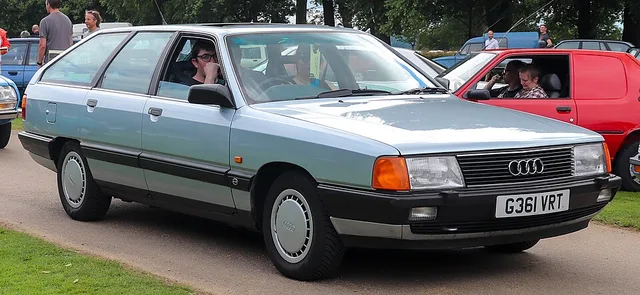
Audi says it developed the Duo in the fall of 1989 on the third-generation Audi 100 Avant quattro, working with the firm Pöhlmann of Kulmbach, and showed it at the Geneva Motor Show in March 1990. Up front sat a 2.3-liter five-cylinder gas engine driving the front wheels. Audi Tradition’s 2024 anniversary document rates it at 98 kW, or 133 horsepower; Zwischengas, Dyler and Automobile Propre say 100 kW and 136 hp.
In the center tunnel, ahead of the rear axle, sat a DC electric motor of 12.6 hp, roughly 9.3 kW, pushing 110 Nm (81 lb-ft) to the rear differential. Some sources say the motor came from Siemens. Next to a 136-hp engine, 12.6 hp is a rounding error. This was not a hot rod. It was a wagon that could tiptoe through a neighborhood without burning gas.
The battery was nickel-cadmium and weighed 181 kilograms, about 400 pounds, under the cargo floor. Audi Tradition’s 2024 document puts it at 8.6 kWh. Zwischengas and the Audi Australia magazine say 8.4 kWh at 64.8 volts. Automobile Propre says 1.5. Take your pick; we’ll come back to that one.
The whole car weighed 1,740 kilograms, or about 3,840 pounds, according to Zwischengas. Below The Radar and Dyler talk about roughly 200 kilograms, around 440 pounds, more than a regular 100 Avant. Plug it in at 220 volts and ten hours later it was full, per Zwischengas and the Audi magazine. With a powerful charger, 45 minutes, per Zwischengas. Dyler and Jalopnik say eight hours at home.
That 100 Avant was a quattro, and how quattro went from rally stages to family wagons, with America barely buying the original, is a story we told on Not Enough Cylinders.
How you drove it
To go electric you stopped, shifted to neutral and pressed a button marked E, according to Zwischengas, the Audi magazine and Top Gear. No shifting after that; it drove like an automatic. Electric top speed: 50 km/h, 31 mph. Zero to 30 km/h took 8 seconds, per Zwischengas. That is not a typo. It’s a golf cart with a better badge.
On gas alone it did 0 to 100 km/h (62 mph) in 16.7 seconds, measured in 1990, and burned 11.8 liters per 100 km in the same test, per Zwischengas. Do the conversion: about 20 miles per gallon. Wikipedia’s history of plug-in hybrids adds the line that nobody puts in a brochure: because of the extra weight, the Duos used more fuel on engine power alone than a standard Audi 100.
Read that twice. The hybrid drank more gas than the plain car whenever the battery was empty.
Electric range depends on the page you land on. Zwischengas says 30 kilometers, 19 miles. The Audi Australia magazine says about 38, or 24 miles. Top Gear and Below The Radar say 24 miles. Dyler and Jalopnik repeat 80 kilometers, 50 miles, and describe it as the company’s claim.
Some of the engineering was clever. A small separate electric motor ran the power steering hydraulics, the brake booster and the ABS. If one drive motor died, the other could keep going. And Audi left unused the chance to run both motors together as an all-wheel-drive setup at low speed. The tester quoted by Zwischengas said electric acceleration had to improve before anyone thought about production.
The customer was a fleet
Zwischengas says the intended buyers were big customers: municipalities, municipal utilities and taxi companies. The planned price was 65,000 to 70,000 Swiss francs, which that source converts to 72,500 to 78,000 German marks.
If that sounds familiar, it should. In 1960 the Henney Kilowatt, an electric Renault Dauphine built in Illinois, went mostly to power companies, to be driven by the guy who reads the meter. Thirty years on, the Duo was aimed at the same kind of buyer: somebody who runs a fleet, drives short routes and can afford to wait ten hours for a charge. Different car, same customer, same wall.
Top Gear says ten units were built and none sold. Below The Radar and Dyler agree on the ten. Below The Radar and Dyler also say Audi experimented with solar panels on the roof.
1991: the Duo II
Audi followed up with a second car on the next-generation 100 Avant quattro. Audi’s document on its fifteen years of hybrid work lists a 2.0-liter four-cylinder up front and an AC electric motor of 28.6 hp, about 21 kW, at the rear, with a Torsen differential splitting power between the axles.
The battery changed to sodium-sulfur. Wikipedia and Automobile Propre say about 80 kilometers of electric range, 50 miles, and 65 km/h, 40 mph. Automobile Propre puts the pack at around 20 kWh. Audi’s own pages don’t give the battery or the range for this one. Motorpasión, a Spanish-language car site, says the Duo II appeared at Geneva in 1992; Audi’s document says 1991. We use Audi’s date.
What Detroit was doing
Now put the Duo on a US timeline. In 1993 the federal government and the three Detroit automakers started the Partnership for a New Generation of Vehicles. Eight federal agencies, national labs, universities and USCAR, whose members were DaimlerChrysler, Ford and GM, were in it. The goal, per Wikipedia: a family sedan about the size of a Ford Taurus at up to 80 miles per gallon by 2003, triple the fuel economy of the day.
The prototypes got there, more or less. The GM Precept reached 80 mpg. The Ford Prodigy and the Chrysler ESX-3 hit 72. All three were full-size five-passenger concepts, lightweight, with a small diesel engine and an electric motor, running on NiMH or lithium-ion batteries. The George W. Bush administration canceled the program in 2001, at the automakers’ request, even though it was reportedly on track. Some of the work moved to a program called FreedomCAR.
So while Audi was plugging in a wagon in Germany, America had a federal program, three automakers and a number printed on the cover: 80 miles per gallon. What America had in its showrooms in 1997 was no hybrid at all.
1997: the Duo comes with a diesel
The third Duo was the only one Audi sold. It was based on the A4 Avant. Dyler says it launched in September 1997; Motorpasión says September 1996. Pick your year. The powertrain: a 1.9-liter TDI diesel of 66 kW (90 hp) and a water-cooled electric motor of 21 kW (29 hp), both driving the front wheels, per Audi. It plugged in, and it recovered energy through regenerative braking. Electric top speed: 80 km/h, about 50 mph. With the diesel, 170 km/h, about 106 mph, according to Audi. Traumautoarchiv says 165.
The battery was lead-gel, at the back. Traumautoarchiv says 320 kilograms, about 705 pounds, and roughly 10 kWh at most. Jalopnik says lead-acid. Curb weight about 1,590 kilograms, 3,500 pounds, per Traumautoarchiv. Electric range about 50 km, 31 miles, per Wikipedia and Automobile Propre.
The price was 60,000 marks, roughly 30,000 euros, according to Below The Radar and Dyler. Jalopnik says nearly $40,000 in 1997 dollars, which may be the same amount in another currency. Top Gear says double the price of a regular A4 Avant, without naming the version or the market. Audi hoped to sell about 500 a year, per Top Gear and Jalopnik.
It didn’t. Traumautoarchiv and Top Gear say 60 were built. Below The Radar, Dyler and Jalopnik say 90 were sold. Wikipedia says about 100. Wikipedia’s plug-in history says ten were leased to Solarmobilverein Erlangen under the ELCIDIS project, which ended in August 2001. Traumautoarchiv describes a three-year trial with seven cars in Erlangen starting April 10, 1997, and then ten vehicles in ELCIDIS.
Top Gear says production ended in 1999.
The cars America could actually buy
Now the part that stings. The first hybrid Americans could drive off a lot was the Honda Insight, which arrived in December 1999. The numbers, via Wikipedia and an EBSCO research brief: a two-seater, 1.0-liter three-cylinder gas engine rated 67 hp, 73 hp with the motor, 838 to 891 kilograms (1,847 to 1,964 pounds) depending on trim, and EPA ratings of 61 mpg city and 70 highway. A 144-volt NiMH pack of 120 cells. The sticker, per EBSCO: $18,880, or $20,080 with air conditioning.
It didn’t sell like a hit either. EBSCO says 17 were sold in the first month and about 3,500 in the first year. American Honda stopped making it in 2006. Wikipedia gives 14,288 for North America over the car’s life, 17,020 worldwide in seven years.
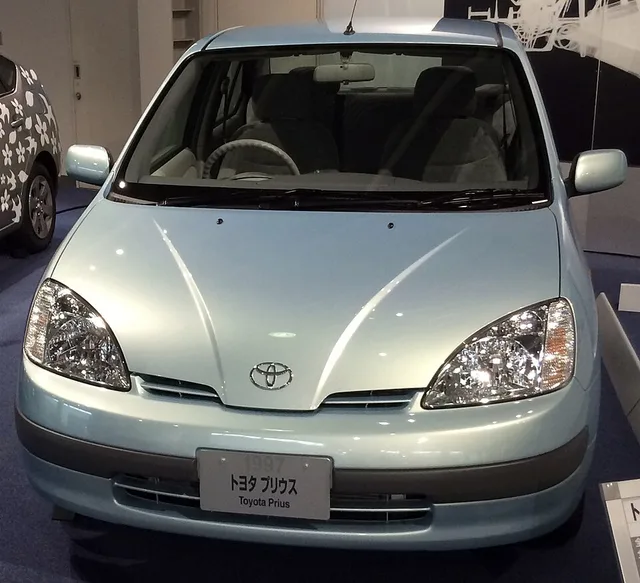
Toyota’s Prius arrived in the US in July 2000, per EBSCO, at $19,995, with EPA ratings of 52 city and 45 highway (original test cycle). Its pack was a 1.78 kWh NiMH. By December 2000, drivers had ordered 7,300 of the 12,000 that Toyota built that year, and Toyota sold more than 100,000 in the US in 2005 alone. About 123,000 first-generation Priuses were sold worldwide, per Wikipedia.
Line them up.
| Audi A4 Avant Duo (1997) | Honda Insight (1999) | Toyota Prius (2000, US) | |
|---|---|---|---|
| Plugs in? | Yes | No | No |
| Battery | Lead-gel, ~705 lb, up to ~10 kWh | NiMH, 144 V | NiMH, 1.78 kWh (2000 model) |
| Price | ~$40,000 (Jalopnik) | $18,880–$20,080 | $19,995 |
| Units | 60 to ~100 | 14,288 in North America | ~123,000 worldwide (all markets) |
Mind what you’re comparing. Neither Japanese car plugged in. Their small NiMH packs managed energy, recovered braking and helped the gas engine; they were not built to drive miles on electricity alone. The Duo carried a big battery to do exactly that. Different jobs, so don’t compare kilowatt-hours. Compare what happened next: Toyota sold about 123,000 first-generation Priuses worldwide, and Audi built 60 to 100 Duo IIIs.
Jalopnik adds an opinion: diesel was cheap in 1997, so the savings versus a normal A4 were minimal. That is its read; the figures here can’t prove it.
America and the Audi hybrid, take two
Audi had another run at US hybrids. It didn’t get far either. On April 3, 2008 Autoblog reported that Audi had already dropped plans to bring the Q7 hybrid to the US in 2009, and said the A4 hybrid would likely meet the same fate. The reason: the weak US dollar. Audi USA’s communications director Jeff Kuhlman said the cost of adding the hybrid system wouldn’t be recovered through expected sales. Autoblog added that Audi would offer the A4 with its 3.0-liter diesel V6 instead.
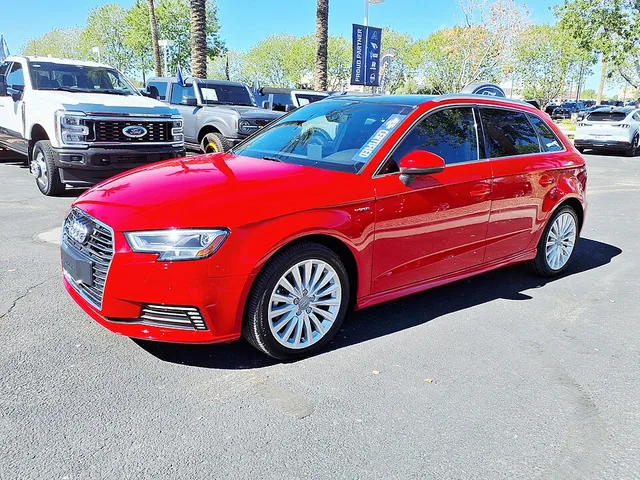
Meanwhile, Audi’s own series plug-in came quietly. Per Audi’s press release, the A3 Sportback e-tron is the first plug-in hybrid from Audi in series production: 150 kW (204 hp) of system power, an 8.8 kWh battery, charge in under two and a half hours at 16 amps, up to 50 kilometers electric, announced for sale in Germany in spring 2014 at about 37,000 euros. Top Gear tested it in June 2014 at £29,950 on the road with the government grant.
Put 8.8 kWh next to the 8.4 to 8.6 kWh of the 1989 Duo and the capacity looks frozen. It isn’t. Audi says the A3’s pack weighs 125 kilograms (about 276 pounds), controller and junction box included, against 181 kilograms (about 400 pounds) for the Duo’s, and Autoblog lists a 75 kW motor against the Duo’s roughly 9.3. The technology moved. The calendar didn’t: about twenty-five years from the first plug-in Audi to a series plug-in Audi. Wikipedia says Audi sold no other hybrid until early 2011.
Spain built the same car, and shelved it too
There’s a Spanish chapter almost nobody tells next to the Duo. On January 14, 2009, SEAT, Volkswagen Group’s Spanish brand, unveiled the León Twin Drive Ecomotive at its technical center in Martorell, near Barcelona, with Spain’s industry minister Miguel Sebastián in the room. That first prototype was an electric test bed: a lithium-ion pack, a 35 kW motor, about 50 kilometers (31 miles) of range and a top speed capped at 100 km/h (62 mph).
In November 2011 the TwinDrive came back as a plug-in hybrid with a 1.4 TSI gas engine and 32 miles of electric range in Autocar’s test. SEAT said it would lend cars to public bodies in Catalonia and Madrid for their fleets and use the data to decide on production. Fleets again, just like the Duo’s municipal and taxi buyers in 1989.
In June 2013 SEAT closed CENIT Verde, a public-private research project with Spain’s science ministry: more than 800 people from 16 companies and 14 public bodies over four years. The showpiece was the León Verde: a 75 kW (102 hp) electric motor, a 122-hp 1.4 TFSI, a six-speed automatic, an 8.8 kWh battery developed by the Barcelona supplier Ficosa, about 50 km (31 miles) electric and 36 g/km of CO₂, per coches.net and Motorpasión. SEAT called it a prototype, full stop.
Now look at the A3 Sportback e-tron Audi announced for spring 2014: 8.8 kWh, a 75 kW motor, a 1.4 TFSI, 50 km. Same group, same numbers, a year apart. Ingolstadt’s car reached showrooms. Martorell’s stayed in the tech center, and SEAT didn’t sell a plug-in until the León e-Hybrid of 2020, with a 13 kWh pack, six years after its German cousin. Spain got its own Duo and parked it just as hard.
The hybrid nobody wanted in Washington
The Duo isn’t America’s first lost hybrid either. Victor Wouk, the engineer Russell Feldmann was sent to for the Henney Kilowatt’s electronic control, by Wouk’s own account, built a hybrid in 1972 from a Buick Skylark with a 1.1-liter Mazda RX-2 rotary engine, twenty 6-volt lead-acid batteries and a 15 kW electric motor, per Hagerty. He delivered it to the EPA lab in Ann Arbor in 1974. The EPA gave him a $33,000 grant, according to Wikipedia, which cites The New York Times. In his IEEE oral history, Wouk says the EPA and others didn’t like the idea. “Hybrids stink!” is how he quotes them.
So America had the Woods Dual Power hybrid in Chicago in 1916, a hybrid at the EPA in 1972, a federal program in 1993 and an Audi wagon on the other side of the Atlantic in 1997. And the first one it could buy came from Japan.
The numbers that don’t match
A short list, because there are many:
- Duo I unveiling. Frankfurt 1989 per Dyler and Wikipedia’s Audi hybrid page; Geneva, March 1990 per Audi, Zwischengas and Below The Radar.
- Duo I battery. 8.4 kWh, 8.6 kWh (Audi Tradition, 2024 edition) or 1.5 kWh depending on the source. 8.4 kWh in 181 kilograms is 46 Wh/kg; 1.5 kWh would be 8.
- Duo I range. 30, 38, about 39 or 80 kilometers.
- Duo III launch. September 1996 or 1997 depending on the source; Wikipedia’s plug-in history has it shown at Frankfurt in 1998.
- Duo III units. 60 built, about 90 sold or about 100.
- Duo III electric motor. 21 kW at the front wheels per Audi; 41 hp at the rear per Traumautoarchiv.
Where Audi has published a number, we use it, or the number several sources repeat. What we can’t confirm is left out.
The wrong amount of ambition
Audi built the right idea with the wrong amount of ambition. The idea was good: a wagon, a plug, a short trip without a tailpipe. The execution said otherwise. Ten cars and a taxi in 1989. A prototype in 1991. And in 1997 a diesel with a 705-pound lead battery at, per Top Gear, double the price of the normal A4, in a market where, per Jalopnik, diesel was cheap.
Audi’s site says the concept was “far ahead of its time – too far for the market.” Convenient. The market in December 1997 bought a Prius in Japan. The market in 1999 bought an Insight here. The only thing ahead of its time about the Duo was the date on the first prototype.
America can’t throw stones. This is the country where GM built the EV1, stopped making it in 1999, the same year the A4 Duo died, and crushed it. It had a hybrid program, an EPA lab and a Buick with a rotary engine decades earlier, and it still ended up buying Japanese. Audi’s story is the German version of the same mistake: having the idea is the cheap part. What matters is who ships it, and who keeps shipping it.
So here is the question. If Audi had put a plug on that wagon and sold it for the price of a normal one, what would a Prius have been?
Unplug and enjoy.
Images: 1989 Audi Duo, DerSporti (CC BY-SA 4.0) · 1989 Audi 100 Avant, Vauxford (CC BY-SA 4.0) · Audi Duo taxi and Audi Duo at the Deutsches Technikmuseum, gillyberlin (CC BY 2.0) · Toyota Prius NHW10, Ghostofakina (CC BY-SA 4.0) · Audi A3 Sportback e-tron, HJUdall (CC0). All via Wikimedia Commons.