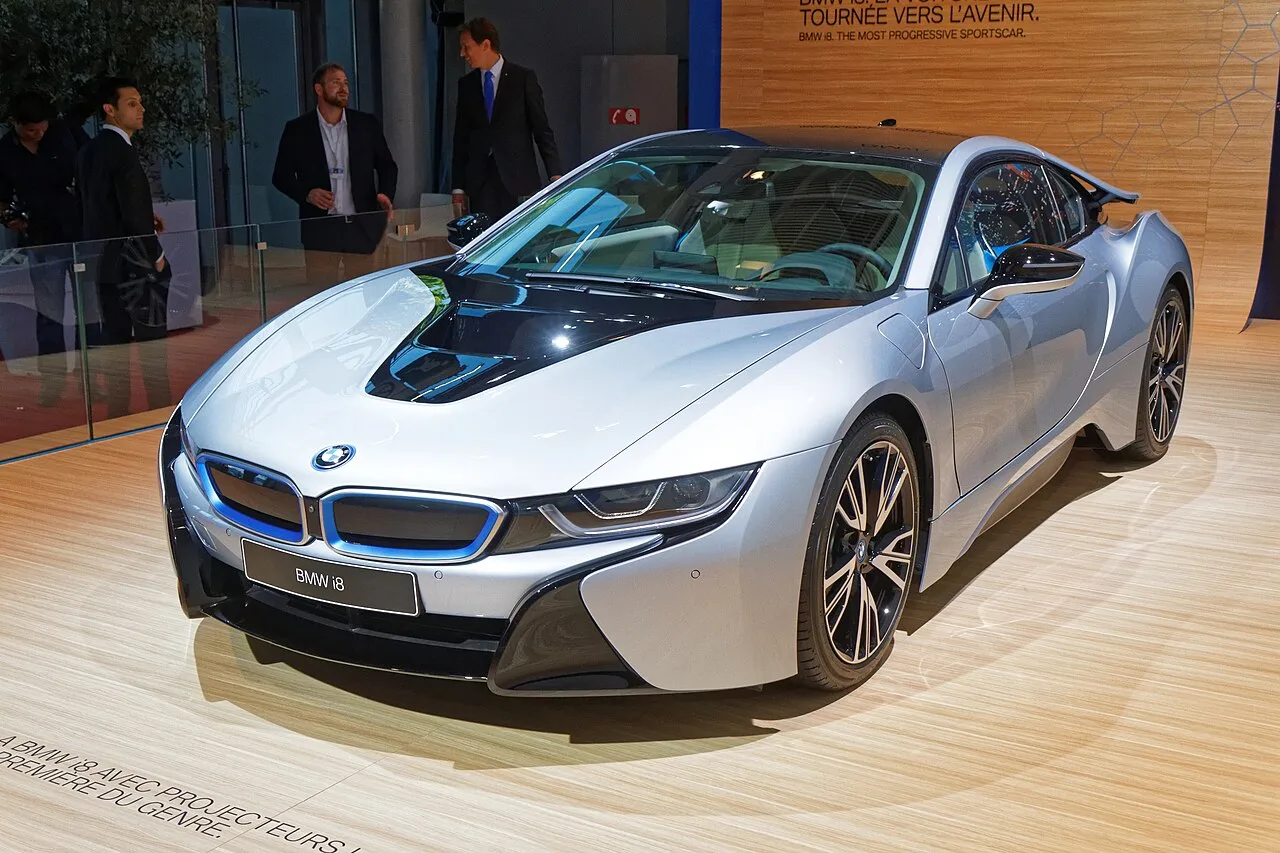
BMW i8: America had two visions of the future in 2014, and picked the other one
In 2014, two cars sat in American driveways both claiming to be the future, and they could not have been more different. One was the Tesla Model S, on sale since the summer of 2012 from a company that had started out with a Lotus-based Roadster: a big, heavy slab of batteries from Silicon Valley, fast in a straight line, light on romance, built on the brute-force idea that the future meant stacking as many kilowatt-hours as you could afford. The other was the BMW i8: a carbon-fibre origami sculpture with doors that swung up like wings and, underneath all that drama, a 1.5-liter three-cylinder from the same family BMW drops into a MINI. America looked at both, and America picked the battery. This is the story of the one it didn’t pick, and why, a decade on, the loser is starting to look like the smarter bet.
What it is, straight off the spec sheet
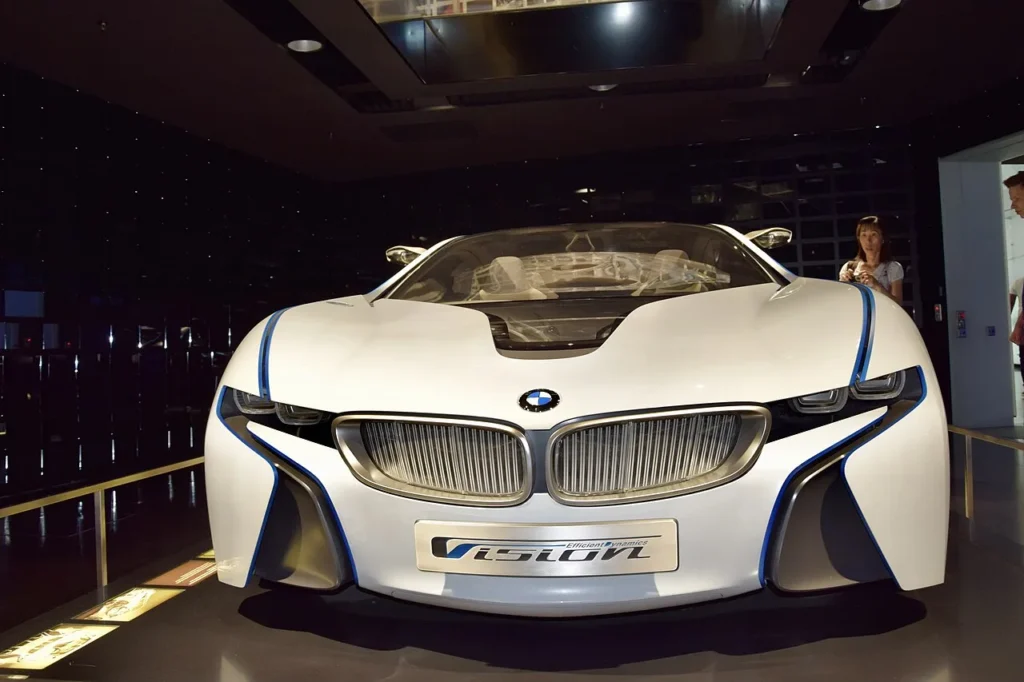
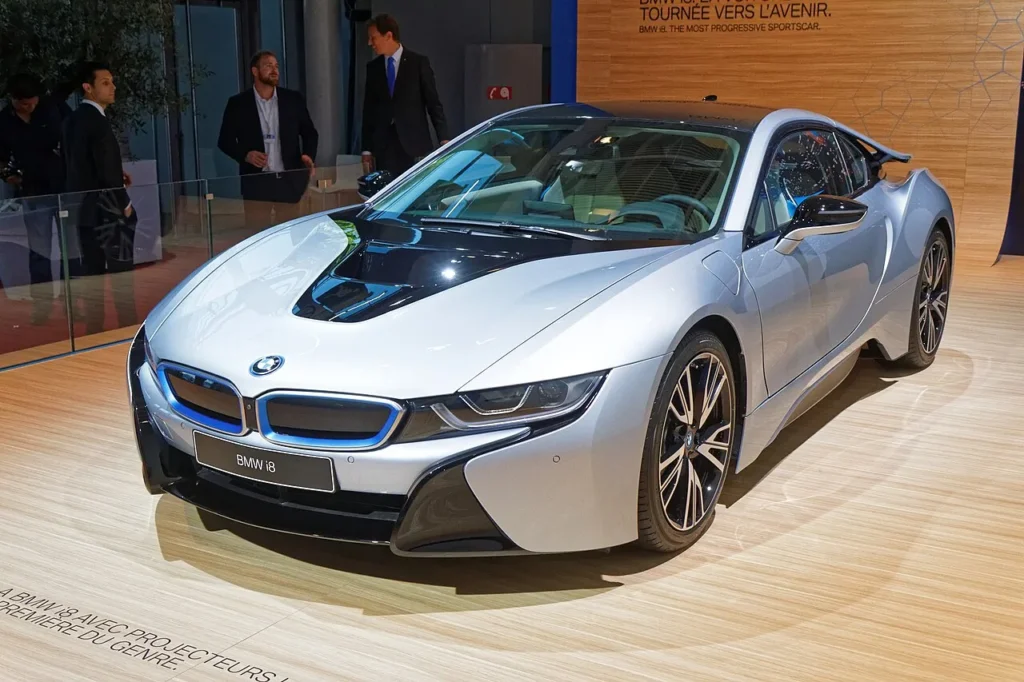
The i8 reached production in April 2014, born from the Vision EfficientDynamics concept BMW had shown in 2009 (that one ran a three-cylinder diesel). The road car swapped diesel for gasoline: a 1.5-liter turbo three-cylinder rated at 228 hp in US spec, mounted amidships, driving the rear wheels, with an electric motor on the front axle making it all-wheel drive. BMW of North America quoted 357 hp combined at launch and 369 hp after the 2019 update. BMW claimed 0-60 mph in 4.2 seconds for the coupé and 4.4 for the roadster, and both are capped at 155 mph.
The electric side mattered least to Americans and should have mattered most. The battery was tiny, 7.1 kWh gross at first and 11.6 kWh after 2018, and the EPA rated its electric range at a laughable 15 miles, later 18, with the engine still sipping a little gas along the way. In a country where the rival Tesla was advertising 200-plus miles of pure range, the i8’s electric figure read like a rounding error. It also wore a carbon-fibre passenger cell, the world’s first production laser headlights (optional, high beams only, and on the road a few weeks ahead of Audi’s R8 LMX), and a US sticker of $136,625 including destination. BMW built 20,465 of them before pulling the plug in 2020.
The fight it actually lost: Tesla
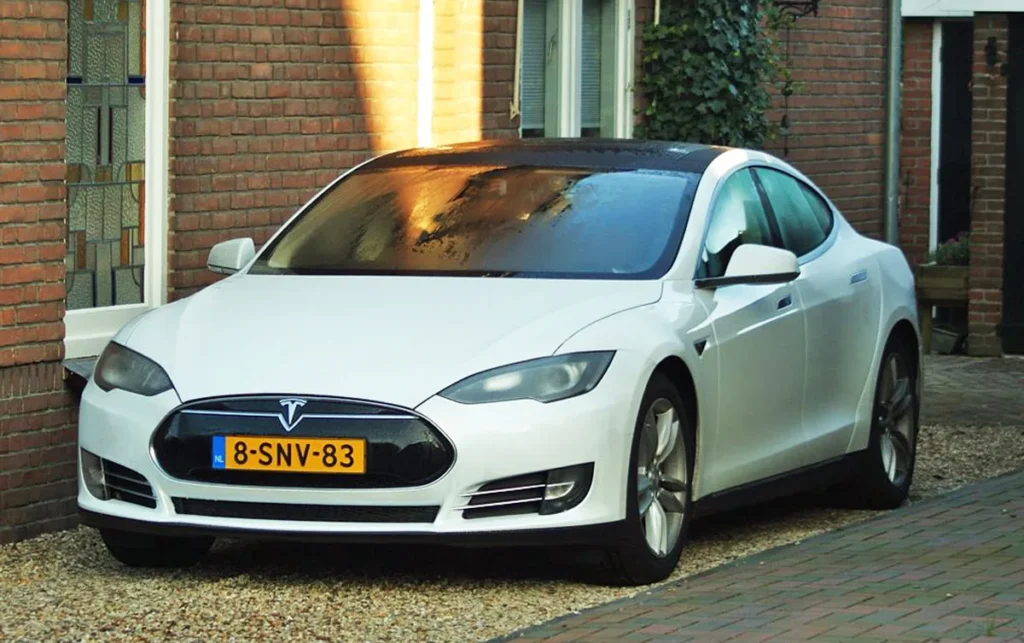
The i8 didn’t lose to the Porsche 911. It lost to the Model S, and the loss was philosophical. Tesla’s bet was simple and very American: range is king, so build the biggest battery you can and let the weight sort itself out. BMW’s bet was the opposite and very German: weight is the enemy, so keep the battery small, build the body out of carbon fibre, and use a small efficient engine with a little electric help. Two visions of the electrified future, parked at the same valet stand.
The market handed the trophy to Tesla without much of a contest. Americans wanted range, software and silent straight-line speed, and the Model S gave them all three while the i8 offered 15 miles of electric range and a three-cylinder soundtrack. Judged as a Tesla rival, the i8 looked like a toy. Judged as a sports car, it sounded wrong. It fell between the only two boxes American buyers were willing to open, and so it became what it still is here: a design icon people photograph and almost nobody understood.
Yes, BMW did call it a supercar, just a different one
It would be easy, and wrong, to defend the i8 by saying BMW never promised a supercar. It did. When the car launched in the UK in July 2014, BMW’s press release was literally titled “The new BMW i8 – the future supercar now.” So the supercar expectation wasn’t just the public staring at the bodywork; BMW planted it. What BMW did was quietly rewrite the word. Its supercar of the future wasn’t the most powerful thing on the road. It was the one that married sports-car pace to economy-car thirst. The clash in America wasn’t that BMW withheld a supercar. It’s that BMW shipped a redefined one and buyers graded it against the old definition: cylinder count, noise, quarter-mile. On that scorecard a three-cylinder was always going to lose, no matter how pretty the wrapper.
The three-cylinder, in context
The engine deserves its context, because the easy joke misses the point. That 1.5-liter triple belongs to BMW’s modular engine family, the same one that powers humble things like a MINI, hence the “supercar with a MINI engine” gag. But in the i8 it isn’t in economy-car tune; it’s wound up to 228 hp, an enormous specific output for a 1.5-liter triple, and it works in concert with the electric motor that fills its weak spots: low-end torque and instant response.
The deeper question is why BMW chose this oddball layout instead of dropping in a straight-six and calling it a day. The answer is the manifesto again. A six would have made the i8 one more conventional, forgettable fast coupé. The three-cylinder hybrid turned it into an argument about efficiency, even at the cost of disappointing your ears. This was the same company, remember, that had just launched the carbon-bodied BMW i3 and was building the carbon-fibre LifeDrive structure, a CFRP passenger cell on an aluminium module carrying the powertrain, battery and suspension, to prove it could bring Formula 1 materials to a production cabin at something like industrial scale. BMW chose the message over the roar. You can argue it guessed wrong. You can’t say it didn’t know what it was doing.
The numbers, and the quiet ending
The lazy verdict is “it flopped,” and the numbers don’t quite support it. For a car this strange, 20,465 units over six years is real reach. Put it against BMW’s own halo history: 399 road-going M1s between 1978 and 1981, roughly 5,700 Z8s in the early 2000s. That doesn’t prove the i8 made money, because volume alone never does, but it does mean you can’t file it under “nobody bought it.”
BMW ended production in 2020, at the close of its product cycle and with no direct heir. The company never spelled out exactly why, so what follows is reading, not fact: the i8 seems to have been caught flat-footed by BMW i’s pivot toward fully electric cars like the i4 and iX. But it’s worth resisting the tidy story that BMW had sworn off the performance hybrid, because in June 2019 the company showed the Vision M NEXT, a plug-in hybrid sports concept with around 600 hp. BMW hadn’t abandoned the idea, and it never put the i8’s cause of death in writing. What’s certain is that, once again, it left at the wrong moment.
America eventually proved the i8 half-right
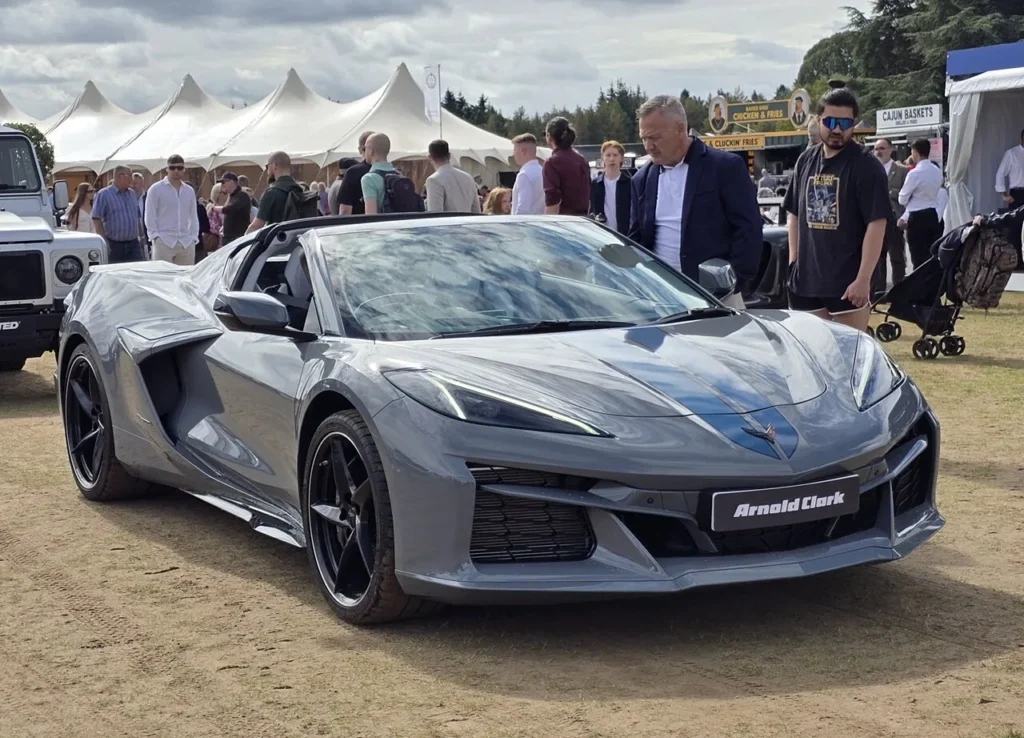
This should sting a little for anyone who dismissed the i8 as a party trick. The idea it was mocked for, a small battery and electric motors used to sharpen a performance car rather than to maximize range, is now sold by America’s own sports-car icon. The Chevrolet Corvette E-Ray puts an electric motor on the front axle, charged on the move, to add traction and instant punch, with a 1.9 kWh battery that can’t be plugged in and, in Stealth mode, only creeps a few miles on electricity below 45 mph. That is, stripped of the badge, exactly the i8’s architecture: combustion at the back, electric help at the front, a battery sized for performance rather than for commuting. Chevrolet revealed the E-Ray in January 2023, nine years after the i8 went on sale, and nobody called the Corvette a toy for it.
So the i8 didn’t lose the argument so much as file it early. Tesla won the mass-market electrified future with its big batteries, yes. But the performance world, the one the i8 actually lived in, drifted toward the i8’s model, not the Model S’s. You don’t put a 100-kWh pack in a sports car to carve a canyon road; you put in a small, savage one, exactly as Munich argued in 2014 and as Ferrari, Chevrolet and the rest concede now.
A design icon that never needed explaining
There’s one thing America never misread about the i8: it looks spectacular, and it still does. Walk past one parked outside a hotel today and people still stop, still photograph it, still assume it costs three times what it did. In a country where exotic styling usually comes from Italy, a German commuter-engine hybrid became one of the most photographed shapes of the 2010s. That alone kept it alive in the culture long after the spec-sheet arguments faded. The i8’s body was writing a check the drivetrain was never trying to cash, and plenty of owners were fine with that trade.
The Spanish footnote: Mallorca
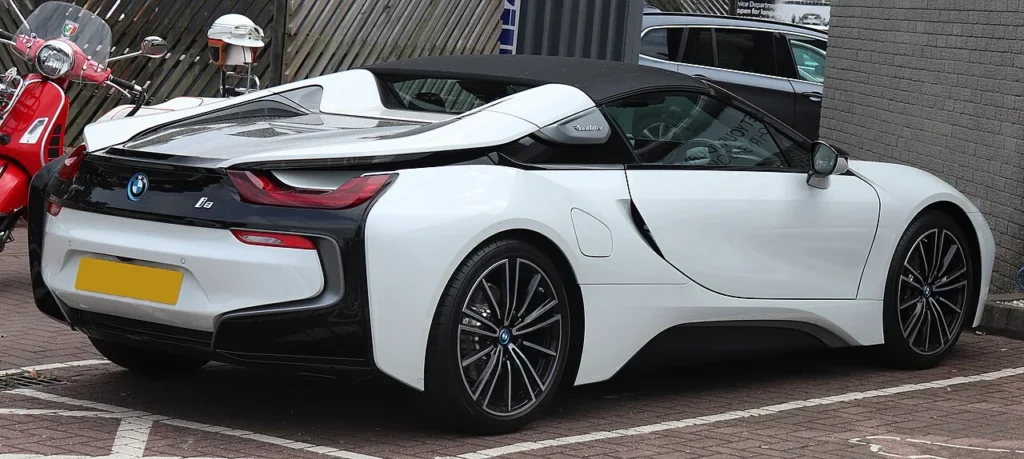
NEB looks at every car from Spain, and the i8 has a small Spanish chapter. When BMW needed a stage for the roadster’s international press drive in April 2018, it picked Mallorca: journalists from around the world flung the open-top i8 along the island’s roads, and more than one came back saying it looked even better without a roof. In Spain the coupé had gone on sale in 2014 at €129,900 with taxes, or €127,400 once the government’s MOVELE program chipped in €2,500 of public money for its 37 km of rated electric range, and around thirty found buyers that first year, half of them delivered in December, more than the twenty-two cars originally allocated to the country. By 2018 the coupé listed at €145,200 and the roadster at €160,200. That’s where the Spanish trail ends: the i8 was assembled in Leipzig, with its gasoline engine shipped from BMW’s Hams Hall plant in England and its carbon fibre made by SGL, and there’s no documented Spanish supplier in the build.
The flaws NEB won’t gloss over
None of this makes the i8 flawless, and flattering it would be a disservice. The electric range was short, and even the EPA’s sober 15 miles assumed a gentle right foot, so anyone who bought an i8 dreaming of electric commuting came up well short. The engine sound was piped and augmented through the speakers, which plenty of buyers consider cheating. The performance, good as it was, never matched the violence the bodywork advertised, so anyone expecting supercar savagery was let down. And the cabin, dazzling on day one, aged less gracefully than rivals at the price.
But notice none of those gripes is why America misread it. Those are ordinary car flaws. The misunderstanding came earlier, from asking it to be the old kind of supercar when BMW had announced a new one.
Ten years early
The i8 is the misunderstood BMW because we scored it on the wrong card, and in America the wrong card had a Tesla logo on it. Set beside the Model S, the i8’s whole thesis (go lighter, go smaller, let a little electricity do the rest) looked timid next to a wall of batteries, and the country that loves more-is-more sided with the batteries. Fair enough for 2014. But look at where performance is heading now: everyone is electrifying, and not to save the planet. Ferrari’s most expensive car, the Ferrari F80, is a V6 hybrid built to go faster. At the other end, pure-electric hypercars like the Rimac Nevera R chase the Tesla answer to its extreme. The idea that a serious performance car could pair a downsized engine with electric assist, wrapped in carbon fibre, is no longer heresy. It’s the playbook.
So the i8 wasn’t a failed supercar. It was a correct answer filed ten years early, in a country that had already picked a different answer. We laughed at the three-cylinder and now the electrified performance car is everywhere. We wanted the Tesla’s battery and now even the purists are bolting motors to engines for speed. The question was never why BMW built a supercar with a MINI engine. It’s why it took us a decade to admit the strange little German had read the future more clearly than the thing we parked next to it.
Unplug and enjoy.
Images: BMW i8 at the 2014 Paris Motor Show, Thesupermat (CC BY-SA 3.0) · BMW Vision EfficientDynamics, Ank Kumar (CC BY-SA 4.0) · Tesla Model S, Niels de Wit (CC BY 2.0) · Chevrolet Corvette E-Ray, Calreyn88 (CC BY-SA 4.0) · 2018 BMW i8 Roadster, Vauxford (CC BY-SA 4.0). All via Wikimedia Commons.