BMW i3: the radical EV BMW let slip away
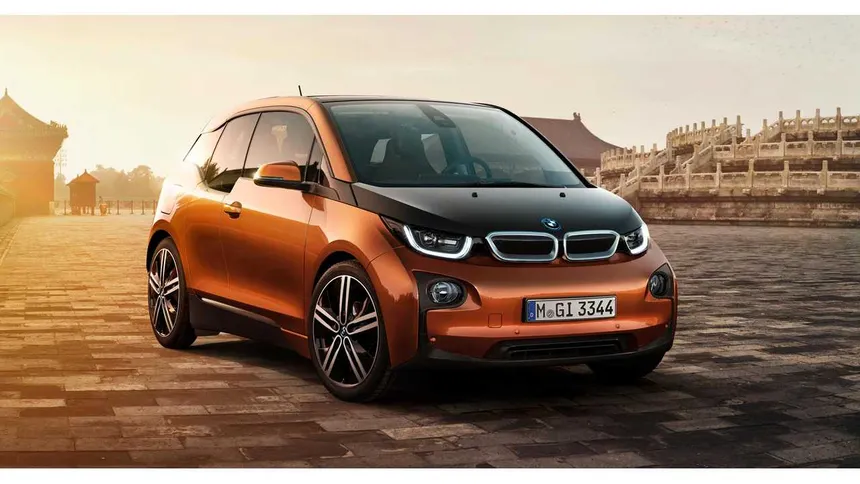
America wanted a truck. BMW built a carbon-fiber pixie. That mismatch, more than anything on a spec sheet, is the story of the i3 in the United States — a car that was years ahead of the industry and aimed at a market that was busy sprinting the other way.
The i3 didn’t flop. BMW built around 250,000 of them over nine years and sold them in more than 74 countries. But in the country that would go on to define the modern EV — first with Tesla, then with a wall of electric SUVs and pickups — the i3 landed as a clever curiosity, not a contender. This is the story of the boldest swing a legacy premium brand ever took at the electric car, and how it never turned that swing into a lineup.
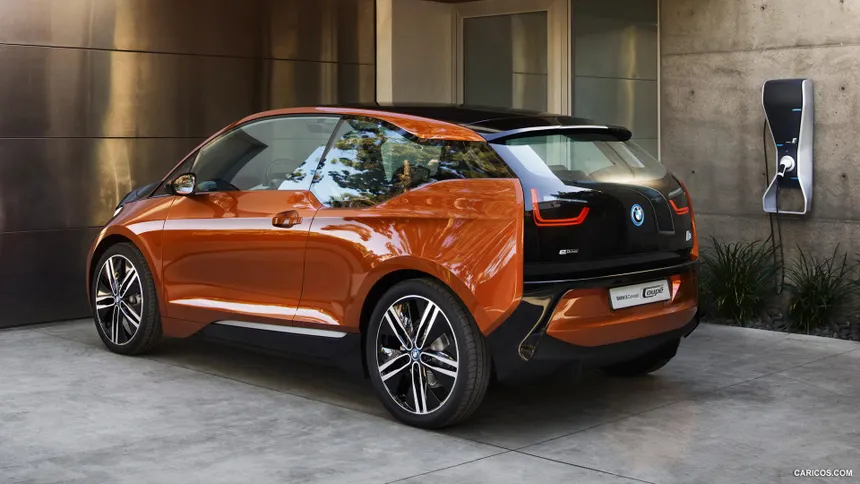
The bet that bordered on crazy: carbon fiber for the masses
Here’s what makes the i3 remarkable, and it has nothing to do with badge snobbery. Before this car, carbon fiber meant six-figure exotics — Lamborghinis, McLarens, the odd track special — because the stuff had to be laid up by hand at ruinous cost. BMW decided to put it in a sub-$45,000 city car. Not as a spoiler or a trim flourish. As the skeleton.
Launched in the U.S. for the 2014 model year after debuting as a concept at the 2011 Frankfurt show, the i3 rode on a purpose-built structure called LifeDrive. Two modules. The Life module was the passenger cell, made almost entirely of carbon-fiber-reinforced plastic (CFRP). The Drive module was an aluminum chassis carrying the battery, the motor, the suspension and much of the crash structure. It was the first high-volume electric car to use a CFRP passenger cell as its main load-bearing element, and one of the first production architectures designed from the start around an electric drivetrain instead of an adapted gas platform.
The payoff was a flat floor, no transmission hump, and a genuinely roomy cabin for something that parked like a Mini. The carbon offset the weight of the battery. In other words, BMW used aerospace materials to solve, in 2013, the exact problem the whole industry is still brute-forcing today with ever-bigger packs and three-ton curb weights. BMW claimed the architecture and the bonding of the carbon cell cut certain build times roughly in half versus a conventional body.
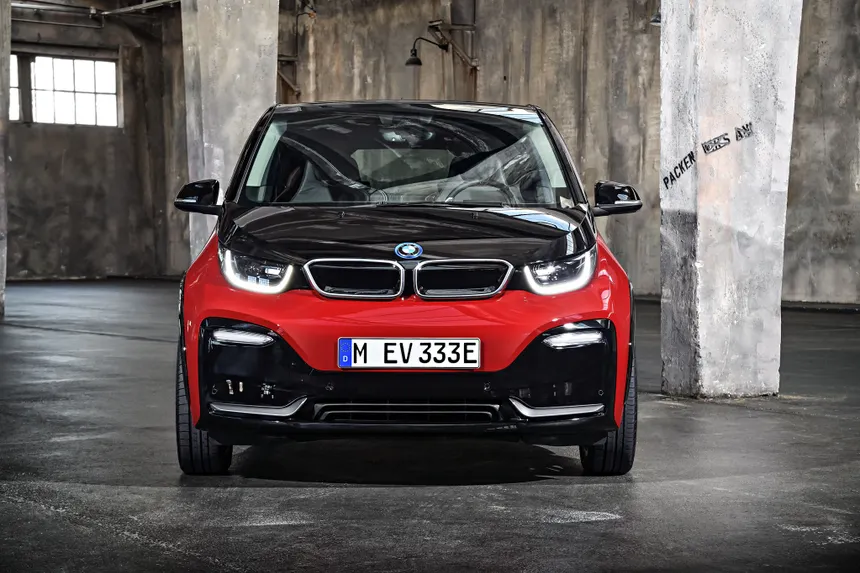
The one “green” EV whose badge actually held up
Here’s a fact that ought to make half the EV industry squirm — and it has a distinctly American punchline. The i3’s carbon fiber was produced in Moses Lake, Washington, on 100% local hydroelectric power. Zero-carbon production of the single most energy-hungry material in the car. From there it went to Germany for processing and final assembly in Leipzig.
So the greenest thing about this Bavarian icon was made in the Pacific Northwest, on cheap dam power. And it didn’t stop there: BMW used recycled material in part of the carbon fiber and reused its own production offcuts — the roof was made from scrap. The interior used responsibly grown eucalyptus and natural fibers. Nobody should call it zero-impact — the adhesives, the aluminum, the battery and the shipping all count — but while rivals sold “clean cars” built in coal-fed plants on supply chains nobody could see, the i3 was one of the few mass-market EVs whose environmental story was actually backed by concrete factory decisions. In a market that would soon drown in greenwashed SUV brochures, that mattered.
The angle America got backwards
Now the part that explains why you don’t see i3s everywhere. The i3 showed up in 2013 as a tiny, light, radical city car at the precise moment the United States decided the future was big and heavy. And here, big and heavy won. The Tesla Model 3 and Model Y became the default EVs; then came Rivian, the Ford Mustang Mach-E, the F-150 Lightning, the Hummer EV. America didn’t want a witty carbon runabout. It wanted an electric truck, or at least an electric crossover with room for a Costco run.
That’s not a knock on the i3 so much as a mismatch of timing and geography. A car engineered to thread European city streets and sip electrons on short hops was always going to be a hard sell in a country built around interstates and driveways with two SUVs in them. The i3 answered a question American buyers never really asked, which is why it became a cult object here — beloved by the people who got it, invisible to everyone else — instead of a hit. BMW read the future of the technology correctly and misread the appetite of its biggest premium market.
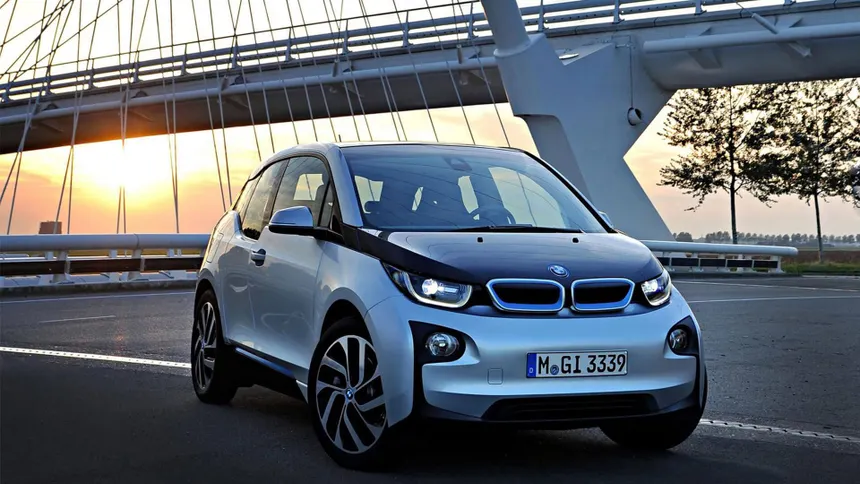
The car that actually drove like a BMW
Under the oddball styling sat a real BMW. Rear motor, rear-wheel drive — the only rear-drive BMW most shoppers could get near this price — about 170 hp in the standard car and 184 in the sportier i3S that followed, with wider tracks and a lower stance. Single-speed, instant torque, and a low center of gravity from the floor-mounted battery. It was quick off the line, darty in traffic, and more fun than anything shaped like a toaster has a right to be. The rear doors opened backward, coach-style; swung open with the fronts, they left a wide, visually pillarless opening that made valet drops a small piece of theater.
Set it against its 2014 peers to see how strange it was. The mainstream EVs then were the Nissan Leaf and the Chevrolet Volt — steel-bodied, sensible, “a normal car, electrified.” The i3 wasn’t playing that game at all; its materials and architecture were a technological league nobody else would touch. It cost more, and that was a real drawback in a segment shopped on sticker price. But it wasn’t a Leaf with airs. It was something else entirely. It also arrived alongside the i8, the scissor-doored plug-in hybrid halo car that shared the carbon-fiber philosophy. Together they were BMW’s “i” sub-brand, the lab where the company proved it could reinvent the car. The i8 was the six-figure showpiece; the i3 was the one meant to carry the revolution to the supermarket lot.
The motorcycle engine hidden in the trunk
The i3’s most eccentric trick, and the one Americans especially forget, was the range extender. Alongside the pure-electric car, BMW offered a REx version with a 647cc two-cylinder gasoline engine — about 34 to 38 hp depending on version, derived from the BMW C650 scooter engine family and re-engineered with Taiwan’s Kymco — hidden in the back. It didn’t drive the wheels. It generated electricity to hold the battery’s charge and stretch the car’s usable radius when the pack ran low, though peak power still came from the battery. It could push total range to roughly 150 miles on the early cars, with numbers that varied by battery, test cycle and trim.
It was brilliant and clumsy at once. Brilliant because it stared down 2013 range anxiety head-on, back when a cross-country charge network barely existed in the U.S. Clumsy because it bolted a gas tank onto a car sold as the smokeless future. And here’s a very American footnote: because the car was classified as a range-extended EV, California’s ZEV credit rules pushed BMW to software-limit the tank so the REx couldn’t be run like a normal hybrid — a regulatory calibration, not a defect. A patch on a patch, sure. But also a very BMW answer to a real problem.
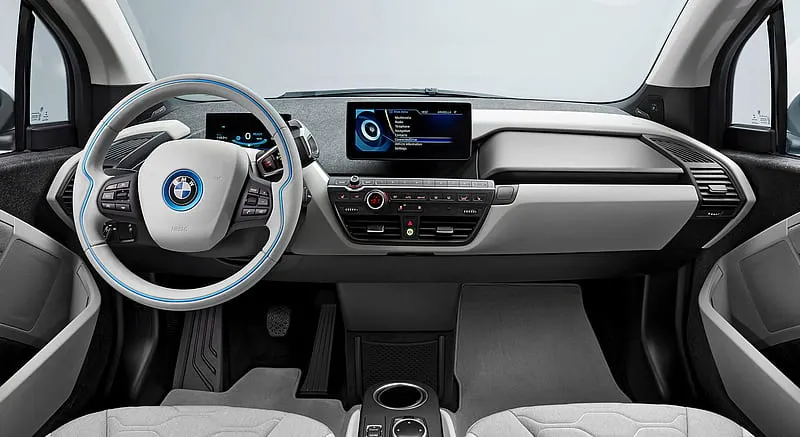
The flaws, because it had them
NEB doesn’t flatter anyone, not even the cars it likes. The i3 had real faults. The first battery held 22 kWh gross, about 18.8 usable — BMW quoted figures near 190 km on the optimistic European cycle, while the U.S. EPA rated it around 81 miles, which in winter or on the highway got worse. BMW kept bumping it: 33.2 kWh gross in 2016, 42.2 in 2018, reaching an EPA rating near 153 miles late in the run. But the car was born short-legged for American distances. The skinny, tall eco tires looked like they came off a ten-speed. The price — city-car size, luxury-car sticker — scared off anyone shopping on dimensions alone. And the range extender, clever as it was, was a quiet admission that the battery didn’t go far enough.
None of this sinks the car. But it’s worth saying plainly, because the affection the i3 enjoys today can paper over the fact that in 2014 it was never an obvious buy. It was niche, pricey and brave, for people buying an idea as much as a commute.
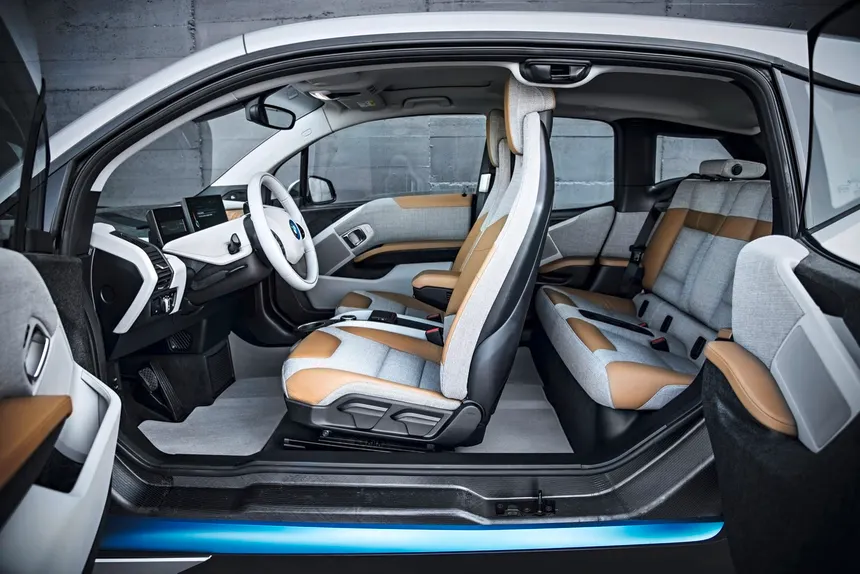
The retreat: 250,000 cars and no true heir
In October 2021, past 200,000 units, BMW confirmed it was pulling the plug. The last i3 left Leipzig in July 2022, some nine years after the first, at around 250,000 built. The plant was retooled for a new chapter of BMW and MINI models, reusing the i3’s people and know-how — but the car itself ended with no direct heir to its formula: compact footprint, CFRP cell, rear motor, LifeDrive architecture. As far back as 2017, BMW had already cancelled the third bespoke “i” model to concentrate on electrifying its mainstream range.
What replaced it told the story. BMW moved to flexible platforms and models like the i4, the i5, the i7 and the first iX3 — that one built in China off the X3 architecture, sharing far more with its gas siblings than the i3 ever did. The iX was the exception, designed with real electric freedom. But none of it recovered what made the i3 radical: the carbon cell, the hydro-powered fiber plant, the small format, the purpose-built platform. BMW framed the ending as a job well done — the “i” brand established, mission accomplished, time to move on. NEB’s read is less generous: BMW held the most advanced architecture in the legacy industry and chose to shelve it.
Then the twist. The i3 name is back. Since August 2026, BMW builds a new i3 in Munich, the second Neue Klasse model after the iX3, with a dedicated architecture, an 800-volt system and a sixth-generation battery. But it’s no conceptual heir to that little carbon runabout — it drops the CFRP cell and the obsession with weight to become the electric answer to the 3 Series. It took BMW more than a decade to return to a dedicated electric family built to be the backbone of its lineup, and when it did, it pinned its bravest old name on a much more conventional idea.
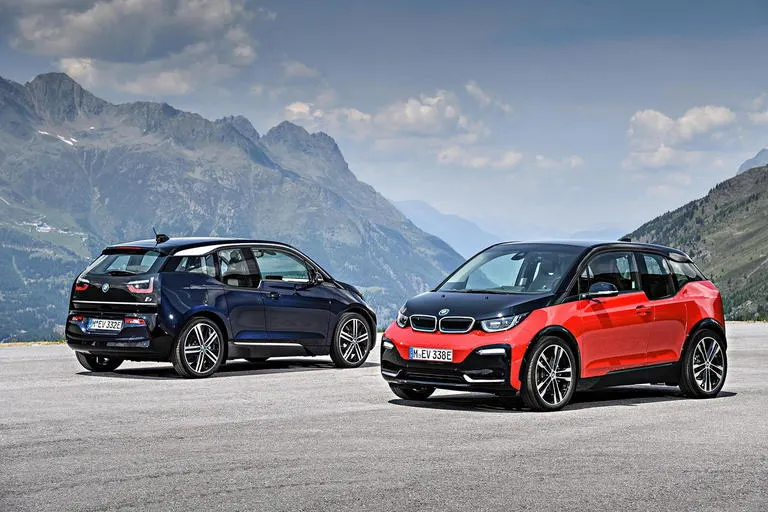
The verdict
Here’s NEB’s take, credit and knife where each belongs.
Let’s be fair first. LifeDrive and the carbon cell were genuinely revolutionary — and also expensive, hard to scale, and too specific for a market that was about to demand SUVs, more range and lower prices, nowhere more loudly than in the United States. BMW could reasonably conclude that this architecture didn’t fit every segment. So the reproach isn’t that BMW shelved the i3. It’s that a company that just proved it could reinvent the car from the wheels up then declined to reuse what it learned — the materials, the industrial integration, the clean supply chain, the from-scratch design — to build anything that followed.
It had a years-long head start on the rest of the old guard, the kind of lead Tesla would have killed for, and it locked that lead in a drawer instead of turning it into a range. While BMW hesitated, Tesla sold Model 3s by the million and ran off with the premium EV market on American soil. By the time Munich committed again, with Neue Klasse, it was following, not leading.
The i3 isn’t the story of a quirky EV that didn’t catch on. It’s the story of a company that showed it could build the future and then wouldn’t commit to it — shelving the car, letting it age into a cult classic, and later reusing its name on something far safer. BMW didn’t lose the i3’s technology. It lost the nerve to keep pushing it.
Unplug and enjoy.