Nissan Leaf: the car that made EVs normal and burned the people who believed first
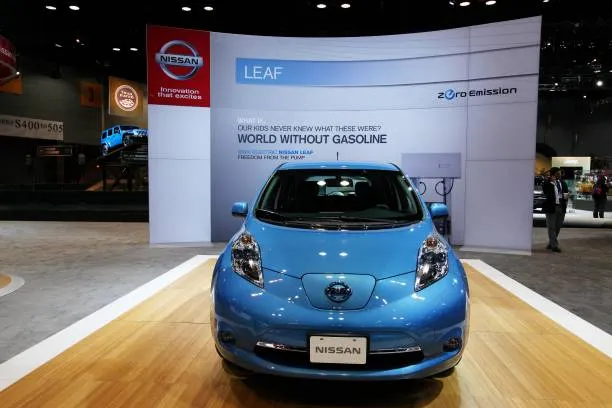
America was the Leaf’s biggest market and the scene of its worst betrayal. The car that finally made the electric vehicle normal — affordable, five-seat, buy-it-at-a-dealer normal — also cooked its own batteries in the American Southwest and left its earliest, most loyal owners stranded. All over one part Nissan chose to leave out to save money.
This is the story of the car that put the EV in ordinary American driveways and, with the same stroke, taught a generation to fear the used-battery gauge. Credit and knife where each belongs.
The car that dragged the EV out of the lab
Set the scene, because the achievement was huge. When the Leaf went on sale in Japan and the United States in December 2010, the electric car in America meant one of three things: crushed compliance cars, fleet experiments, or a six-figure Tesla Roadster. There was no real EV for a real family. The Leaf was.
Five seats, an ordinary hatchback body, roughly $30,000 before incentives, and a 24 kWh lithium-ion pack good for about 73 EPA miles on the early cars. Not much, but plenty for the commute most Americans actually drove. And crucially, you bought it at a Nissan dealer like any other car, and Nissan built it on American soil in Smyrna, Tennessee. Behind it stood Carlos Ghosn’s personal gamble, betting the Renault-Nissan Alliance’s reputation on mass-market electric when almost nobody in Detroit or Tokyo would.
And Nissan wasn’t starting from nothing. Back in 1998, during California’s zero-emission mandate era, it had sold a handful of the Altra, a lithium-ion electric minivan that ran in the same Golden State compliance program that produced the GM EV1 and the Toyota RAV4 EV. The Leaf was the serious, mass, affordable version of that idea — the one that finally left the compliance-fleet ghetto and reached the showroom floor.
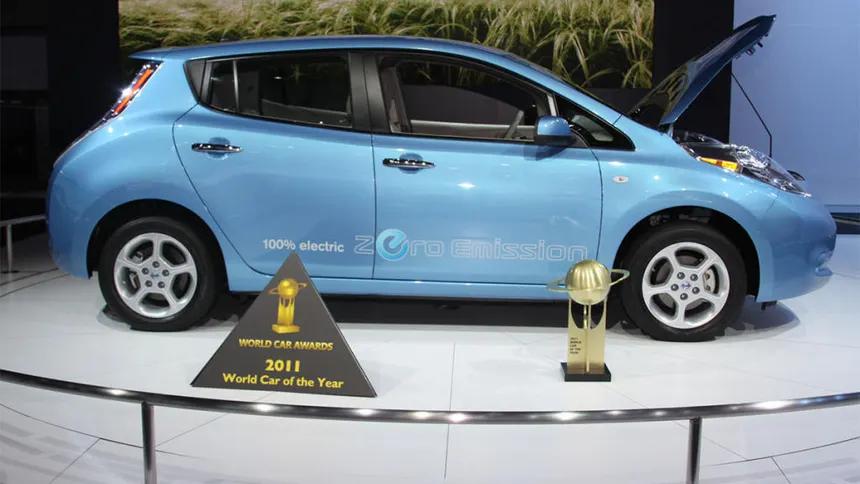
It worked. Global sales passed 50,000 by early 2013, 200,000 by the end of 2015 — making it the best-selling EV in the world — and 400,000 by March 2019, the all-time EV record at the time. The United States alone accounted for the single biggest chunk of those sales. The Leaf wasn’t a cute science project. It was the car that told America the EV was real. Nobody takes that away from it.
An American on-ramp, and a standards war it lost
Part of why the Leaf mattered so much here was money. The federal $7,500 EV tax credit could knock a $30,000 Leaf down toward $22,000, and some states piled on their own rebates — California, Georgia and others made it briefly cheaper to run a Leaf than a gas econobox. For a lot of Americans, the Leaf wasn’t an environmental statement. It was a cheap commuter that never saw a gas station. That’s how you sell hundreds of thousands of anything in this country: make the math obvious.
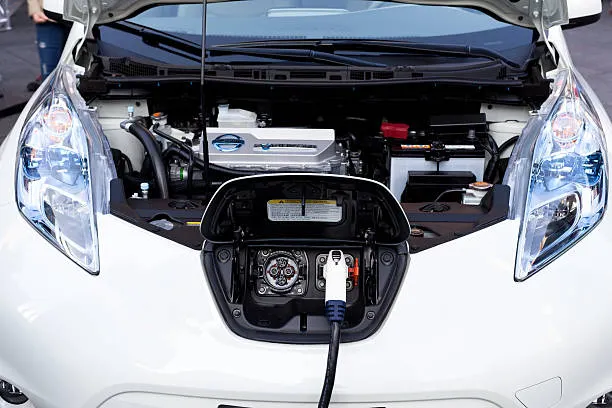
Nissan also bet big on the charging plug, and this is where the American reader should pay attention, because it’s a bet the Leaf lost. The car used CHAdeMO, the Japanese fast-charging standard Nissan and others pushed hard in the early 2010s. For a while CHAdeMO chargers were the ones you actually found on US road trips. Then the industry consolidated around CCS, and Tesla’s connector — now the North American Charging Standard everyone is adopting — swallowed the rest. The Leaf ended its life in America plugging into an orphaned standard, a fast-charging port slowly going extinct at the very stations built to serve it. Nissan didn’t just skip battery cooling; it backed the losing horse on charging too.
The decision that doomed it: a battery with no cooling
Here’s the detail almost no Leaf tribute puts front and center, because it ruins the postcard. Nissan made one engineering call that shaped everything after it: the Leaf’s battery has no active cooling. No liquid loop, no chiller, not even a fan. It’s cooled passively by air — by the breeze as you drive, and by nothing at all when it’s parked, sitting in a Walmart lot, or even charging.
To see how big a deal that is, look at what everyone else did. The Chevy Volt, from the same era, liquid-cooled its pack. Tesla liquid-cooled from the Roadster on. Practically every serious EV since runs active thermal management, because a lithium battery hates heat: working hot, charging fast, and living in a scorching climate age it fast. The Leaf was — and stayed, to the very end of its life — the only mass-market EV with no battery temperature control at all.
Why did Nissan do it? The usual reasons: cost, weight, simplicity. A liquid system adds pumps, lines, a radiator, complexity and money. Skipping it made the car cheaper, lighter and simpler. On paper, in a temperate Yokohama lab, the math worked. In the real America — in Phoenix, in Vegas, in Houston — it was a time bomb.
Leafgate: when the desert ate the batteries
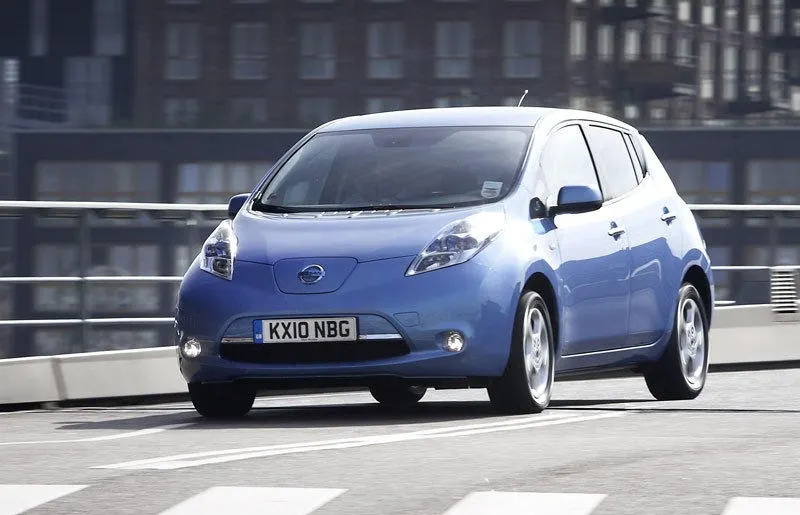
The bill came due fast, and it came due in the Sun Belt. In Phoenix, Arizona, and across the hot, dry Southwest, the earliest Leafs started losing capacity alarmingly quickly as early as 2012. Two-year-old cars with low miles showing up with their range collapsed. Owners nicknamed that first pack the “canary” battery, because it died at the first sign of trouble.
The Leaf reports battery health on a twelve-bar gauge on the dash. Owners watched bars drop one after another over months. In the harshest climates, losses of 30 to 50 percent by 60,000 to 80,000 miles became routine — cars rated at 73 miles that couldn’t crack 40 in summer. The people who had believed in the EV before anyone else, the early adopters who paid their $30,000 up front, ended up with an increasingly useless car and a Nissan that, at first, looked the other way.
The pressure — complaints, burning forums, the press, and finally a class-action lawsuit — forced Nissan to act. It extended the warranty to cover capacity loss: if the pack dropped below nine of twelve bars within five years or 60,000 miles, Nissan would repair it back to nine bars. Not to new. To nine bars. The bare minimum to make you stop complaining, not to give you back the car you bought. And the damage spread past the owners: the Arizona battery story jumped to the mainstream press and became the first big public scare about EV battery life. Every headline about a dying Leaf in Phoenix was ammunition for every skeptic who already distrusted the electric car.
The “lizard battery” and the lesson Nissan never learned
In 2015, Nissan reworked the cell chemistry. The new pack, nicknamed the “lizard battery” — because it shrugged off heat like a reptile — tolerated high temperatures far better and degraded much more slowly. It was a real improvement, and it deserves credit. Leafs from 2015 on age far better than the first ones.
But here’s the kicker that turns this into an NEB story and not just a warranty footnote: the lizard battery was still air-cooled. Nissan changed the chemistry but never added the liquid cooling the rest of the industry treated as mandatory. And it never did. No Leaf, through the end of the second generation in 2024, ever got active thermal management. The same root problem came back years later with fast charging: second-gen Leafs software-limit their DC charging speed so the cells don’t cook — a phenomenon owners dubbed “Rapidgate.” Fourteen years and two generations tripping over the same rock the pioneer had refused to move.
What also has to be said
NEB doesn’t swing the knife without looking at both faces. In temperate climates — the Pacific Northwest, the Northeast, most of the country outside the Sun Belt — plenty of Leafs have aged just fine and still run on healthy original packs. Mechanically the car is stone-reliable: no transmission, no clutch, almost nothing to break. And the whole saga has a genuine upside: the used Leaf became the cheapest on-ramp to an EV on the planet, the first electric car millions of ordinary Americans could actually afford. A staggering number of clean miles have been driven by second- and third-hand Leafs, many bought for the price of a used lawnmower engine’s worth of gas savings.
There’s even a nuance the black legend ignores: much of the degradation panic became overblown for the later packs. Nissan improved the chemistry so much that many batteries now outlast the car around them, yet the “a Leaf dies in four days” myth stuck to units that were aging normally. Nissan ate the reputation of its first cars for the model’s entire life, long after the worst of the problem was fixed.
So no, the Leaf wasn’t a bad car. It was a hugely important one with an Achilles’ heel Nissan knew about and chose not to fully armor. That mix is exactly what makes it worth telling.
The verdict
Here’s NEB’s read.
The Leaf earns a place of honor in automotive history. It was the car that pulled the EV off its pedestal and parked it in the ordinary American driveway, the one that proved with half a million sales that a battery car could be a daily driver and not a millionaire’s toy or a fairground stunt. Without the Leaf, the normalization of the electric car in America takes years longer, and the used-EV market that exists today barely exists at all. Point to Nissan, and a big one.
But the greatness and the scar came from the same car. Nissan had the nerve to launch it when nobody else would, and at the same time the stinginess to skip the one component that decided whether that battery aged with dignity or died in a single summer. The people who paid for that stinginess were precisely the bravest ones — the ones who bought first, who funded the whole project with their money and their faith, and who got a canary battery for their trouble. And the part with no defense isn’t the original mistake — in 2010 everyone was still learning — it’s that Nissan, knowing the problem cold, spent fourteen years and two generations refusing to fit the fix everyone else already used.
The Leaf made the EV normal. And for the same price, it taught a whole generation to eye a used battery with dread. The irony is perfect: the car built to prove the EV was dependable became the skeptic’s favorite proof that it wasn’t. Every American who still says “yeah, but the battery” is, knowingly or not, quoting a Phoenix Leaf from 2012. Not a bad epitaph for a pioneer — but one Nissan earned, one un-tightened bolt at a time.
Unplug and enjoy.
1 thought on “NISSAN LEAF”