EV Battery Types: The Guide That Takes the Marketing Apart
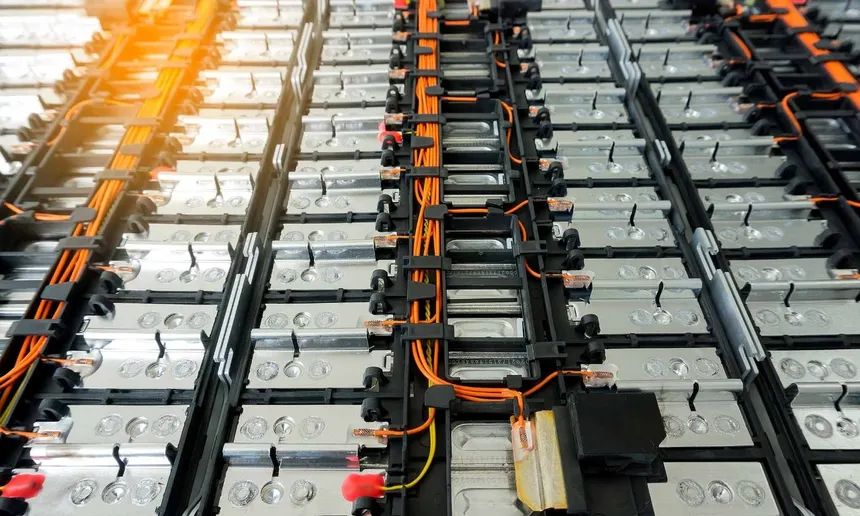
Your EV’s battery doesn’t hold the capacity on the window sticker. And that’s just the opening line.
Here’s the proof, straight from Tesla’s own factory. The European Model Y running Tesla’s in-house 4680 pack carries about 79 kWh gross, of which only 74 are usable. When Tesla dropped that pack into the exact same car that used to run an LG battery, WLTP range fell from 661 km to 609 km. Same car, same aerodynamics, same motors. The only thing that changed was the battery, and 52 kilometers walked out the door. That’s the real world of EV batteries —a place where the numbers on the spec sheet and the numbers on the road aren’t on speaking terms.
For an American buyer, this matters more than it does almost anywhere else, because the battery is where the tax credit, the trade war, and the price of the car all collide. So let’s pop the pack and look inside, no brochure, no fairy tales. When an automaker tells you “80 kWh and ultra-fast charging,” you’re getting half the story. The half that matters is buried in three questions nobody invites you to ask: what’s the cell made of, what shape is it, and how did they build it into the car?
Question one: the chemistry, or what it’s actually made of
Every battery in every car you can buy today is lithium-ion, sure, but that tells you almost nothing. What runs the show is the cathode material —the positive electrode— and there are two queens fighting over the throne.
On one side, NMC: nickel-manganese-cobalt. This is the energy-density chemistry, packing more energy into less weight, running from 150 to 250 Wh/kg. It’s what goes in the cars that brag about long range and big performance —the long-range Teslas, the premium German EVs. You’ll see it written as NMC 532, 622, or 811, where the numbers are the ratio of nickel, manganese, and cobalt. More nickel means more energy and less cobalt —and cobalt is the expensive, scarce metal with the shadow of Congo mining hanging over it, the one every American automaker is racing to design out. The catch: NMC is pricier, more sensitive, and doesn’t like being charged to 100% every day. Manufacturers tell you to stop at 80-90% for daily use precisely because sitting full ages it faster.
On the other side, LFP: lithium iron phosphate. It quit the density race —it sits around 90-160 Wh/kg— but in exchange it won almost everything else. No cobalt, no nickel, just iron and phosphate, both cheap and abundant. It’s the safest against thermal runaway, the chain reaction that ends in a fire. It lasts far longer: 3,000 to 5,000 full cycles versus NMC’s 1,000 to 2,000. And here’s the part nobody tells you —you can charge it to 100% every night without punishing it. In 2025 its prices dropped more than 15%, and the International Energy Agency pegged an LFP pack at over 40% cheaper per kWh than NMC on average. That’s why it ate the affordable-car market: the entry Model 3 and Model Y RWD, BYD’s whole lineup, and the cheap urban EVs America is finally starting to get. Its Achilles’ heel is cold. Below freezing it loses steam, and at -20°C it can drop to 60% of capacity —which, if you park in Minnesota, is not a footnote.
There’s no best chemistry. There’s a best one for the job. Anyone selling you otherwise is selling you something.
The two coming up fast: manganese and sodium
This is where it gets interesting, because the map is being redrawn right now, not a decade out.
First is LMFP —LFP with manganese added to bump up the voltage, and with it the energy density, without giving up the safety and low cost of iron-phosphate. It’s the logical evolution of LFP, the way to stretch that cheap chemistry toward ranges it couldn’t reach before.
But the real revolution is sodium. The sodium-ion battery swaps the working ion itself: instead of lithium, it uses sodium, one of the most abundant elements on the planet and dirt cheap. For years it was a lab promise, until 2025 and 2026 when three things clicked at once. CATL, the biggest battery maker on earth, launched its sodium brand Naxtra in April 2025 and hit mass production in 2026, targeting 600 km of range. The first passenger car with its cells is a GAC Aion, followed by the Changan A06 with a 45 kWh sodium pack and a claimed 400-plus km. BYD is building a 30 GWh sodium plant aimed at city cars and micromobility, and is already on a third-generation cell with over 10,000 cycles.
Sodium’s downside? Lower energy density, closer to LFP than NMC. But for a city car, a delivery van, or a cheap runabout —where cost, safety, and better cold-weather behavior than LFP are what count— it’s a brilliant play. The strategy taking over the industry is dual-chemistry: LFP or LMFP for the long-range trims, sodium for the cheap and urban ones. Note who’s driving all of this: CATL and BYD, both Chinese. America is watching the next chemistry get invented somewhere else, again.
Question two: the cell’s shape, which is no small detail
The same chemistry can show up in three different bodies, and the shape changes how it’s cooled, how it’s packed, and even how long it lasts.
The cylindrical cell is the classic can, like a fat battery. Tesla championed it with its 4680 format —46 mm across, 80 mm tall— five times bigger than the 21700 cells it used before. Its big trick is the tabless design, which improves current flow and cuts production cost. The catch: being small and round, it leaves air gaps when packed and runs hot, up to twice the heat of a flat cell at the same rate, so it demands more cooling. And the 4680 story has a twist —it’s the one at the center of that Model Y range drop, a made-in-America cell that still hasn’t fully delivered on its promise.
The prismatic cell is a rectangular brick, and its flag-bearer is BYD’s Blade: a flat, elongated cell nearly a meter long and 14 mm thick. Being long and thin, it sheds heat far better and packs with almost no wasted space. Its density is lower than Tesla’s 4680 —160 Wh/kg versus 241— but it survives twice the cycles and makes half the heat. Two opposite philosophies: Tesla squeezes energy, BYD squeezes space, safety, and cost.
Then there’s the pouch cell, a soft laminate in a flexible envelope, very efficient with space but mechanically more delicate, needing a solid structure around it so it doesn’t swell or suffer. Several automakers use it where thin packaging matters.
Question three: how they build it into the car (this is the modern magic)
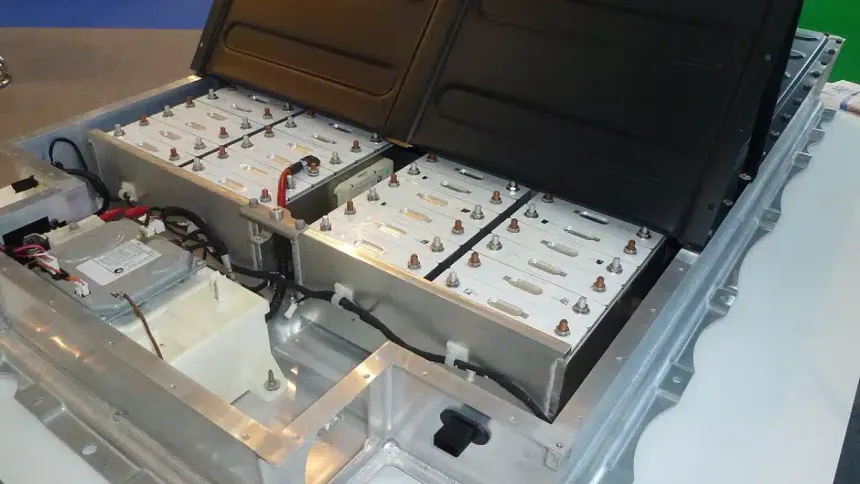
For years, a battery was a box of boxes: cells packed into modules, modules packed into the pack. Every layer added weight, volume, and dead hardware that didn’t store a single watt.
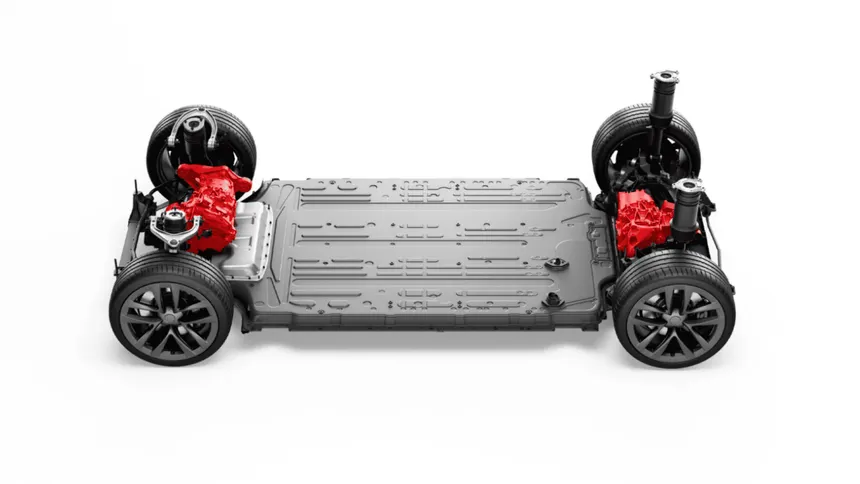
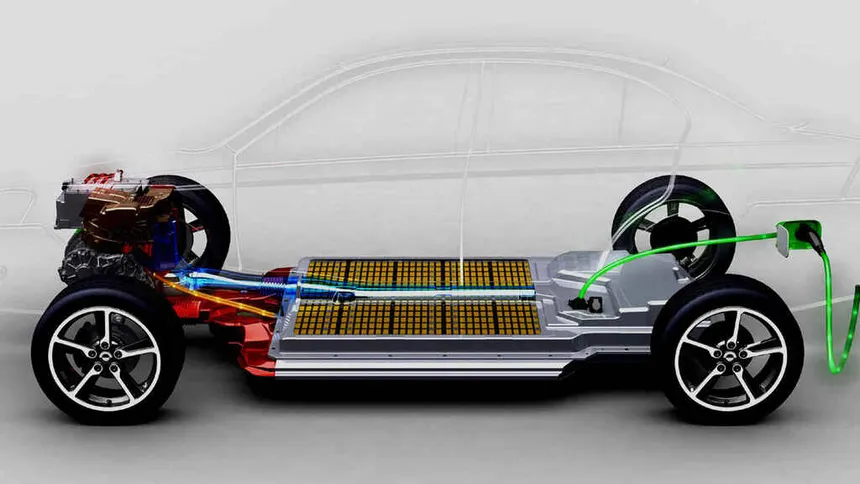
The quiet revolution of the last few years has been killing those middle layers. Cell-to-pack drops the modules —cells go straight into the pack. Cell-to-body, or cell-to-chassis, goes further and makes the battery itself part of the car’s structure. BYD’s Blade is the perfect example: its long cells run across the floor of the car from side to side and act as structural beams, bonded to the chassis in a rigid honeycomb. The battery isn’t a passenger riding in the car anymore; it’s part of the skeleton.
This isn’t marketing —it’s more range with no better chemistry, because the space modules and casings used to eat is now filled with cells. It’s why a car with a “worse” chemistry on paper can match or beat one with a “better” one. What counts isn’t only what the cell is made of, but how many you fit and how.
Degradation: the fear the data has switched off
The great EV bogeyman is that the battery dies in four years and bankrupts you. The data, now that we finally have some, tells a different story.
A Geotab study of more than 22,700 real vehicles put average degradation at 2.3% per year. A separate analysis by Aviloo, spanning brands of every kind —Audi, BMW, Ford, Hyundai, Mercedes, Renault, Tesla and more— found that at 100,000 km the median state of health was still between 88% and 95%, and at 150,000 km still between 87% and 94%. Degradation isn’t a nosedive: it follows an S-curve, a slightly bigger loss the first year as the battery breaks in, a very long flat plateau in the middle, and only at the end of life does it speed up again. It also helps that federal law requires automakers to warranty the battery for at least eight years and 100,000 miles, with a free replacement if health drops below 70% in that window.
What actually hurts it? Heat, and leaving it parked full. The detail almost nobody knows, in the words of the Aviloo study’s own lead, is that you shouldn’t leave the car parked at 100%, or 90%, or even 80% —the sweet spot is between 30 and 70%. Constant DC fast-charging abuse takes a long-term toll too, though the occasional session is harmless. And all of it comes with a chemistry asterisk: an LFP takes a 100% charge without drama; an NMC would rather live in the middle. That famous 80% rule isn’t universal —it depends on what’s under your floor.
The future car that never quite arrives: solid state
You can’t close a battery guide without the holy grail, if only to knock it off its pedestal: the solid-state battery, which swaps the flammable liquid electrolyte for a solid one and promises double the energy density, a 10-to-80% charge in ten minutes, and 600-plus miles of range.
The running joke in the industry is that solid-state is “always three years away.” It’s not far off. Toyota, which has poured in the most —over $15 billion and the world’s biggest patent portfolio— is aiming at 2027-2028 for its first cars, and got a production license in Japan in late 2025. QuantumScape, backed by Volkswagen, has validated promising cells in the lab but admits in its own shareholder letters that scaling production remains a serious challenge. And there’s the line between headline and reality: the chemistry works in the lab; manufacturing it at volume, cheaply, at good yield, is the unsolved part. That’s where nearly three decades and billions of dollars have quietly vanished.
The realistic picture is a phased rollout: pilot production now, a handful of very expensive cars —likely six-figure Lexus flagships— around 2027-2028, and real prices for the rest of us after 2030. In the meantime there’s a middle ground already on the road: semi-solid cells. NIO runs 150 kWh semi-solid packs in China, and American players are genuinely in the hunt —Factorial supplies semi-solid cells to Mercedes-Benz and Stellantis, QuantumScape is validating with Volkswagen, Solid Power runs BMW test cars. The future doesn’t land all at once; it trickles in.
So which battery do you want?
Depends on which driver you are. And that’s the answer the advertising hides behind one big kWh number.
If you rack up miles and need range and solid cold-weather behavior, NMC pays off —as long as you’ll treat it right and not leave it sitting full. If your life is city and mid-range trips, and you want a battery that lasts forever, that you can plug in without thinking, and that almost never burns, LFP is the rational pick, and the cheaper one to boot. If you’re pure urban on a tight budget, the sodium cells arriving this year are about to put an EV within reach of a lot of people who can’t swing one today. And if you’re dreaming of solid state, dream easy —just don’t hold your breath.
Here’s the closing shot, and I won’t soften it: stop staring at the brochure’s kWh number like it’s your test score. That number is gross, not what you use, and it tells you nothing about what the cell is made of, whether they built it into the car well, or how long it’ll last. Next time a salesman hits you with “eighty kilowatt-hours and ultra-fast charging” like he’s doing you a favor, ask the three he doesn’t want to hear: which chemistry, which format, and gross or usable? If he can’t answer, he’s not selling you a car. He’s selling you a brochure.
Unplug and enjoy.
2 thoughts on “EV BATTERY TYPES”