EV Electric Motor Types: The Four Motors That Actually Move Your Car
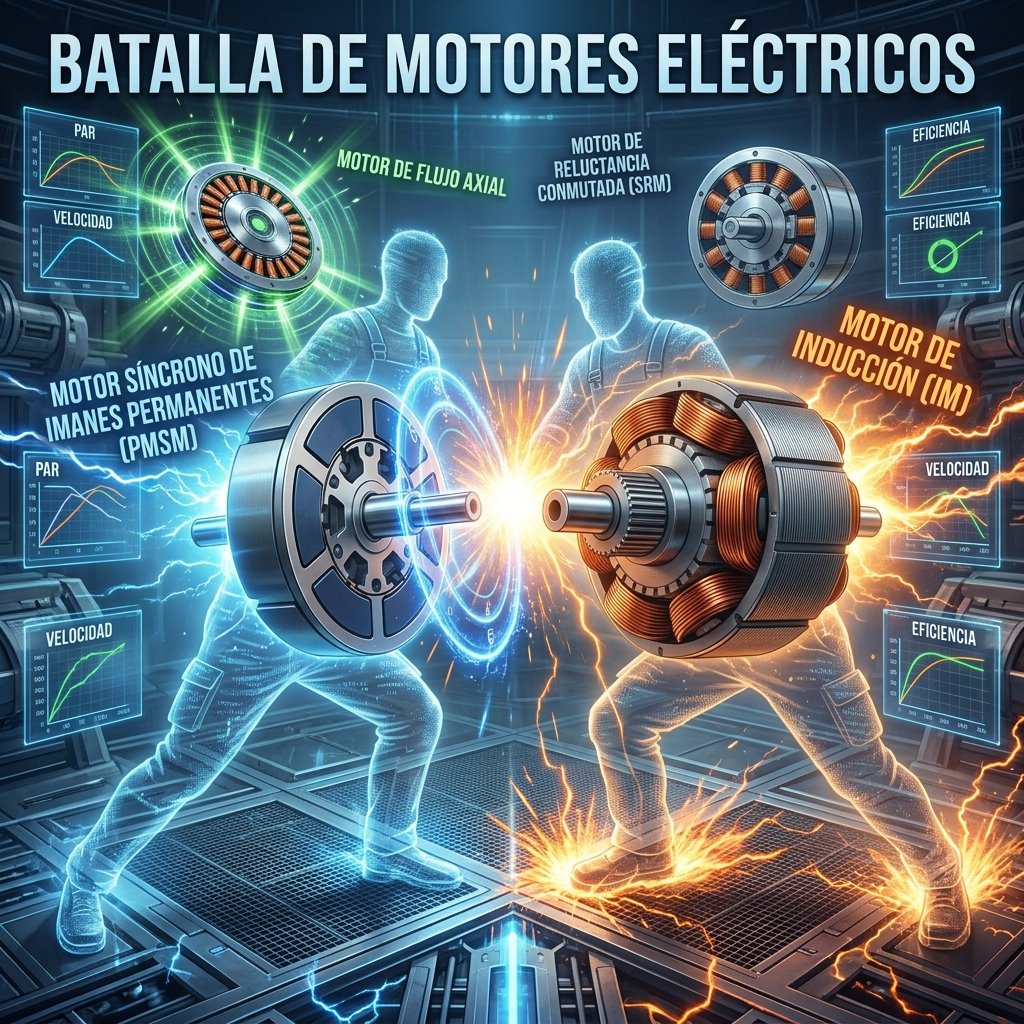
Washington wants the rare earths out of your car. The motor is where that fight is really happening.
Everyone talks about the battery. The battery gets the headlines, the tax credits, the factory ribbon-cuttings. But the part of an EV most tangled up in the trade war with China isn’t the battery pack —it’s the motor spinning your wheels. And here’s what almost nobody tells you: there isn’t one kind of EV motor. There are four, they’re built on completely different principles, and the choice between them is now as much about supply-chain politics as it is about engineering. Some of them run on magnets America can’t source without Beijing. Some don’t need a single one.
So let’s do the thing the window sticker never does. Four motor types, what each one is good at, what each one hides, and why the one in your Tesla and the one in a European hatchback aren’t remotely the same machine.
Why this is a supply-chain story before it’s an engineering story
Start with the number that drives every decision below. China refines 85% of the world’s light rare earths and 100% of the heavy ones, and controls north of 90% of global production. The neodymium magnets that make the most efficient EV motors possible come, overwhelmingly, from one country —a country that increasingly keeps the finished magnets for its own automakers and export-controls the rest.
For Detroit, that’s not a footnote. It’s the reason GM and Ford are scrambling to line up domestic magnet supply, the reason the Inflation Reduction Act and the Pentagon are both throwing money at rare-earth processing on U.S. soil, and the reason a motor that needs zero magnets suddenly looks a lot more attractive than it did five years ago. It cuts the other way too: China is also the planet’s largest EV producer, so the same country that controls the magnets is racing you to build the cars they go into. When one nation holds the raw material, the refining, the finished magnets, and the assembly lines, “buy the cheapest motor” quietly becomes a geopolitical bet. Keep that tension in mind, because every one of the four motors below sits somewhere on a spectrum from “totally dependent on that supply chain” to “owes it nothing.”
The permanent magnet motor (PMSM): the efficiency king with a leash
This is what most EVs on American roads run today, and the reason is pure performance: it’s the most efficient motor there is.
The rotor —the spinning part— carries permanent magnets, usually neodymium. The stator throws a rotating magnetic field, and the rotor locks onto it in perfect step; that’s the “synchronous” part. Because the rotor’s magnetic field is already on, baked in by the magnets, the motor doesn’t waste energy creating it. No slip, no rotor losses. The payoff is efficiency between 95% and 97%, and it’s strongest in the city and at part-throttle —exactly how most Americans actually drive. Against a comparable induction motor that’s an 8-to-12-point efficiency edge, and that edge is range. It’s in the Mustang Mach-E, in GM’s Ultium cars, in the Tesla rear motor.
The leash is the neodymium. Build a PMSM and your production line is hostage to whether Beijing feels like selling magnets this quarter —and in a stroke a factory can idle not for lack of steel or copper, both of which the U.S. has, but for lack of a fistful of magnets it can’t make at scale. There’s also a smaller, permanent tax: a magnet can’t be switched off, so even coasting down the highway the field is still there, dragging, bleeding a trickle of range through what engineers call spin loss. It’s a tiny loss, but it runs every second the wheels turn, and it’s the physical price of an always-on field. The magnet never rests.
The induction motor (ASM): the all-American muscle that owes China nothing
Here’s the irony worth savoring: the motor that made Tesla terrifying —the one in the early Model S and Model X that ripped off sub-four-second 0-to-60 runs— was invented by Nikola Tesla in the 1800s and needs no rare earths at all.
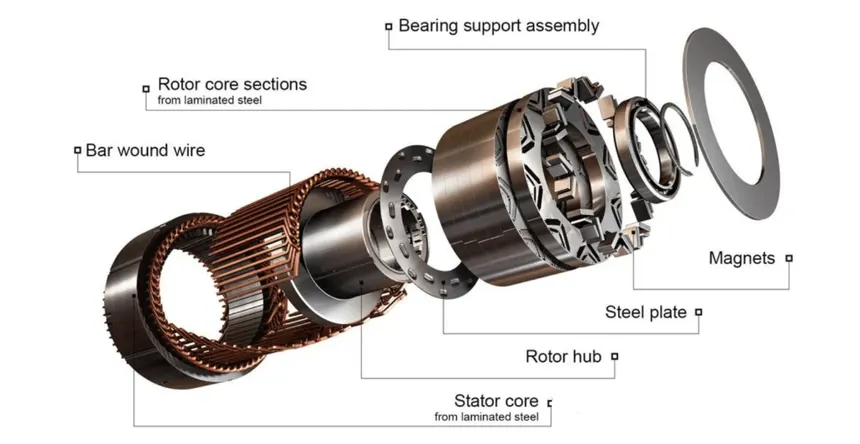
The induction rotor carries no magnets and no direct current. The stator’s rotating field induces currents in a cage of copper or aluminum bars —the classic squirrel cage— and those induced currents make their own field that chases the stator’s. The catch is that the rotor always lags a hair behind; it needs that “slip” to work, which is why it’s called asynchronous. That slip caps peak efficiency around 90-93%, and it’s worst at low speed and light load, i.e. city driving.
But look at what you get in exchange: it’s tough as a truck axle, cheap to build, and completely free of the Chinese magnet supply chain. Nothing in it depends on an export license. That’s why, even as the industry chased permanent magnets for range, the induction motor never fully left the stage —it’s the fallback that can’t be cut off. And it has one elegant trick —with no magnets, when you don’t need it, it de-energizes and freewheels with almost no drag. Where the permanent magnet always drags, the induction motor genuinely coasts. Hold that thought, because it’s the key to the next move.
The best of both: why your dual-motor Tesla runs two different engines
This is where it clicks. A dual-motor EV doesn’t carry two identical motors, and that’s not a parts-bin accident —it’s the smartest trick in the drivetrain.
The dual-motor Model 3 and Model Y run a permanent-magnet-assisted synchronous reluctance motor —the IPM-SynRM— on the rear axle, and an induction motor up front. Why the mismatch? Because each does the job it’s best at. The rear permanent-magnet unit is hyper-efficient and does almost all the driving; these cars run in rear-drive mode most of the time. The front induction motor sits idle and freewheels —no magnets, no drag— until you actually demand power or need all-wheel grip on a slick on-ramp, and then it wakes up. Efficiency when you’re cruising, muscle when you floor it, minimal drag the rest of the time.
The rear motor is the clever bit. A synchronous reluctance rotor has no windings and, in pure form, no magnets —just layers of steel arranged so the rotor “wants” to line up with the stator’s field, like a compass snapping to north. Tesla salts in some magnets to boost it, hence “assisted.” The result holds strong, constant torque across a huge speed range. It’s exactly why Tesla walked away from the Model S’s pure induction setup when it engineered the Model 3.
The magnet-free play (EESM): the answer to the rare-earth chokehold
Now the motor Detroit’s planners are watching closely: what if you could get permanent-magnet-grade efficiency and fine control without kneeling to the magnet monopoly? That’s the externally excited synchronous motor —the EESM, or wound-rotor motor.
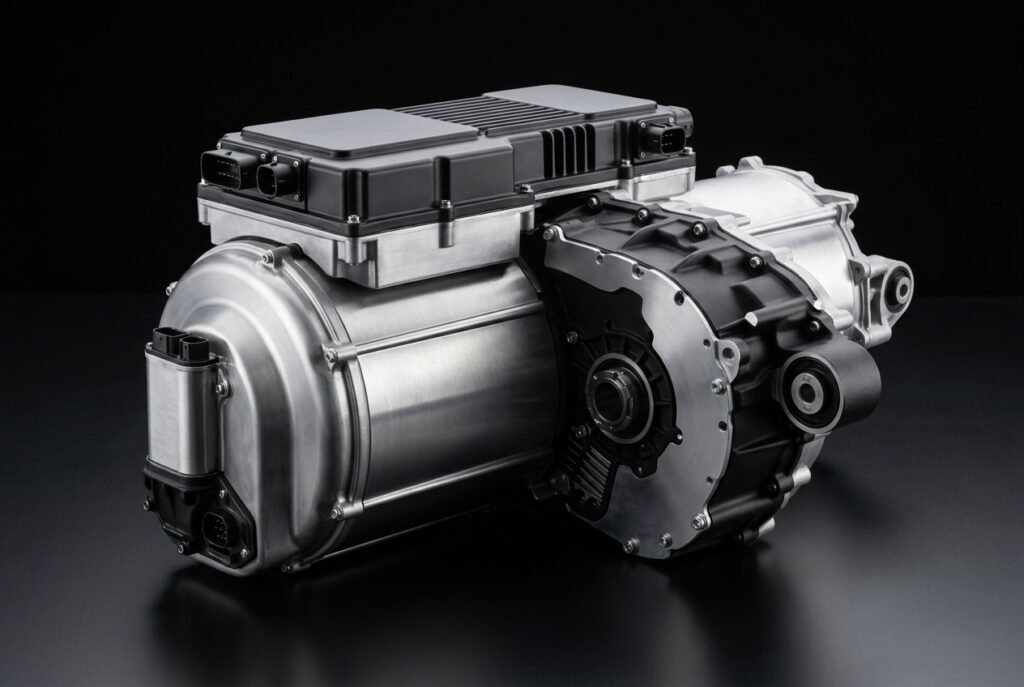
Instead of magnets, the rotor carries copper coils fed direct current through slip rings, generating the magnetic field on demand, only when you switch it on. Yes, technically it’s a brushed motor —sounds like a throwback— but the upside buries the prejudice. Total independence from rare earths. A carbon footprint roughly 30% lower than a comparable PMSM. And because the field switches off at will, no spin loss when you coast, which makes it shine on exactly the long highway hauls Americans rack up.
And here’s the part that should sting a little in Detroit: the pioneer isn’t a legacy American giant. It’s Renault, which has been building these in volume since 2012 and patented its own rotor-winding process, and BMW, which puts EESMs on the rear axle of its entire new Neue Klasse platform, magnet-free. The technology that could cut the cord to Beijing has been quietly maturing in Europe for over a decade while the U.S. leaned on magnets. The catch is modest —the motors run a bit larger, the slip rings add mechanical complexity, and feeding the rotor draws a little power— but the efficiency gap with permanent magnets narrows every year, and in some driving cycles it’s already gone. And the next round is already loaded: Renault’s third-generation E7A motor, co-developed with Valeo, targets up to 200 kW on an 800-volt architecture with volume production planned in France. This isn’t a research curiosity anymore —it’s a bet that’s been paying off for over a decade, and the rest of the industry is only now catching up.
The one nobody dares ship: pure switched reluctance
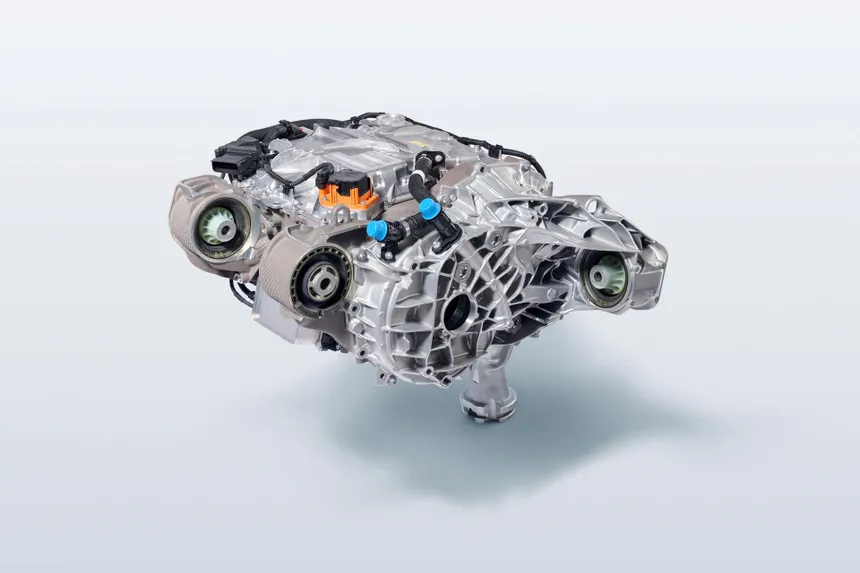
There’s a fifth suspect worth naming, if only to explain why it’s not under your floor: the pure switched reluctance motor, the SRM. On paper it’s an accountant’s dream —no magnets, no rotor windings, the cheapest and most rugged motor to build, happy at brutal temperatures and sky-high rpm. Land Rover even showed a fleet of Defender prototypes running a 70 kW SRM back in 2013.
So why does nobody sell one? Because it has a vice that’s brutal to tame: torque comes out in pulses, not a smooth line, and that means torque ripple, vibration, and a whine that’s a dealbreaker in a car that brags about silence. Taming it takes fiendish control electronics. Plenty of research, maybe a production future, but calling it a market reality today would be a lie.
So which one is best?
None of them. That’s the answer no marketing department will give you, because it doesn’t move metal.
Want maximum range and city efficiency? The permanent magnet wins —if you can live with the leash to China. Want ruggedness, low cost, and a supply chain that runs through nobody’s export-control office? Induction. Smart engineering? Mix the two, like Tesla, and take the best of each. And if what keeps you up at night is the rare-earth chokehold —the exact thing Washington is spending billions to break— the EESM is the play with foresight, the one Europe saw coming a decade early.
None of that shows up on a spec sheet. The brochure lists horsepower and range and a 0-to-60 time, and stays dead silent on the one question that will shape whether these cars stay buildable and affordable through the next trade spat: what spins inside, and who controls the stuff it’s made of. A Mach-E and a Mégane can post similar range numbers and be running motors on opposite ends of that supply-chain spectrum. Same result on paper, completely different exposure in the real world.
So here’s the closing shot, and I won’t soften it: next time a salesman waves off “the electric motor” like it’s all the same box, ask him the two questions he doesn’t want. Which of the four? And who does the factory depend on to build it? That choice isn’t random and it isn’t neutral —it’s efficiency, cost, and increasingly national security, all bolted to your rear axle. The day you get that, you stop buying the car off the brochure and start buying it for what’s underneath. Which is the whole point.
Check you’re still alive.