Electric crate motors: the engine swap that finally came for the hot-rodder’s soul
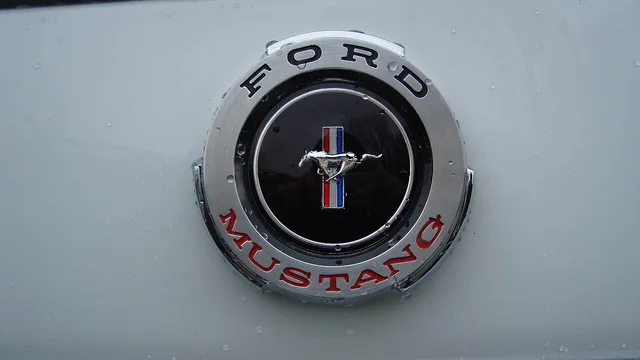
For a hundred years the most American thing you could do to a car was yank its engine and bolt in a bigger one. The small-block Chevy in a Ford. The LS swap in everything. The whole hot-rod religion was built on one sacred act: the engine swap. So here’s the question nobody in the scene wants to sit with. What happens when the ultimate engine swap makes no noise at all? Ford will sell you a 281-horsepower electric motor in a crate for about four grand, and it slots into your ’65 Fastback as easily as a V8 ever did. The swap isn’t dying. It’s going silent. And that’s a far stranger story than “classic car goes green.”
Let’s get into it, because the American version of this fight is nothing like the European one.
The crate motor changes who gets to play
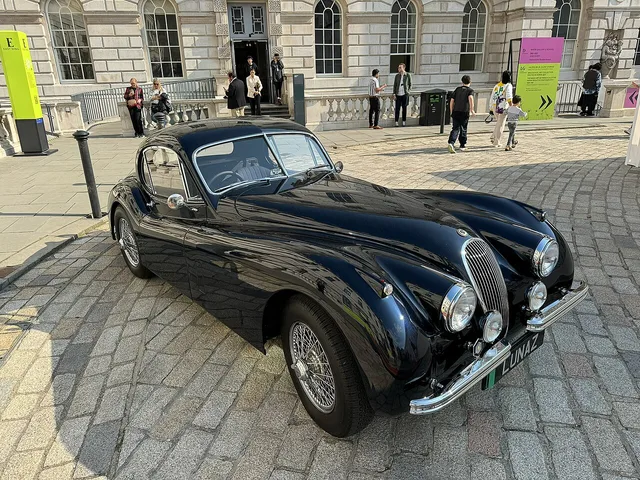
Over in Britain they turn classics electric for the Instagram set: six-figure Porsches and near-million-dollar Aston Martins rebuilt by firms like Lunaz and Everrati, the latter openly chasing American money with a 964-generation 911 pushing close to 500 hp. Beautiful work. Irrelevant to most of us. That’s a jewelry business, not a car-culture one.
The thing that actually matters landed at the SEMA show in Las Vegas in the fall of 2021, when Ford Performance pulled the sheet off the Eluminator: an electric “crate motor,” the same unit from the Mustang Mach-E GT, sold as a part you can buy. It makes 281 horsepower and 317 lb-ft, it costs around $3,900, and the first batch sold out in days. Chevrolet had already been showing its own electric crate concepts and a Connect & Cruise-style path for EV swaps. For the first time, the electric conversion stopped being a boutique service and started being what American performance has always run on: a part in a box, sitting on a shelf, waiting for a guy with a socket set and an idea.
That’s the real shift. Not the rich man’s electric Rolls. The crate motor. Because the crate motor is democratic in a way the restomod never will be. It puts the silent swap in reach of the same garage builder who’s been doing loud swaps since Eisenhower. And that is exactly why it stings.
The movement was grassroots long before Ford showed up
Ford didn’t invent this; it showed up late to a party the garages had been throwing for years. The clearest proof sits in San Marcos, California, about twenty miles north of San Diego, where a shop called EV West has been turning classics electric for more than fifteen years. Its founder, Michael Bream — an engineer, racer and former skateboard manufacturer — took a converted car up the Pikes Peak hill climb and won his class back in 2012, years before the big manufacturers decided electric swaps were respectable.
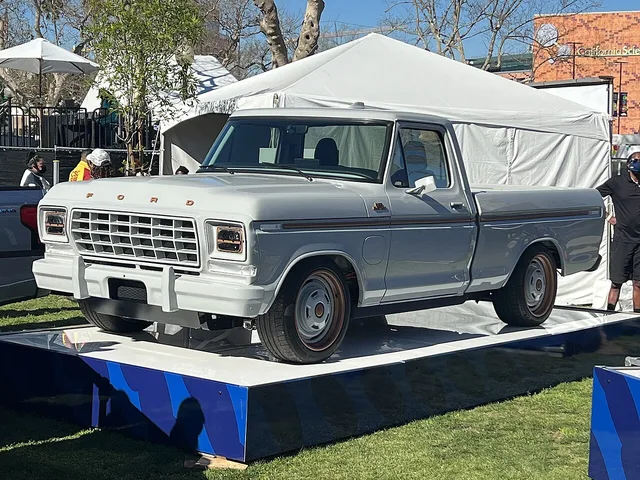
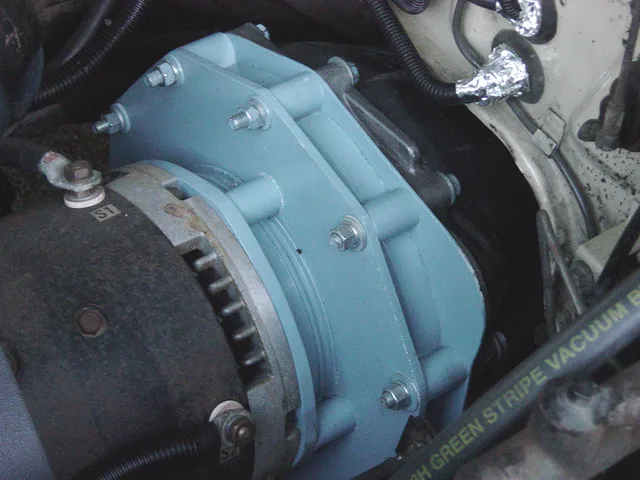
What makes EV West matter isn’t the trophy, it’s the model. The shop designs its own bolt-in brackets and adapter plates that mate an electric motor to the car’s original mounts and transmission, then ships those parts worldwide to people doing the work themselves. Its Porsche kits run from roughly $8,700 to $34,000, the top end built around a salvaged Tesla Model S drivetrain. And that word — salvaged — is the grassroots engine of the whole American scene. The batteries come out of wrecked Teslas the insurance company already wrote off, given a second life under a 1953 Ford pickup instead of a landfill. Tony Hawk had a 1962 Corvette done. The parts bin is the nation’s crashed EVs.
Bream also says the quiet part out loud, and it’s the same point the British builders land on: “We want all of these conversions to be 100% reversible.” The original drivetrain gets boxed, not binned. Keep that in your head for the next section, because it defuses half the war.
The soul problem, stated plainly
Here’s the part the cheerful press releases skate over. Hot-rodding was never only about going fast. It was about the engine. The lope of a cam at idle. The way a built motor sounds through open headers at a stoplight. Half the culture is noise, smell and vibration — the car as a living, breathing, slightly dangerous animal. You can measure an electric swap’s horsepower all day and it will not give you that. An EV crate motor delivers the one thing a hot-rodder always chased, which is brutal instant thrust, while deleting the one thing he loved while chasing it, which is the drama.
So the purist backlash in America isn’t snobbery the way it can be in Europe. It’s grief. These are people watching the central ritual of their hobby get performed with the sound turned off. And they aren’t wrong that something real is lost. A ’69 Camaro that whirs is quicker and cleaner and it is also, undeniably, no longer the thing that made a kid’s chest thump in 1969.
But there’s a counterweight the loudest critics skip, and it’s the same one the British builders figured out: the good conversions are reversible. The smart move is to keep the original V8 crated up in the corner of the shop, numbers-matching and intact, and run the electric drive as a removable phase in the car’s life. Done that way it isn’t an execution. It’s a chapter. The irreplaceable, matching-numbers muscle car stays sacred; nobody sane cuts one of those up. The millions of ordinary old cars that aren’t holy relics are a different conversation.
The green story doesn’t survive contact with a calculator
Americans get sold the same fairy tale the Europeans do — convert your old car, save the planet — and it falls apart just as fast on this side of the Atlantic. The math is the problem.
The carbon that went into building your car decades ago is spent. It’s gone, a sunk cost you can’t claw back. Converting it doesn’t erase that; it adds a new carbon debt on top — the considerable emissions of manufacturing a fresh battery pack, the same math that sinks the GMC Hummer EV. To pay that debt back through tailpipe savings, you’d have to drive the thing constantly. But nobody drives a classic constantly. It lives under a cover and comes out for cars and coffee and the occasional sunny weekend. Britain’s Historic & Classic Vehicles Alliance put the payback bluntly: measured in decades, if ever, especially once you factor in replacing the battery down the line.
Translated into plain English: dropping a new battery into a car that covers a couple thousand miles a year is one of the least green things you can do with that car. If the only thing you cared about was carbon, you’d leave it parked. So let’s bury the save-the-earth pitch right here. The electric swap has to justify itself some other way — and it can, just not the way the brochure says.
What it’s actually for: keeping the car usable
Strip away the environmental halo and the nostalgia war and you’re left with the real reason the swap is growing: usability. An old carbureted car is getting harder to live with, not because of emotion but because of the world closing in around it. Parts for some engines are drying up. Cities are tightening the screws on combustion, the same pressure that made Europe build a car America can’t buy. The daily reality of running a forty-year-old motor as actual transportation keeps getting thornier.
An electric conversion answers that. The car becomes something you can start in a second, drive without a cloud of unburned fuel, park near your house without fighting an increasingly hostile set of rules, and keep on the road for another twenty years without chasing a carburetor rebuild kit on eBay. That’s not a climate argument. It’s a “can I still use my car” argument. In America it hits hardest in the states leaning hardest on tailpipe rules — California at the front, where an EV swap can turn a smog-check headache into a car that sails through because there’s no tailpipe left to test.
That’s the quiet truth under the whole movement. People aren’t converting because they fell in love with lithium. They’re converting because they want to keep driving the car they already own, in a country that is slowly making the old way impractical. The battery isn’t the point. Access is the point.
The catch nobody mentions until you try it
NEB doesn’t flatter even the idea it finds defensible, and the American retrofit world has real catches. The first is that “four grand for a crate motor” is a tease. The motor is the cheap part. Batteries, a charger, cooling, a controller, mounts, wiring, and the labor to make it all cohere push a serious build well into five figures fast. The crate motor democratized the dream, not the bill.
The second is engineering. A chassis designed for a cast-iron V8 was never set up for the dead weight and instant torque of an electric drive. Do it carelessly and you’ve built something that accelerates like a missile and stops and turns like a 1965 sedan — which is to say, badly. Brakes, suspension and steering all need to come up to the new reality, or the result is quick and genuinely dangerous.
The third is legal, and it’s a patchwork. There’s no single national retrofit framework; it’s fifty states doing fifty things, with California’s referee and Bureau of Automotive Repair process the one most builders learn to navigate. What’s a weekend’s paperwork in one state is a saga in another.
None of that kills it. It just places it. The electric swap is a costly, fiddly, state-by-state proposition that makes real sense for a specific owner and none at all for the rest. Trailer-queen with matching numbers? Leave it alone. Beloved driver you want to keep using in a tightening city, with the old motor saved in the corner? Now the crate motor starts to look less like heresy and more like a plan.
The verdict
Here’s NEB’s read.
The sacrilege-versus-future debate, as old as the first electric car era, is a trap, and it keeps everyone arguing about the wrong thing. The electric swap isn’t about saving the planet, because it doesn’t. It isn’t really about honoring the car, because it mutes the exact thing that gave the car its character. It’s about keeping the machine usable in a world that’s quietly legislating it out of daily life. The man crating up his small-block and sliding in an Eluminator isn’t an environmentalist and he isn’t a traitor. He’s a guy who wants to keep driving his car, and who found the one move that lets him.
And that’s the part the industry won’t print on the box. The electric crate motor is the most American object to come out of this whole movement — a performance part in a crate, sold to the garage, ready to swap — and it exists because the loud version is slowly being shown the door. Hot-rodding was always about adapting whatever was in the crate to whatever the times demanded. The times just put a battery in the crate. You don’t have to like how it sounds. But pretending it isn’t the same old swap, played in a new key, is kidding yourself.
Unplug and enjoy.
Images: Kieran White (CC BY 2.0) · Thomas Quine (CC BY 4.0) · TaurusEmerald (CC BY-SA 4.0) · Leonard G. (CC BY-SA) · Plug In America (CC BY-SA 2.0)