Charge Your EV to 80%? Read Your Owner’s Manual First
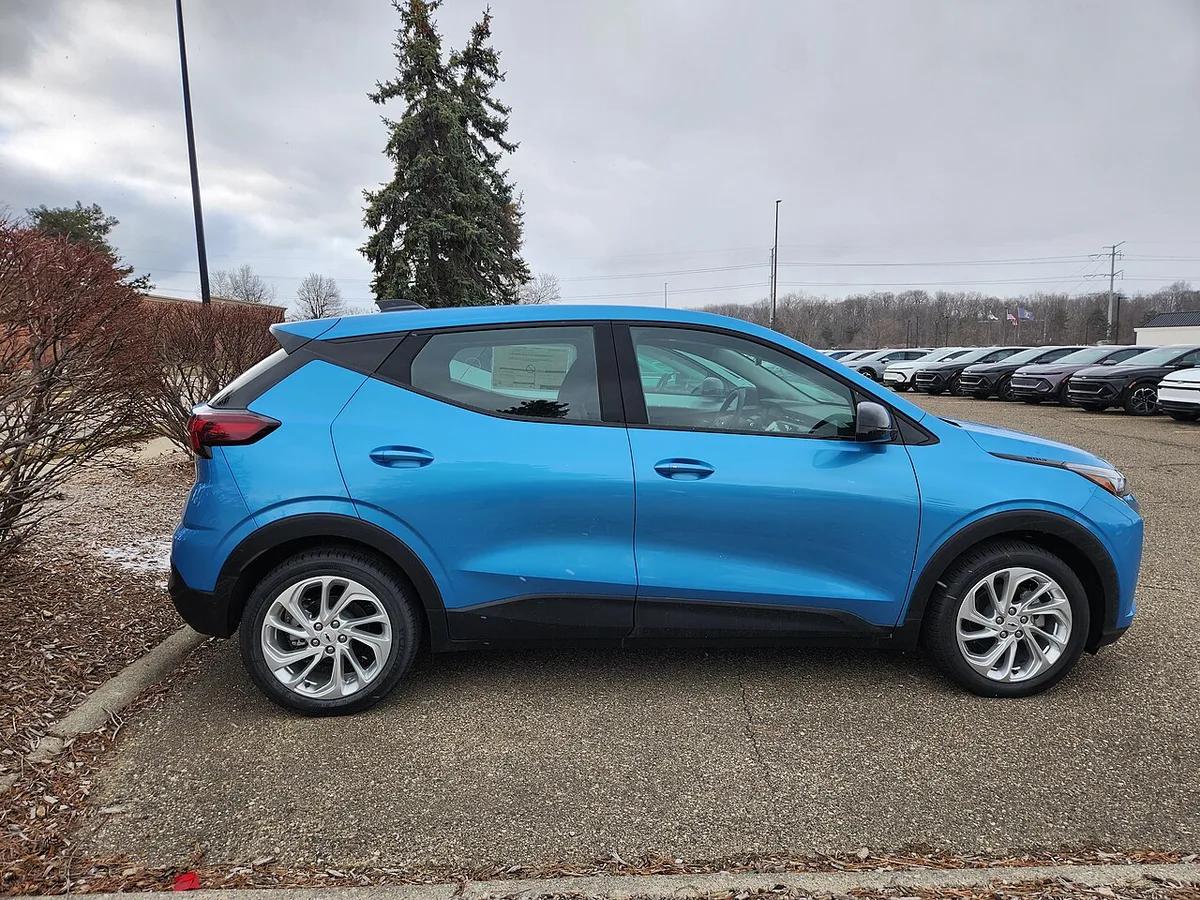
Chevrolet will sell you a 2027 Bolt and tell you to charge it to 100%. Every day. Then it will sell you an Equinox EV off the same lot and tell you to stop at 80%.
Same brand. Same dealer. Opposite advice.
Meanwhile, half the internet is busy repeating one rule for every EV ever built: charge to 80%, run it down to 10%, plug back in. It comes with a famous name attached, Elon Musk, and it has been making the rounds again this month.
He said it three years ago. He wasn’t talking about your daily commute. And the 80% idea was already living inside a production car years before he sat down with Joe Rogan.
The Bolt that gets more range by ignoring the rule
The 2027 Bolt is GM’s first EV with a lithium iron phosphate battery, LFP for short, a 65 kWh pack built with CATL cells. GM’s owner’s manual tells Bolt drivers to keep the upper charge limit at 100% for everyday use and to charge to a full 100% at least once a week.
The Equinox EV and the Blazer EV use nickel-based cells. For those, GM recommends 80% to protect the battery.
GM Authority ran the numbers with GM’s own guidelines and found something odd. Charged the way GM recommends, the Bolt offers 262 miles of everyday range. The 2026 Equinox EV FWD, held to 80%, offers 255. The Blazer EV FWD, 250. The cheapest of the three ends up with the most usable miles, because it is the only one its maker tells you to fill up.
There is one exception buried in GM’s TechLink service bulletin for dealers: if you’re heading into mountainous terrain, GM recommends a lower limit of 80% on the Bolt too.
So which is it, 80 or 100? It depends on what’s inside the pack, and if you’re fuzzy on the difference, start with our guide to EV battery types. And almost nobody repeating the rule online knows what’s inside theirs.
What Musk actually told Rogan
The clip comes from episode 2054 of The Joe Rogan Experience, released on October 31, 2023. It’s the episode where Rogan fires an arrow at the Cybertruck and the broadhead flattens against the steel.
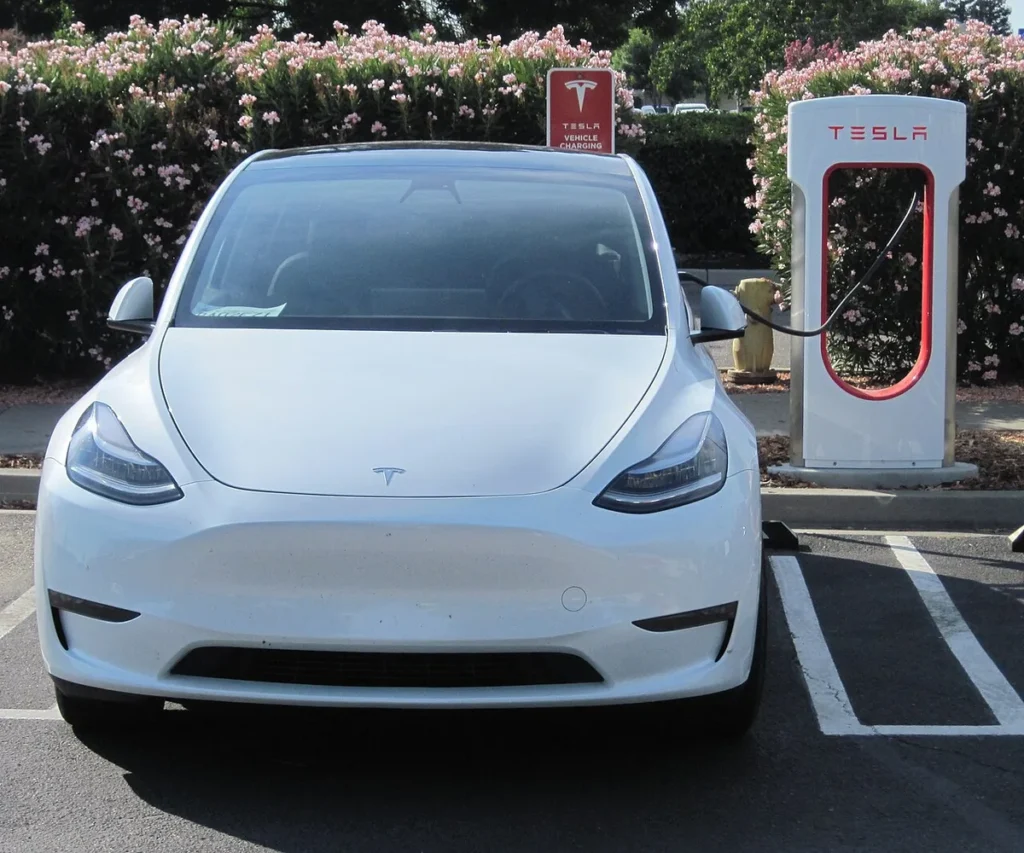
Rogan asks how long a full charge takes. Musk says the logic is backwards from a gas car. On a road trip, you don’t fill up. You charge to about 80%, drive it down to 10% or less, and let the car’s trip planner figure out where to stop and for how long.
Then comes the analogy everyone now shares. Lithium ions moving from one side of the battery to the other are like cars hunting for a spot. When the lot is empty, they zip right in. When it’s nearly full, like a mall parking lot, they have to circle. That’s why, Musk says, getting from 80 to 100 takes about as long as getting from zero to 80.
Rogan follows up with the question that matters: is that for everyday use too, or just long trips?
“No, just long trips,” Musk answers.
That line has vanished from the version going around. This month the clip resurfaced in Spanish-language car media, and on social feeds it hardened into a universal law for daily driving. Musk was talking about Supercharger stops on a highway. The internet turned it into a lifestyle.
Nissan had the 80% button first
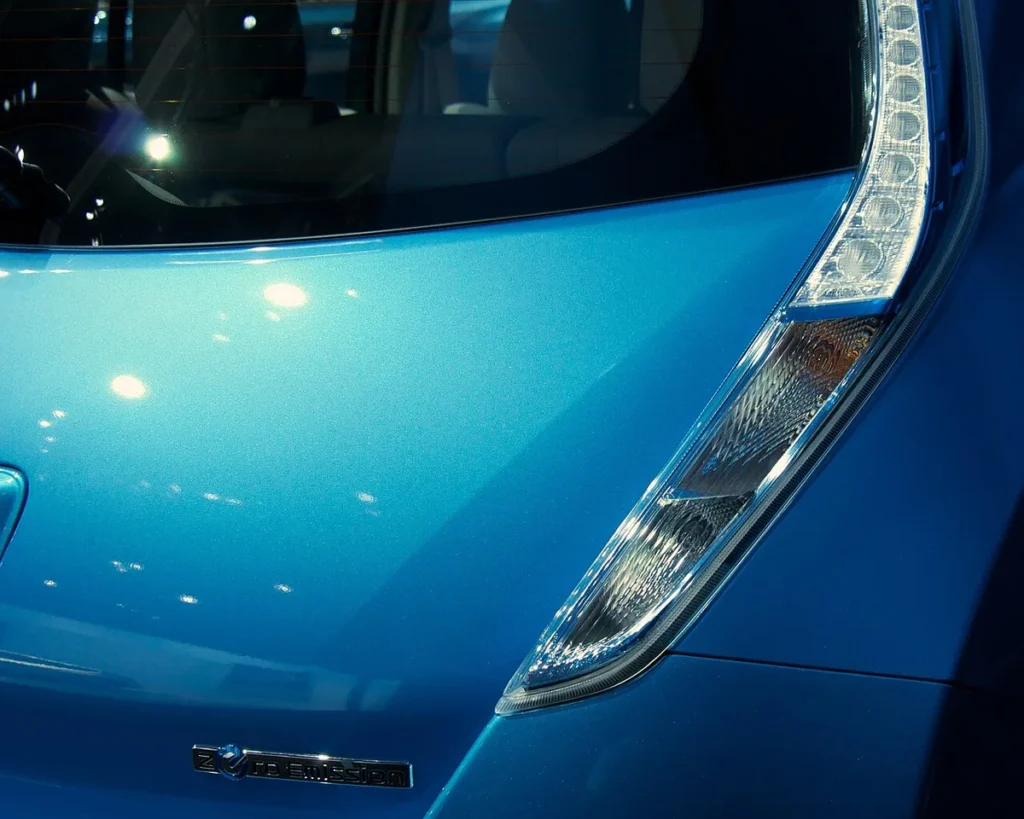
Long before that podcast, the original Nissan Leaf gave owners a software setting to stop charging at 80%. Edmunds described it at the time as an option that helped prolong long-term battery life.
For the 2014 model year, Nissan deleted it. Green Car Reports explained what that option had been doing to the window sticker: because the car offered an 80% mode, EPA rules forced Nissan to blend 80% and 100% charging ranges into a single official number.
The result, per Edmunds: the 2013 Leaf was rated at 75 miles. The 2014 Leaf was rated at 84. Same battery. Same drivetrain. Nine more miles on paper. Neither Nissan’s 2014 press kit nor Edmunds says why Nissan pulled the feature, and we won’t guess.
What it does tell you is that the 80% habit is older than the meme, and that the government’s range math was already tangled up in it a decade ago. The Leaf also taught the industry what an air-cooled pack does in Phoenix heat; we told that Nissan Leaf battery degradation story separately.
On the road, Musk is right
EVKX publishes charging curves for the 2026 Tesla Model 3 Performance. Charging from 10 to 80% on a DC fast charger takes about 36 minutes. From 10 to 100%, about an hour and 12 minutes. The last 20 points cost as much time as the previous 70. We break down why in our EV charging curve explainer, and why some cars hold their speed longer in 400V vs 800V.
Ford says it plainly on its support pages: on DC fast chargers, stopping at 80% minimizes charging time and reduces battery capacity degradation, because charging rates slow between 80 and 100%. Ford applies that to both its LFP and its nickel packs.
Even here, 80% is a reference point, not gospel. Musk’s actual advice was to let the car’s trip planner work out where to stop and how much to charge. Trust it before you trust a meme.
At home, running it to 10% is a bad habit
The second half of the viral recipe says to drain the battery to 10% before you plug in. On a road trip with a planner that knows where the next station is, fine. As a daily routine, Tesla’s own manual says the opposite.
In its battery care guidance, Tesla tells owners to charge more frequently and warns that waiting until the battery is low to charge can strain it over time. Tesla recommends Level 1 or Level 2 charging at home for daily use and steers owners toward Superchargers mainly for long trips. What actually limits that home session is the onboard charger, which we covered in EV AC charging.
At the bottom of the gauge, Tesla gets blunt. Never let the battery fully discharge. If it hits 0%, other components, like the low-voltage battery, may be damaged or need replacing, and Tesla says discharge-related expenses are not covered by the warranty. A parked Tesla can also lose around 1% a day, according to the manual, with the rate varying by weather, vehicle configuration and settings. Leave it at 10% before a two-week vacation and you’re flirting with zero. Just ask the Fremont police officer whose Tesla ran low in the middle of a pursuit, a story our sister site Not Enough Cylinders told in Electric Emergency Vehicles.
The company run by the man credited with “drive it down to 10%” asks its customers not to do that every day.
Two chemistries, two sets of rules
The 80% rule makes the most sense for nickel-based batteries, NMC and NCA. Keeping those packs away from 100% as a habit is what the automakers recommend. Ford suggests a 90% daily maximum for its NMC packs. GM says 80% for the Equinox EV and Blazer EV. Tesla tells owners of cars with a recommended 80% daily limit to keep it there and save 100% for when they need the range. Tesla used to put it this way: charging up to 100% is best saved for when you are preparing for a longer trip.
LFP is a different animal. It’s cheaper and more stable, and it stores less energy than nickel chemistry. According to the International Energy Agency, LFP made up over 55% of the EV batteries deployed worldwide in 2025. In the United States, its share almost halved in 2025, from an already low base.
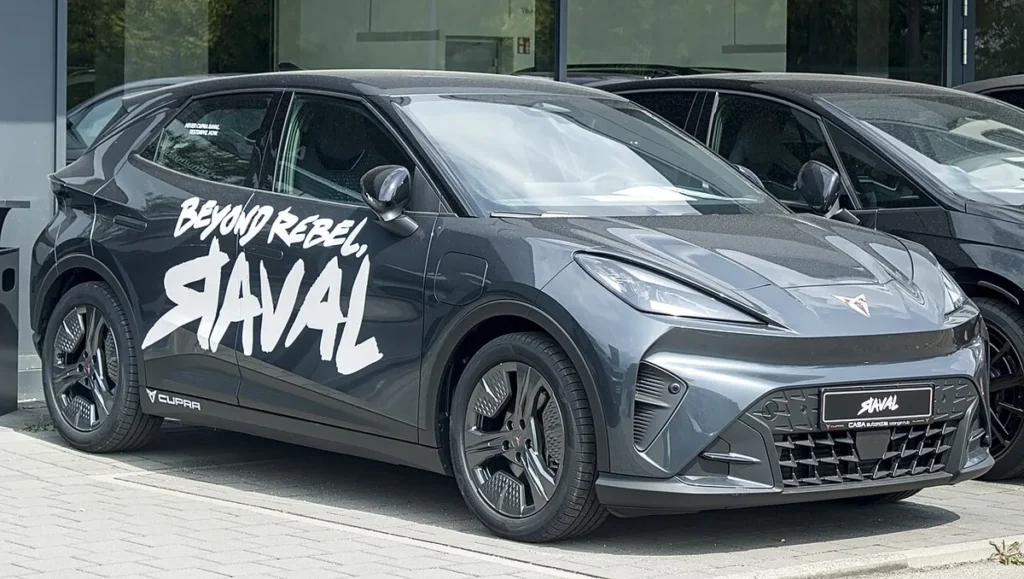
Europe is heading the other way, and Spain is where you can see it. Since June 2026, Volkswagen’s Martorell plant outside Barcelona has been building the ID. Polo and its twin, the Cupra Raval, with a 37 kWh LFP pack in the entry trims and a 52 kWh NMC pack higher up. Same line, two chemistries, two sets of charging rules. Near Zaragoza, CATL and Stellantis broke ground in November 2025 on an LFP cell plant of up to 50 GWh a year, a roughly 4.1 billion euro project scheduled to start up by the end of 2026. America’s LFP share is shrinking. Europe is about to make the cells itself.
And LFP makers now tell you to do exactly what you were taught never to do.
Tesla, for LFP-equipped vehicles, recommends keeping the charge limit at 100% even for daily use and charging to 100% at least once a week. Ford tells Mustang Mach-E Standard Range owners with LFP to set the maximum charge level to 100% and charge to 100% at least once a month. GM, as you’ve seen, says the same for the Bolt. Mercedes-Benz, with the CLA 200 EQ, the first electric CLA with LFP cells, displays a message when the battery needs calibrating and asks for a 100% charge limit to do it.

If you own one of these cars and cap it at 80% because a podcast clip told you to, you’re overruling the people who built your battery.
Why LFP wants 100%
If full charges are supposed to be bad for batteries, why are automakers asking for them every week? Is LFP immune?
No.
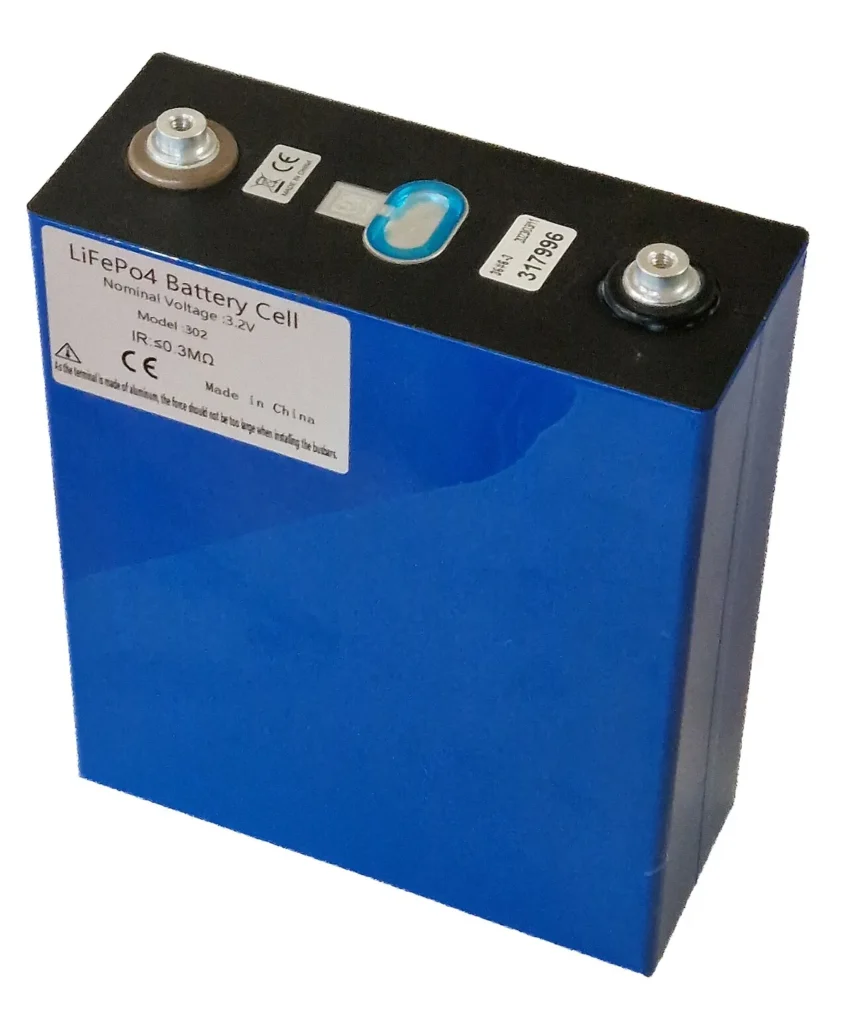
The Journal of The Electrochemical Society published a study in 2024 co-authored by Jeff Dahn, the battery researcher whose lab is funded by Tesla. It cycled LFP/graphite cells in five state-of-charge windows: 0–25%, 0–60%, 0–80%, 0–100% and 75–100%. The finding was direct: cycling near the top of charge, 75–100%, is detrimental to these cells. The lower the average state of charge, the longer they last. The authors also admit that living only in the bottom quarter isn’t realistic, because you’d be wasting most of the pack.
So why do Tesla, Ford, GM and Mercedes want you at 100%?
The voltage curve. In a nickel battery, voltage climbs clearly as the cells fill, so the battery management system, the BMS, the same brain that runs battery thermal management, can estimate state of charge with good accuracy. In LFP, the curve is very flat; between roughly 20 and 80%, voltage barely moves. The BMS loses its reference and the estimate drifts. A solid reference shows up when the pack reaches the top.
GM spells it out in its TechLink bulletin for the 2027 Bolt: because of LFP’s flat voltage curve, the BMS needs to regularly reach 100% and Charge Complete status to learn and accurately maintain state of charge. Skip it, and you can get symptoms like inaccurate charge-time estimates or a gauge that jumps to 100%. Ford warns that without a full charge at least monthly, owners may see variation in their estimated range. Mercedes says an uncalibrated car gets conservative with displayed range and charging power. Tesla adds a second reason: when it introduced LFP Model 3s in China, its customer support said a weekly full charge helps balance voltage across the pack and keeps the remaining-range estimate accurate over time.
The chemistry would rather not live at the top. Your automaker asks you to go there anyway, to balance the cells and to keep the car from lying to you about how many miles are left. Our read at NEB: between a battery that ages a bit faster and a customer stranded on the shoulder with a percentage that wasn’t real, the automakers picked the first.
The research saying top-of-charge cycling hurts LFP comes from a Tesla-funded lab. Tesla’s own manual tells those same LFP cars to hit 100% every week.
Apple plays the same game in your pocket. iPhone 15 models offer an 80% charging limit. Apple says that even with the limit on, the phone will occasionally charge to 100% to keep its state-of-charge estimate accurate.
What tens of thousands of real cars say
Telematics company Geotab published its third major battery-health study in January 2026, covering 22,700 vehicles across 21 models. Average degradation came in at 2.3% a year. At that pace, Geotab projects the average battery would keep about 81.6% of its capacity after eight years. That’s a projection, not a measurement of eight-year-old cars.
The biggest factor was charging power. Vehicles that leaned heavily on DC fast chargers above 100 kW averaged 3.0% degradation a year, roughly double the 1.5% of vehicles that mostly charged on AC or at lower power. And the 20–80 gospel? Geotab says that for most EV use there’s no need to worry about avoiding full charges or running low. Extremes only showed up as a problem when they were habitual: cars spending most of their time near full or near empty.
Recurrent, which tracks battery health on used EVs, looked at more than 12,500 Teslas in the U.S. in 2023 and found no statistically significant difference in range degradation between cars that fast-charged almost all the time and cars that rarely did. Its read: good thermal and battery management protects the cells. Recurrent still advises against fast charging in extreme heat, recommends preconditioning in the cold, and suggests avoiding fast charging at very high or very low states of charge.
Geotab looks at a mixed fleet. Recurrent looked at Teslas. Both agree that batteries wear slowly, and that heat, charging power and long-term habits matter far more than the Tuesday you went to 95%.
A Stanford team published a study in Nature Energy in December 2024 comparing cells cycled with steady, constant-current discharge, the way labs traditionally test them, against cells run on real-world driving profiles with acceleration, braking and rest. The real-world cells lasted up to 38% more cycles. Senior author Simona Onori put it bluntly: we’ve not been testing EV batteries the right way. Driving like a normal human isn’t killing your pack.
Your 100% has a cushion
The 100% on your dash is rarely 100% of what the cells can physically hold. Automakers keep buffers at the top and bottom. Recurrent estimates usable capacity typically sits between 95 and 99% of the total. Published examples: the Porsche Taycan with Performance Battery Plus lists 105 kWh gross and 97 kWh net; the Audi Q6 Sportback e-tron performance, 100 gross and 94.9 net.
That cushion doesn’t make a nickel pack happy sitting full for days. Hudson Zanin, a professor at Brazil’s University of Campinas, told the outlet Canal VE this month that the worst case is leaving the car parked for days at 100% under strong sun. Geotab’s data points the same way. For long-term storage, Tesla’s guidance is to leave the car around 50%.
What to do with your car
Find out what battery you have. On a Tesla, per its manual, if the charge limit setting shows 50% and 100% instead of Daily and Trip, it’s LFP. On a Mach-E, Ford says that if the eighth character of the VIN is a 4 or a 5, it’s LFP. On anything else, check the manual or the spec sheet.
Nickel (NMC or NCA): daily limit between 80 and 90%, whatever your automaker specifies. Save 100% for trips.
LFP: do what the manufacturer says. If it asks for 100% weekly or monthly, do it. Cell balancing and an accurate range estimate depend on it.
DC fast charging on a trip: use 80% as a reference, not a rule. If your car’s trip planner is good, follow it. That was Musk’s actual advice.
Daily driving: don’t wait for 10% to plug in. Charge often, at home, on Level 2. And after every over-the-air update, check that your charge limit is still where you left it.
Never let it hit 0%. If it’s going to sit for weeks, remember it loses charge while parked.
Watch the heat. A full battery parked for days in the sun is the worst-case scenario.
Read the glovebox
The 80% rule has become the EV owner’s superstition. People repeat it without a date, without context and without knowing what chemistry is under the floor. Musk was talking about road trips and said no when asked about daily driving. Nissan deleted its 80% button more than a decade ago. Tesla, Ford, GM and Mercedes tell their LFP owners to go to 100%. The Bolt, cheaper than the Equinox EV and the Blazer EV, gets more everyday range than both precisely because it ignores the rule.
EV ownership has no shortage of short-video gurus. Owners who’ve actually opened the glovebox are rarer. The LFP driver capping at 80% out of fear is leaving range on the table every day, range they paid for and their automaker wants them to use. The driver running to 10% every week because a clip said so is going against their own manual. Both think they’re babying the battery.
The Bolt and the Equinox EV sit on the same lot with opposite numbers on the slider. The answer for yours isn’t in a 30-second clip. It’s in the glovebox.
Unplug and enjoy.
Images: TaurusEmerald (CC BY-SA 4.0) · Steve Lyon (CC BY-SA 2.0) · DontCallMeLateForDinner (CC BY-SA 4.0) · Alexander Migl (CC BY-SA 4.0) · Aeroid (CC BY-SA 4.0) · Charles, Flickr (CC0), via Wikimedia Commons