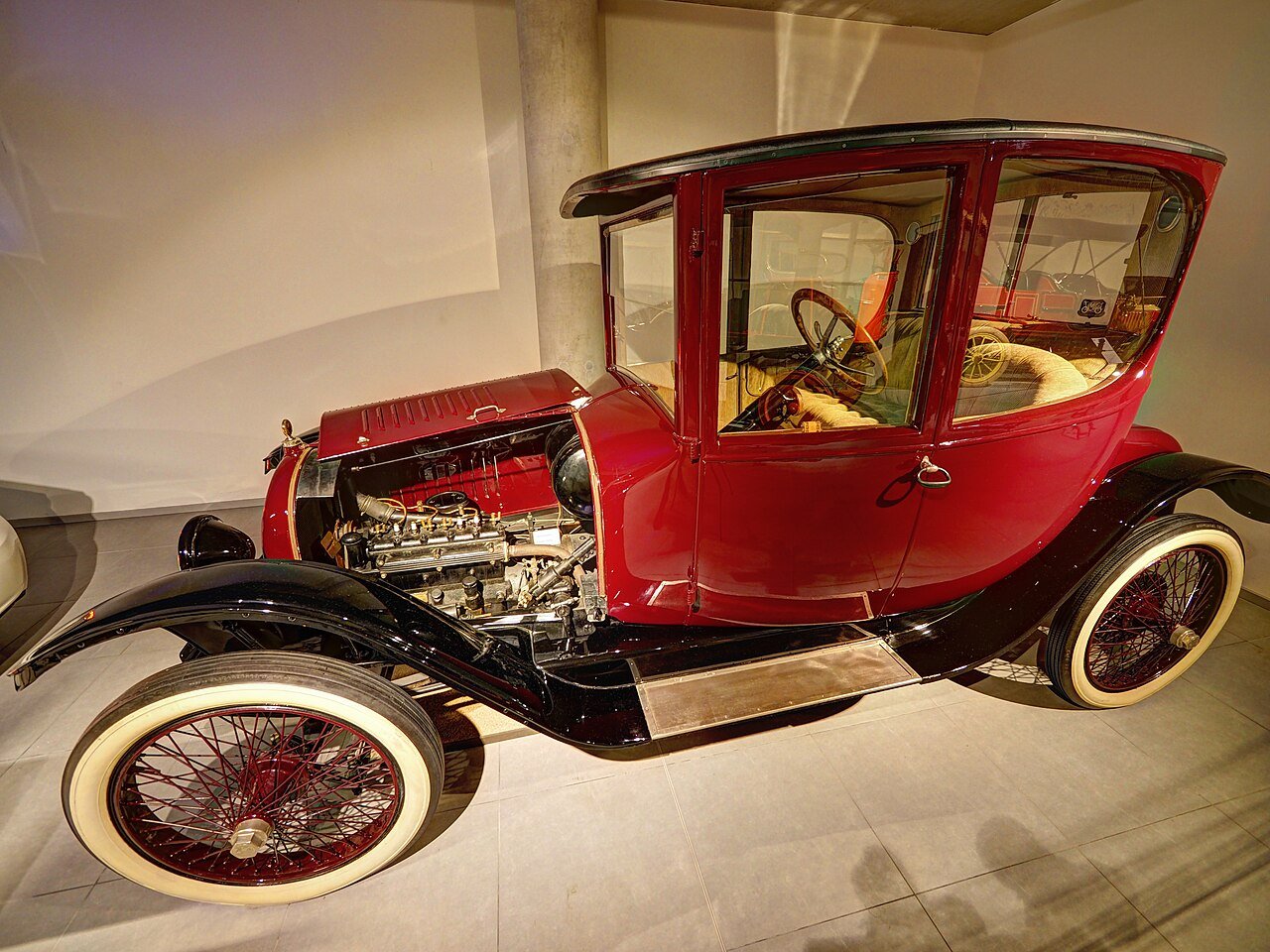
Woods Dual Power: The Chicago Hybrid That Hung in Henry Ford’s Museum
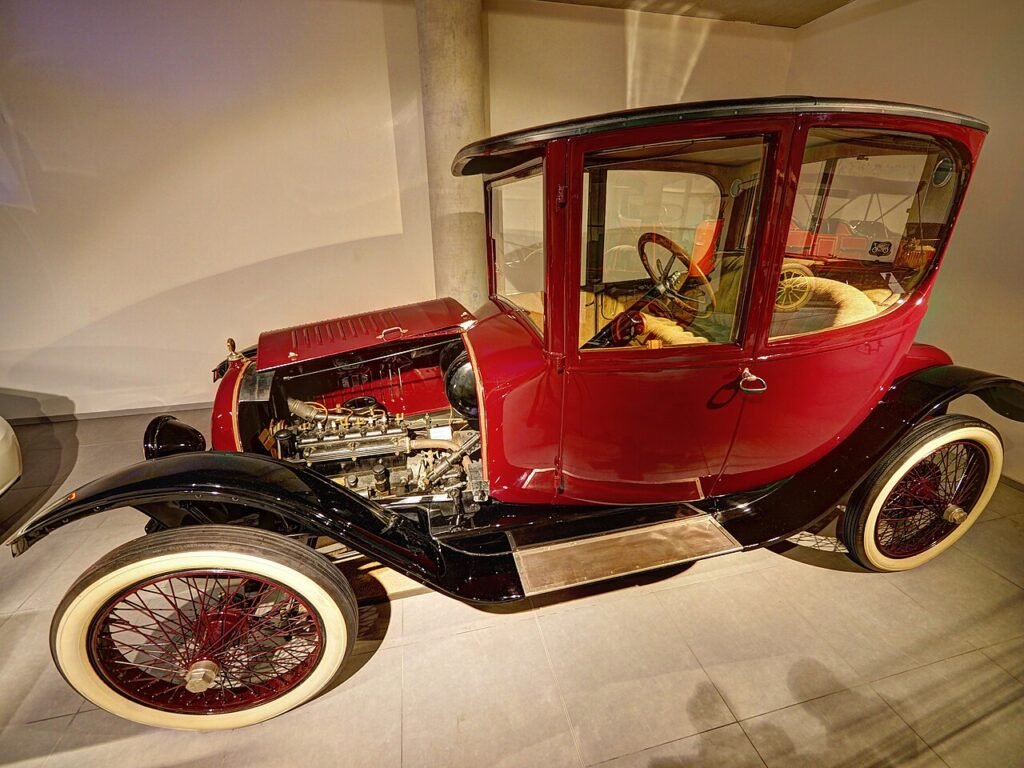
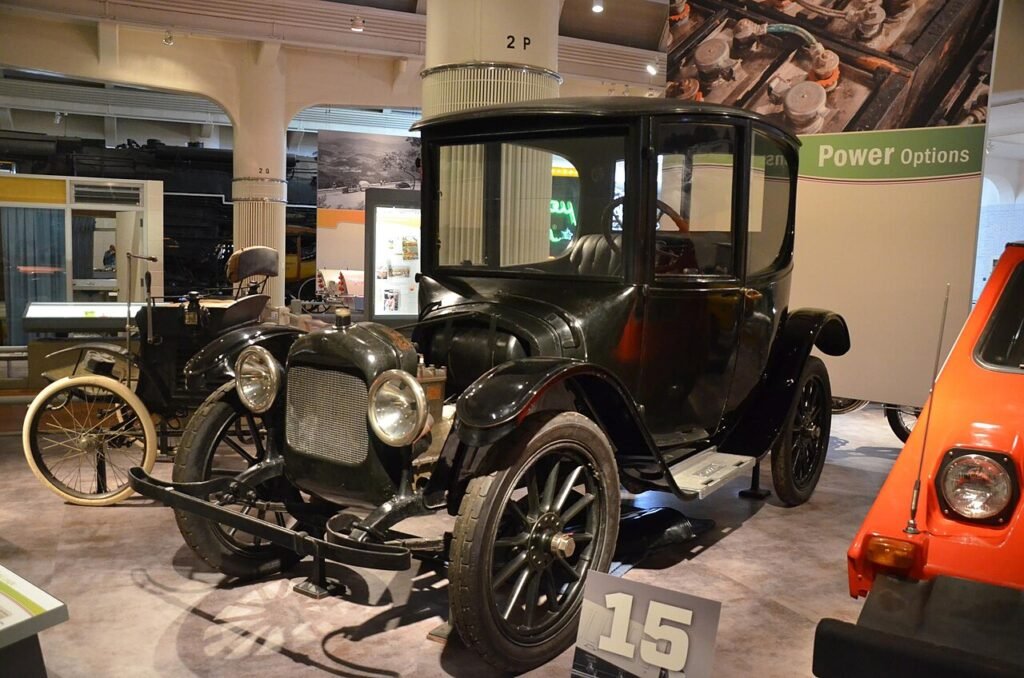
Henry Ford’s own museum in Dearborn keeps a hybrid on its floor. It sits in the Driving America exhibit, a gift from Adin P. Rawnsley, object number 28.436.1. The museum’s label doesn’t flatter it. The car “supposedly combined the best of both” gasoline and electric power, customers rejected the idea, and the company folded by 1918.
The car is a 1916 Woods Dual Power, built in Chicago. It cost $2,650, which the museum converts into about three years and nine months of average 1916 pay, with annual wages at $708. And its patent was granted on May 20, 1919, to a company that had already shut down.
That’s a hell of a plot for a car most Americans have never heard of.
Chicago against the machine
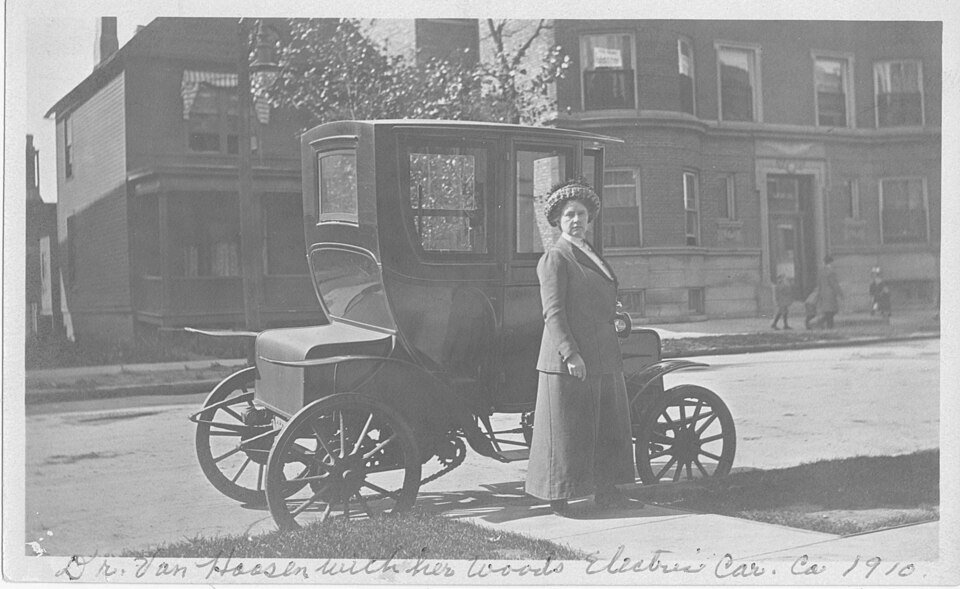
Woods Motor Vehicle Company built electric cars in Chicago. Wikipedia dates its start to 1899. Its namesake, Clinton Edgar Woods (1863 to 1927), published The Electric Automobile: Its Construction, Care and Operation in 1900, which Wikipedia calls the first book on electric vehicles. I’d put it as one of the first complete manuals on the electric automobile and leave the bibliography question open. Mind the name, too: Wikipedia says Clinton and at least one source writes Clifton.
Twelve years before the Dual Power, the company’s 1904 Victoria sold for $1,900, topped out at 18 mph (29 km/h) and ran 25 miles (40 km) per charge, weighing 2,700 pounds, according to Wikipedia. That was the electric car as the industry knew it. By 1916 the electric side of the market had shrunk, and Woods bet on a coupe that could use both a motor and a gas engine.
Who ate it alive? TTAC’s answer: mass-produced gasoline cars from Ford and General Motors. The Henry Ford Museum doesn’t name names, it just says the buyers said no. I haven’t found a document that gives one single cause, and I won’t invent one. The facts that survive are a high price, a system that took explaining, and a competitor that built cars at industrial scale. The late patent didn’t cause the closure; it’s an administrative footnote that makes a great story.
What was under the hood
The drivetrain is the best part of the story. At speeds below about 15 mph (24 km/h) the electric side pulled the car. Above that, an electromagnetic clutch connected the gasoline engine to the electric assembly, so the engine could drive the car through the shaft of the motor-generator and, depending on the moment, both contributed. The car could charge its batteries while running on gasoline. Top speed was about 35 mph, 56 km/h, versus about 20 mph for a typical electric of the time, per TTAC.
Per Hagerty and TTAC, the pieces were a Continental four-cylinder L-head, 68.7 cubic inches (1,125 cc), 14 horsepower. A General Electric motor-generator, 48 volts and 60 amps, around 5 to 6 horsepower. An Exide lead-acid battery, 24 cells, 115 amp-hours at the five-hour rate. And a Cutler-Hammer electromagnetic clutch. Work out 48 volts times 115 amp-hours and you get 5.52 kWh nominal, with less than that actually usable because of variable voltage, losses and the discharge limits of lead-acid. The math is mine.
The dashboard, TTAC says, carried a Stewart-Warner magnetic speedometer and a combined ammeter and charge indicator. Mac’s Motor City Garage adds that the electric mode ran silent and smooth at low speed, which the company sold to women buyers. For 1918 the engine grew to 95 cubic inches, and the price went to $2,950. Mac’s Motor City Garage sizes the original price as about two Buicks, which tells you what Woods was asking buyers to accept: a more complex, pricier car, in a year when the electric side of the market was already shrinking.
Put the two Woods price tags side by side: $1,900 for the 1904 Victoria and $2,650 for the 1916 Dual Power, a 39 percent jump over twelve years, though they were very different cars. Hagerty converts the 1916 price to roughly $66,000 in 2021 dollars, and TTAC says that in 1916 you could buy almost four Ford Model Ts for the price of one Woods Dual Power. That makes the sales numbers a lot less of a mystery.
The Henry Ford Museum gives a 110-inch wheelbase (2.79 m), a 160-inch length (4.06 m), and 3,000 pounds, about 1,360 kg. Hagerty says 3,600 pounds, about 1,630 kg. The sources put it between 3,000 and 3,600 pounds, and I can’t tell if that’s the version or the way it was weighed.
The man behind the drivetrain
The drivetrain came from Roland S. Fend, not from Clinton Woods. Woods built and sold it, but he wasn’t the direct inventor of the architecture. Patent US 1,303,870, titled “Automobile,” was filed June 26, 1915, by Roland S. Fend and granted May 20, 1919, with Woods Motor Vehicle Company of Chicago as assignee. TTAC calls the drivetrain Fend’s brainchild and describes him as an acknowledged expert on electric vehicles who consulted for early makers. PopSci and others credit Woods directly.
Fend’s own description of what he was after is plain: a car with a gasoline engine and an assisting electric dynamo, where the relative speeds of the two could be adjusted to put any proportion of the load on either. His control system took two levers, one for the throttle and one for a rheostat.
Why build it that way? The patent spells out the reasoning. A pure electric needs big, heavy storage batteries and a stout frame to carry them. A gasoline car needs an oversized engine for acceleration and hill climbing, although it runs most efficiently at steady speeds. Fend’s answer was a smaller dynamo than a traditional electric motor, plus a gasoline engine of about the size of a normal car’s, which in his words cuts battery weight and complexity. He also wrote about battery life: keep the electrolyte density between 1200 and 1250, with only occasional overcharges. A 1915 patent worrying about battery longevity. Hold that thought for any EV forum thread you’ve read this year.
This is also where I stopped trusting the dates. Wikipedia puts the Dual Power Model 44 at 1911 to 1918. The Henry Ford Museum and TTAC say 1916. A patent filed in 1915 for a car sold in 1911 looks wrong, though it isn’t proof, since a patent can protect a later improvement. My read: the Dual Power reached the market in 1916, with some sources lumping the Model 44 into a 1911 to 1918 run and others calling it a 1917 model.
What the brochure said and the patent didn’t
Hagerty and TTAC quote the sales brochure: “a self-charging, non-stalling, two-power car with unlimited mileage.” They also describe what the brochure called “dynamic braking,” working above about 6 mph, roughly 10 km/h. The driver returned the electric control lever to its starting position, the motor shifted to generating, and the car slowed.
I read through the text of the patent and found no such terminology. It does describe the dynamo running as a generator to charge the battery, and a brake lever tied to the armature circuit, closed when the lever is in its non-braking position. So energy recovery looks like part of the system, but the modern label “regenerative braking” shouldn’t be moved onto the 1915 document without a caveat. The brochure says it, and the patent doesn’t use those words.
And another odd one, and this one is no footnote. Hagerty, TTAC and Mac’s Motor City Garage describe the production car as having no conventional gearbox, just the electromagnetic clutch tying the two motors together. The 1915 patent describes a more complex layout: a cone clutch, a gear change, and a second gear change between the dynamo and the axle. It may be the gap between the patented design and the production car, but the public record I could read doesn’t settle it, and I have no basis to say the car as built carried everything in the document.
Not the first, not even the first in America
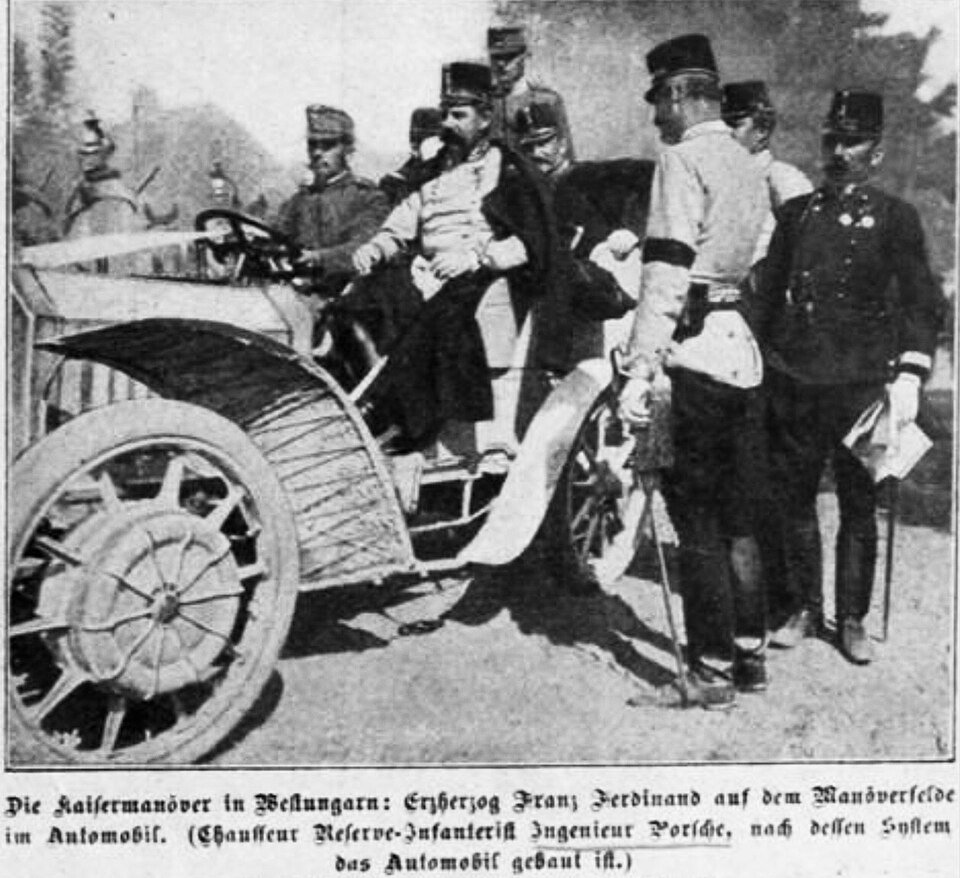
The Lohner-Porsche came first by a long way. Ferdinand Porsche built it in Vienna in 1898, according to The Drive, and it was shown at the 1900 World’s Fair in Paris and, in Mixte form, at the 1901 Paris Salon. It was in the catalog through 1915 under Austro-Daimler, from 14,400 to 34,028 Austrian kronen.
Porsche called it Semper Vivus, “forever alive,” per The Drive. The idea: two small gasoline engines drove a generator, and the generator fed the electric motors that moved the front wheels, which cured the range limits of a pure electric. Not many sold, but Emil Jellinek ordered five of the 1902 models for resale, and Porsche’s newsroom says roughly 300 vehicles were built using the Lohner-Porsche system overall, including 40 models for the Vienna fire brigade.
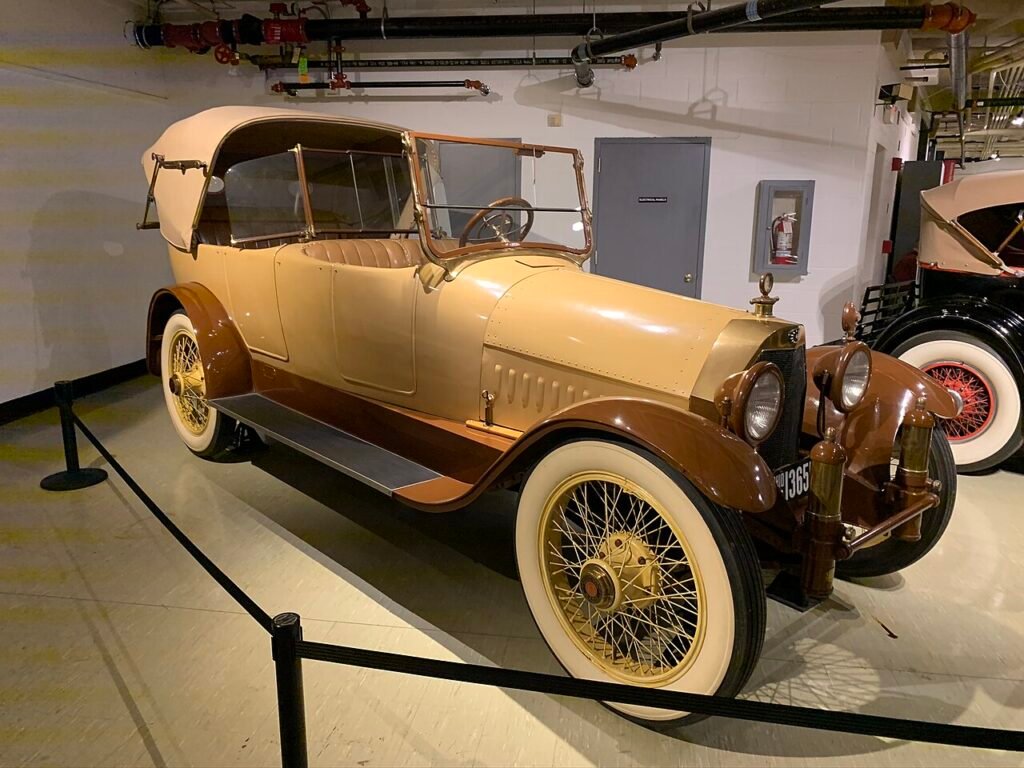
The Owen Magnetic got there on American soil a year ahead of Woods, though its architecture wasn’t the same as the Woods’s: an electromagnetic transmission, not a parallel hybrid. It was a 1915 New York car with a magnetic clutch and an electric motor between engine and wheels, no clutch pedal and no gear shifting, per the Henry Ford Museum. The company went into receivership in 1920, and the museum points to the system’s complexity driving up costs.
Spain has a claim too, and it’s messier. In Barcelona, La Cuadra, the country’s first car factory, built an electric omnibus in 1900 for the Hotel Oriente. Some Spanish accounts say the offer included a gasoline engine with a dynamo to stretch the range, others describe a generator set to recharge the batteries on the move, and none of that is nailed down. The press is. On the afternoon of December 5, 1900, the bus ran two laps of Barcelona’s ring roads and down the Ramblas with 16 passengers and 400 kilos of luggage, at an average 22 km/h, and La Dinastía wrote the next day that the tests “could not have turned out more satisfactorily.” The company stopped building cars in 1901. Its remains became Hispano-Suiza, and the project chief named in that 1900 report was Marc Birkigt. Neither The Drive nor Hagerty mentions it.
Why gasoline won, according to people who’ve thought about it
PopSci states it flat out: the world didn’t abandon electric cars because they were unreliable or badly engineered, it abandoned them because gasoline solved immediate problems that electricity couldn’t, chiefly speed, range and fuel distribution. Gasoline could move in barrels, while electricity stayed limited outside cities until the 1930s. That’s PopSci’s reading and I pass it on as such.
PopSci also reports that Henry Ford and Thomas Edison announced in 1914 plans for an affordable electric car for 1915, with Edsel Ford overseeing production, and that the project never materialized. The article says there is speculation, unproven, that oil magnates talked Ford out of it. I mention it because it’s the backdrop for a $2,650 hybrid coming out of Chicago in 1916: the biggest name in cheap cars had floated an electric, and nothing came of it.
The Henry Ford collection’s own entry for the 1916 Woods catalog is shorter and harsher. Batteries and gasoline powered the vehicle, the maker hoped to draw buyers with the best of both power sources, and the entry’s verdict: “It didn’t work. The company failed a few years later.”
How many survive
The plan was 650 to 750 Dual Powers a year, per TTAC. Far fewer got built. Hagerty says the company sold “just a handful.” I found no firm number of Dual Power units and I won’t guess one. The company as a whole built about 13,500 vehicles over two decades per TTAC, and fewer than 14,000 per Hagerty.
The count of survivors changes by source. The Howard conservation lab says four are known. Hagerty says four, maybe five. TTAC says three and a half, and its half is a partial car on a Stanley Steamer chassis. Beyond the Dearborn car, a 1917 coupe was conserved by B.R. Howard for the Natural History Museum of Los Angeles County, whose paint analysis found a medium green under a later yellow ochre repaint. Hagerty and TTAC both describe the car at the Louwman Museum in the Netherlands as operational. For scale, Japan’s electric Tama built 1,099 cars between 1947 and 1951.
My take
Dearborn has the answer in plain sight. A hybrid that was clever, patented, and hidden in a brochure’s promises lost to the guys who built cheap cars by the hundreds of thousands. I can’t prove that last part, and TTAC says it for me.
What I can say is that the car worked and one still drives. Hagerty’s headline got the balance right: it wasn’t the first hybrid, but it was an electrically assisted marvel, and a marvel with that price tag was always going to sell in a handful. A modern hybrid doesn’t invent the system. It makes it cheap and puts it in a car the shop on the corner can fix. The Woods never got there.
Next time somebody tells you hybrids are a new idea, ask them where they think this one was built. Chicago, 1916. Why does every generation have to learn this again?
Unplug and enjoy.
Images: Alf van Beem / Wikimedia Commons, CC0 · Joe Ross / Wikimedia Commons, CC BY-SA 2.0 · Rochester Hills Museum / Wikimedia Commons, public domain · Das interessante Blatt, Sept. 25, 1902 / Wikimedia Commons, public domain · Akrasia25 / Wikimedia Commons, CC BY-SA 4.0.