Toyota Prius: the market proved it right
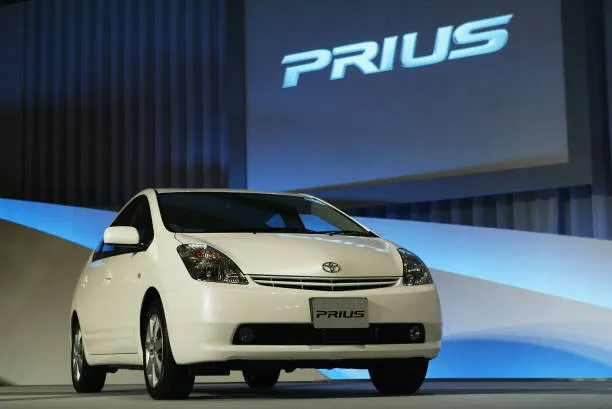
For twenty-five years, the car world treated the Toyota Prius as the class clown. The car for the smug, the eco in-law, the cab driver, the person who feels nothing behind the wheel. It was sneered at, caricatured, and even accused — via a rigged study — of polluting more than a Hummer. And while everyone laughed, the Prius did something none of the cars they think are cool ever managed: it changed the entire industry and gave Toyota the scale, experience and prestige it built everything else on.
Here’s the truth enthusiasts choke on. The Prius is probably the most important car of its generation. And it wasn’t even the first hybrid. Let’s tell it straight, with the credit and the knife where each belongs.
What it actually was (and wasn’t)
Start with the nuance almost nobody gets right. The Prius didn’t invent the hybrid. The first functional hybrid in history was built by Ferdinand Porsche in 1900 — the Semper Vivus, an electric car with a gasoline engine acting as a generator. What the Prius did, nearly a century later, was something just as decisive: it was the world’s first mass-produced gasoline-electric hybrid. The gap between “inventing something” and “getting it to sell by the millions” is the only gap that matters.
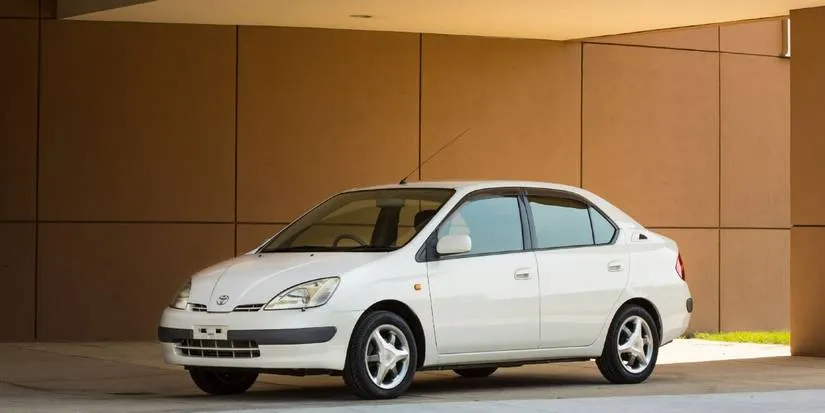
The first Prius, the NHW10, reached the Japanese market in late 1997 — Toyota usually dates it to October — just before the Kyoto Protocol was adopted that December, and rolled out worldwide in 2000. Behind it was a broad engineering effort, the G21 project, that evaluated around eighty hybrid configurations before settling on the final architecture. The goal was insane for the era: double the efficiency of a normal gasoline car. There was no way to do that with conventional mechanicals, so they went hybrid.
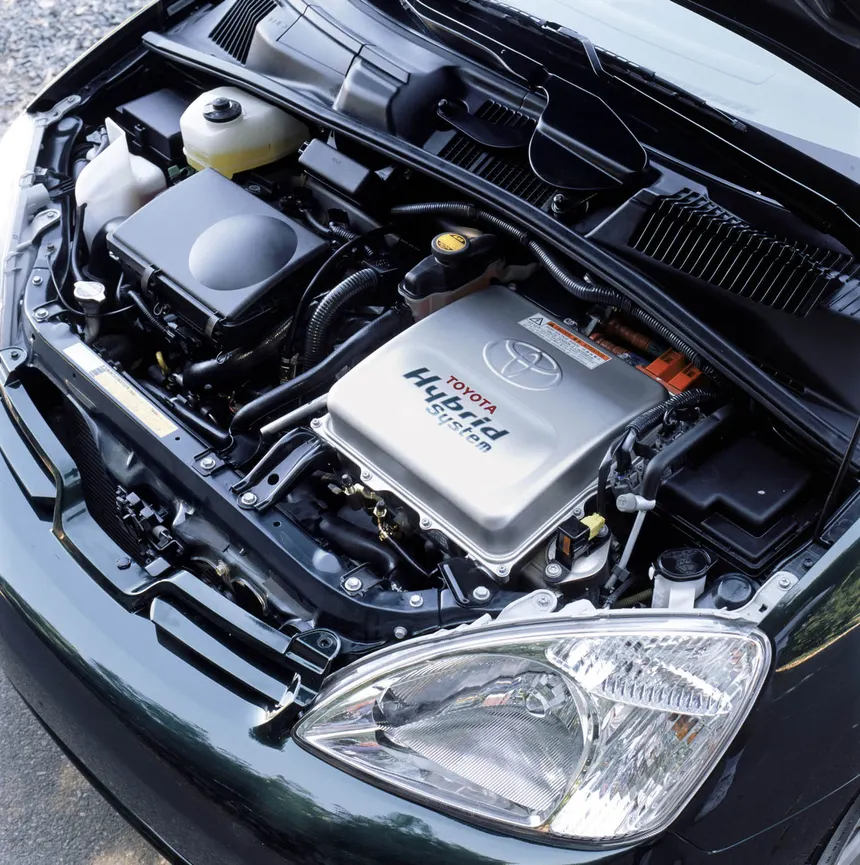
The heart of it was the Toyota Hybrid System, renamed Hybrid Synergy Drive in the second generation (2003): a power-split setup with a gasoline engine, two electric machines — a generator and starter, MG1, and the motor that drives the wheels and recovers braking energy, MG2 — and a nickel-metal hydride battery. Instead of a conventional stepped gearbox, a planetary gearset split the power among the three in real time. It sounds obvious today because the Prius made it obvious. In 1997 it was science from another planet stuffed into a family compact. The first Japanese Prius still relied on the gasoline engine to run the air-conditioning compressor, which could force it to start; the second generation added an electric compressor that could cool with the engine off. But the concept worked, and that was all that mattered.
The American footnote enthusiasts forget
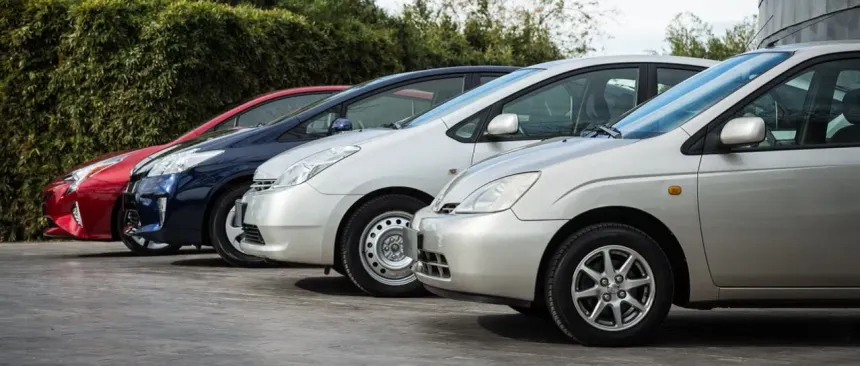
For a US audience, one correction up front: the Prius wasn’t even the first hybrid sold in America. That was the Honda Insight, a two-seat aluminum oddity that landed in late 1999, a year ahead of the Prius. But the Insight was a science project — cramped, impractical, built to win an efficiency number. The Prius, when it arrived stateside in 2000, was the first hybrid an ordinary American family could actually live with: five seats, a real trunk, a normal shape. Honda got there first; Toyota got there right. And that difference — first versus right — is the whole story of why one became a household name and the other a trivia answer. It is, incidentally, the same lesson the Prius itself teaches against Porsche’s 1900 hybrid: being first counts for far less than being the one who makes it stick.
The numbers that shut the mockers up
Anyone still laughing should be shown the scoreboard, because it’s brutal.
Worldwide Prius sales passed one million units in April 2008 and three million by mid-2013. By January 2017, the Prius family — the liftback plus the Prius c/Aqua, the Prius v/α and the plug-in versions — had topped 6.1 million, about 61% of all the hybrids Toyota and Lexus had sold since 1997. The Prius liftback was for years the outright benchmark of its segment and one of the best-selling hybrids in history. In Japan it was Car of the Year in 1997 and sold 3,500 units in its first month.
But the real number isn’t how many it sold — it’s what that volume bought. The Prius made Toyota the world’s reference in hybrid technology and gave it industrial scale, real-world usage data and a tech reputation the brand reused for decades. While enthusiasts mocked it for being slow, Toyota was squeezing that experience and scale to develop technologies that ended up in far more desirable models. Laughing at the Prius while admiring Toyota was laughing at your own grandfather.
The second generation: the icon and the stigma
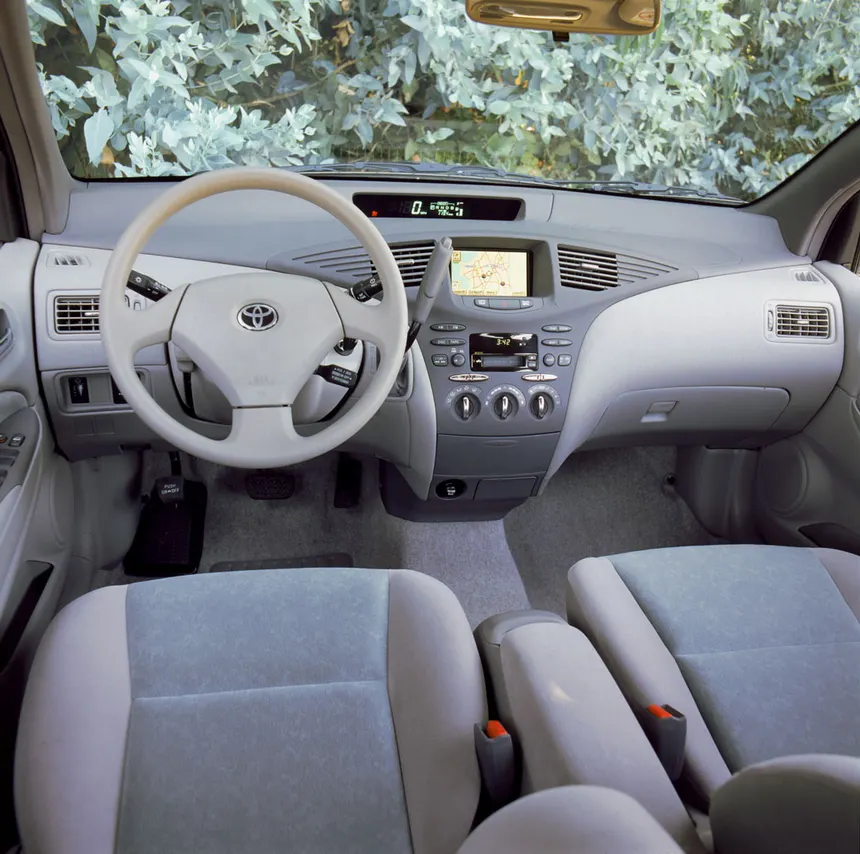
If the first Prius was the proof of concept, the second, launched in 2003, was the cultural phenomenon. That wedge shape, aerodynamic to the point of strange, became the universal silhouette of “the green car.” Taxi fleets, police departments and Hollywood filled up with them. At the mid-2000s Oscars, several stars turned up in a Prius as a statement of principle.
And that’s where the stigma was born too. The Prius stopped being a car and became a symbol, and symbols breed antibodies. The “Prius driver” became a cliché: the moralizer, the one dawdling in the fast lane, the one looking down on you from ecological high ground. Much of the hatred of the Prius was never about the car — it was about what it stood for. But going from that to inventing science to sink it is a leap, and somebody took it.
The “Dust to Dust” hoax: trying to kill it with rigged science
This is the chapter most people have half-heard and almost nobody knows in full.
In 2006 and 2007, an automotive marketing company called CNW Marketing Research published a 450-plus-page report titled “Dust to Dust” that reached a perfect-headline conclusion: building and running a Prius used more energy over its life than a Hummer. The green car, they said, was worse for the planet than the very symbol of excess. The press repeated it on a loop, and the hoax made it as far as prime-time TV.
The problem wasn’t that the report didn’t exist — it was that its assumptions made a fair comparison impossible. They were grotesquely rigged: it assumed a Hummer H1 covered 379,000 miles over a 35-year life, while granting the Prius barely 109,000 miles in under 12 years. With cards marked like that, any result comes out however you want. The Rocky Mountain Institute redid the analysis with Argonne National Laboratory’s GREET model and found that no matter how hard it skewed the numbers toward the Hummer, the Prius still came out far cleaner. The Pacific Institute was blunter: the report rested on faulty methods, untenable assumptions, selective use of data and zero peer review.
Translation: someone manufactured a terrible study to tell the people who already hated the Prius exactly what they wanted to hear. And it worked, because the hatred was already there, waiting for an excuse that looked like science. From the same quarry came the myth linking the Prius’s NiMH batteries to the scarred landscape of Sudbury, Canada, as if the battery had created that damage: the degradation there long predated the Prius, and the real supply chain was far more complex. The Prius was held to a standard of ecological purity no gasoline car was ever asked to meet.
The fair knife: the Prius was dull to drive
That said, NEB doesn’t flatter anyone, the Prius included. And part of the enthusiasts’ complaint was flatly true: as an object to drive, the Prius was an appliance. The early generations’ steering filtered out almost all road feel, and the power-split system — which the driver perceives as an eCVT, though it’s really a planetary gearset — held the engine at a high, steady rpm under hard acceleration, with that monotone drone so many enthusiasts hated. The whole experience was tuned to sip fuel, not to make you smile. Anyone chasing feel behind the wheel had every reason not to want one.
But here’s the logical trap half the industry fell into: confusing “boring to drive” with “irrelevant.” The Prius wasn’t built to thrill. It was built to prove a point and sell it by the millions, and it nailed both. Judging the Prius by how little fun it is is like judging a washing machine by how it tastes: it didn’t fail by not thrilling you, it was competing in a different event.
And there’s a delicious irony buried in that complaint. The hybrid principle the Prius made mainstream — a combustion engine working alongside electric motors, energy recovered under braking, instant electric torque filling the gaps — is exactly the recipe behind the cars enthusiasts genuinely worship. The Ferrari LaFerrari, the McLaren P1 and the Porsche 918 Spyder, the hybrid holy trinity that arrived around 2013 to 2015, are hybrids. Formula 1 went hybrid in 2014 and never looked back. The technology the purists sneered at in a Toyota taxi is the same technology they applaud when it wears a prancing horse. The Prius did the unglamorous work of proving it could be built and sold, and the supercars cashed the check.
The shadow: the success that became a cage
And here comes the read that really sets NEB apart, because it cuts both ways.
The Prius’s success may have become a strategic trap. Toyota had a profitable, reliable, familiar hybrid solution, and that eased the pressure to bet on the pure electric car with the same intensity. While other makers needed a technological breakthrough just to exist, Toyota could keep improving something it already sold by the millions. That same comfort surrounds its two RAV4 EVs, from 1997 and 2012, which stayed short, limited runs with no continuation while the brand kept repeating that the battery wasn’t ready. Winning that hard with one technology convinces you that you can wait on the next.
That’s the nuance almost nobody tells: the Prius isn’t just Toyota’s greatest play, it’s also part of why Toyota showed up late to the next race. The same company that popularized partial electrification ended up defending, with too much confidence, that partial electrification was enough — because its golden goose kept laying.
The verdict
Here’s NEB’s stance, with credit and knife where they belong.
The Prius deserves a respect the car world has spent a quarter-century denying it out of inverted snobbery. It wasn’t the first hybrid, but it was the one that dragged the technology out of the lab and into the real lives of millions. It normalized the idea that a car could burn half as much and still be a real car. It seeded the hybrid hardware now running through the veins of the entire sector, including the hybrid hypercars those same enthusiasts worship. And it survived a smear campaign built on a rigged study that painted it worse than a Hummer. Laughing at the Prius was always easier than understanding it.
But that same victory had a price, and the Prius didn’t pay it — Toyota did. Winning the contest of its era so clearly convinced the brand it didn’t need to play the next one with the same ambition, which is why the company that popularized the mass-market green car ended up trailing in the pure-electric revolution. The Prius lost nothing. It simply won so hard that its maker got comfortable. And by the time the next contest started, the company that had built the future was busy defending the past.
Unplug and enjoy.