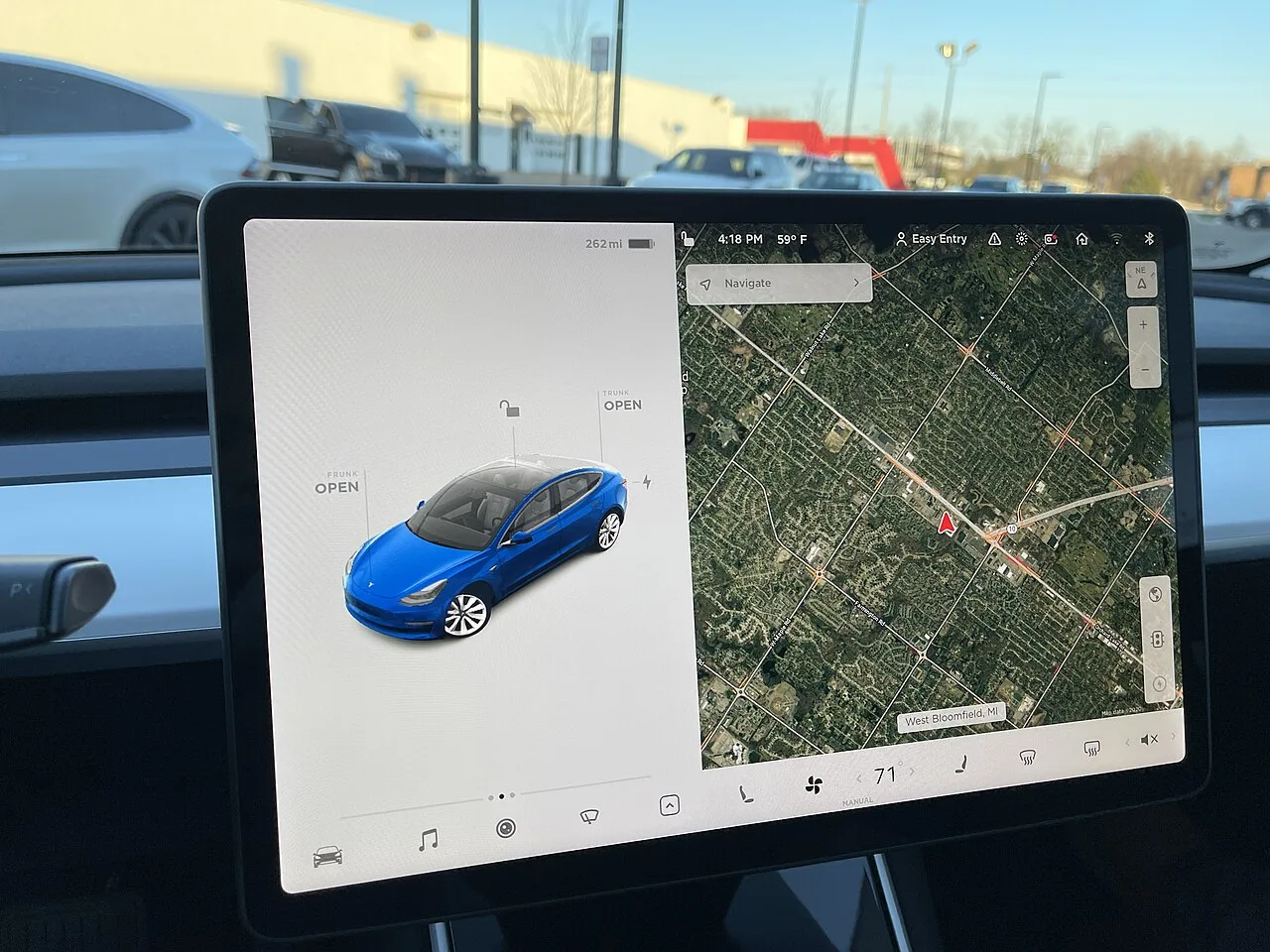
EV over-the-air updates: the battery you own and the battery you’re allowed to use
Your EV carries a battery you paid for and another one you’re not allowed to use. And you don’t hold the key to the difference.
Over on our sister site NEC, we already covered what an automaker can do to your car after it sells it to you: the software-defined car, features behind a subscription, steering wheels no longer mechanically tied to the wheels. Here we get into what that debate means in an electric car. In a gas car, a remote update usually stops at the navigation system or a new menu on the screen. In an EV it can change how far you go, how fast you charge and how much horsepower you have. The battery, the motor and the inverter all answer to code. And that code can be rewritten overnight while the car sits in your garage.
The acronym is OTA, for over the air: updates delivered wirelessly, no service visit required. Let’s look at what they give you, what they take away, and who gets to decide.
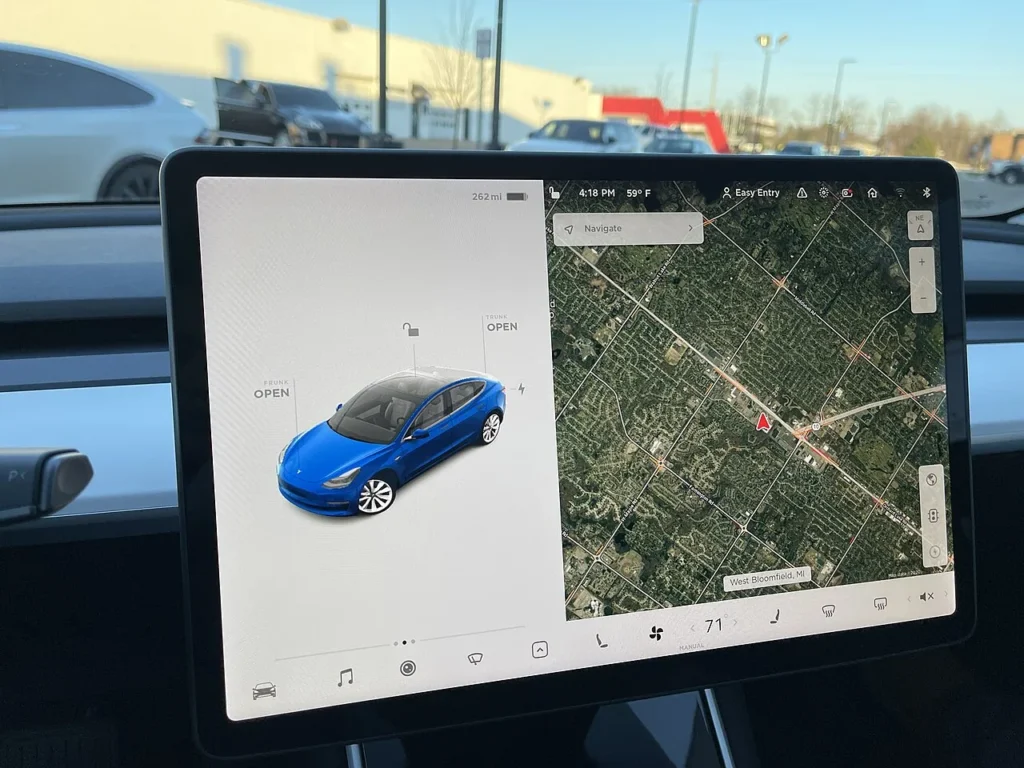
An EV is a computer on wheels, and so is the battery
If you read our piece on thermal management and the BMS, you already know an EV battery isn’t a passive tank. It has its own brain, the battery management system, which decides how much energy goes in, how much comes out, at what temperature, how fast and up to what percentage. The inverter decides how much current reaches the motor. The onboard charger decides how much it takes from the grid.
All of those are limits written in software. And anything written in software can be changed. That opens two roads: the automaker can make your car better years after you bought it, or cut it back with the exact same move. The technology is identical. What changes is who the update is working for.
The battery you weren’t allowed to use: Tesla and Hurricane Irma
In September 2017, with Hurricane Irma bearing down on Florida, some Tesla owners suddenly found their cars had more range.
They were Model S and Model X cars sold as 60 kWh versions. But they had 75 kWh batteries inside. It’s the gap between gross and usable capacity we covered in our EV battery piece, pushed to the limit: here the reserve wasn’t protecting the cells, it was for sale. Tesla built them that way and software-locked part of the capacity; owners who wanted the rest could unlock it for a fee, an upgrade that could run several thousand dollars. To help owners get out of the storm’s path, Tesla remotely and temporarily unlocked the full pack on cars in the area: an extra 30 to 40 miles. Tesla confirmed it to Electrek, which broke the story.
It was reported as a goodwill gesture, and it was one. But what it revealed was much bigger. There were cars on the road carrying 15 kWh of battery their owners had paid for along with the car, hauled around every day and couldn’t use, because a line of code said no. When it mattered, the company opened the valve from California. When the emergency passed, it closed it again.
That’s the core of this whole piece. Your battery’s capacity is no longer what’s physically inside the car. It’s what the automaker decides you get to use.
The update that takes miles away
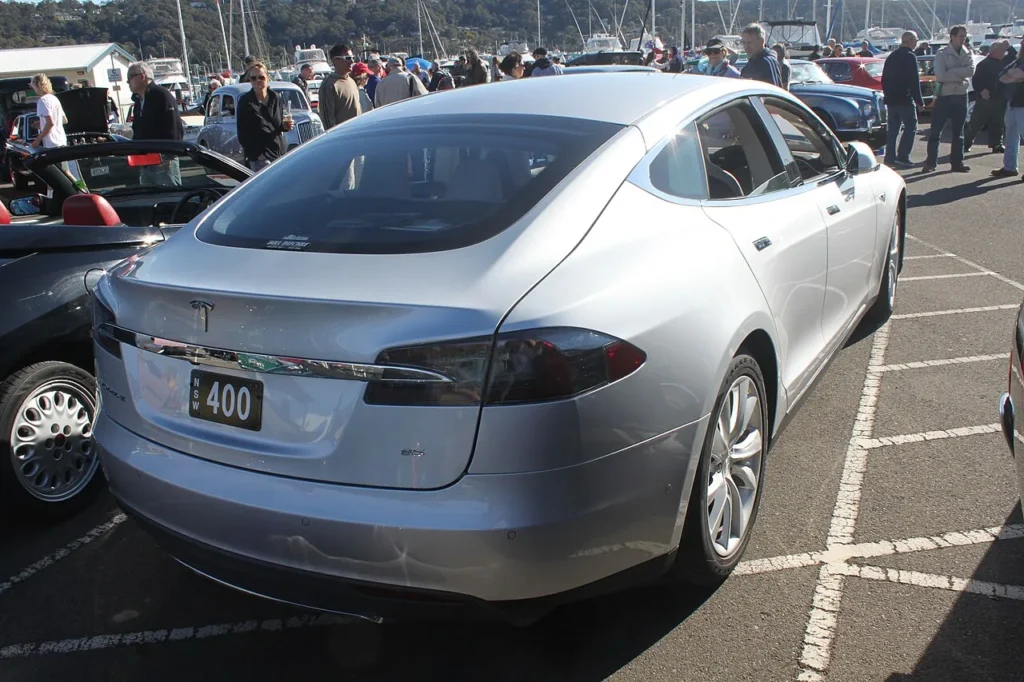
If an OTA can hand you range, it can also take it back. And it already has.
In May 2019, shortly after a Model S caught fire in Hong Kong, Tesla pushed an update to Model S and Model X cars with 85 kWh packs, a battery it had stopped making in 2016. The company said it was revising charge and thermal settings to “help further protect the battery and improve battery longevity.” Owners noticed something else: less range and slower Supercharging. One owner watched his rated range fall from 247 to 217 miles, an 11 percent drop in five weeks.
Owner David Rasmussen took it to court in August 2019. In March 2020, Tesla released an update restoring maximum battery voltage. The case ended in a $1.5 million settlement, attorneys’ fees included, covering 1,743 Model S owners, most of whom were set to receive $625 each.
Norway went further. In May 2021, a Norwegian court sided with 30 owners who said a Tesla update had throttled their charging speed and battery capacity, awarding 136,000 kroner each, about $16,000. Tesla didn’t respond to the suit, so the owners won by default unless the company appealed. Electrek estimated at the time that more than 10,000 owners could be affected in Norway alone.
Did Tesla have technical reasons to protect aging batteries? Possibly. Batteries age, and the Nissan Leaf proved it the hard way. Those 85 kWh packs were years old and the Hong Kong fire was real. But the issue isn’t whether the call was technical. The issue is that people paid for a car with a certain range and charging speed, and woke up one day with different ones. No shop visit. No signature.
When software covers for a hardware problem
There’s another use of OTA nobody talks about much: putting a software patch on a physical problem.
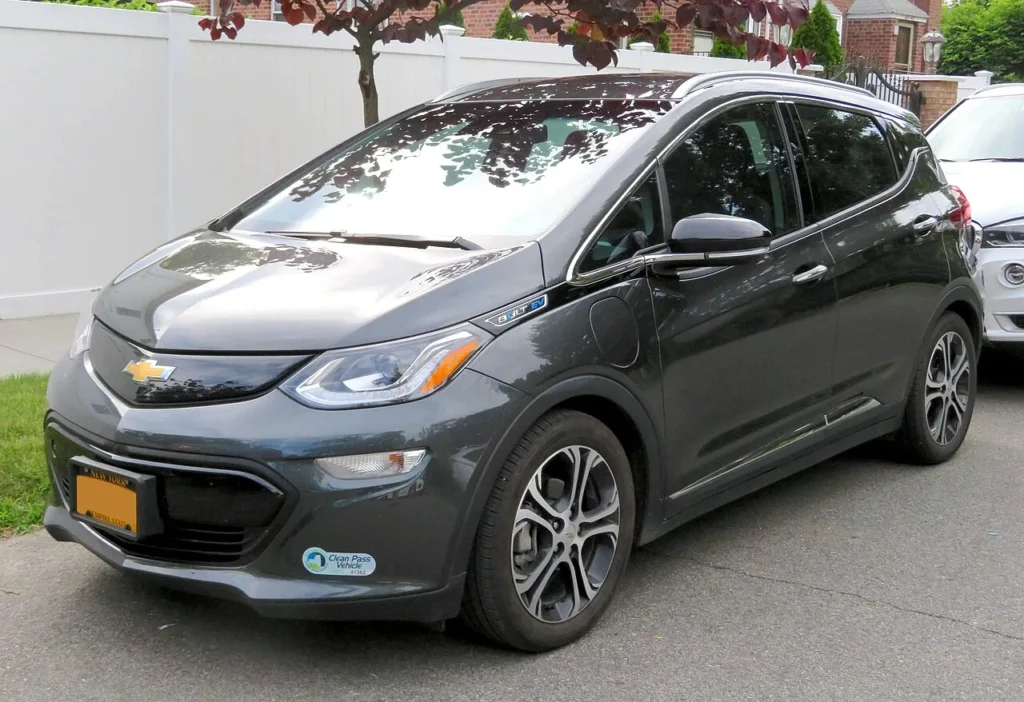
The biggest case is the Chevrolet Bolt. In 2021, GM recalled every Bolt EV and Bolt EUV ever built, more than 140,000 vehicles, over a fire risk in batteries made by LG. The real fix was replacing battery modules, because two manufacturing defects could cause a fire. The recall was estimated at around $2 billion, with LG Energy covering most of it.
While new batteries were on the way, GM announced in November 2021 a free software update that capped charging at 80 percent and added diagnostic tools able to detect specific battery abnormalities. In exchange, it lifted earlier restrictions: owners could go back to charging overnight indoors, parking inside and running below 70 miles of remaining range. One telling detail: even though it was pitched as an update, owners had to go to a dealer to get it.
Software did a good job here. It cut the risk while the hardware got fixed. But look at what owners paid for it: a car that suddenly used 80 percent of the battery they’d bought. Software doesn’t fix a bad cell. It hides it behind a limit.
Made in Spain: the plug-in you weren’t allowed to plug in
The clearest European example of software playing firefighter comes out of Almussafes, near Valencia, in Spain. That’s where Ford builds the Kuga plug-in hybrid, the European sibling of the Escape plug-in hybrid American buyers know. It isn’t a full EV, but its battery answers to the same kind of code.
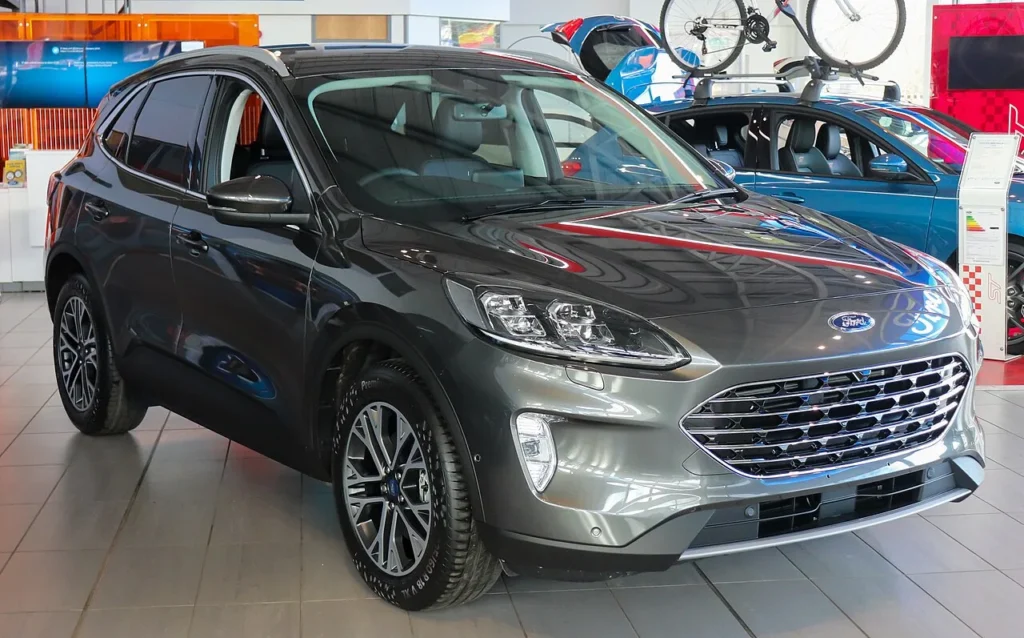
In August 2020, Ford stopped sales and recalled about 27,000 Kuga PHEVs in Europe after several fires. The root cause was contamination in the supplier’s cell production process, and the fix was a full battery pack replacement. Until the new packs arrived, owners were told the most absurd thing you can tell someone who bought a plug-in: don’t plug it in.
It happened again in 2025. About 26,000 Kuga PHEVs built between 2019 and 2025 were recalled in Europe over a manufacturing defect that lets the cells’ internal separator wear down with repeated charge cycles and can cause a short circuit. Same order: don’t charge, drive only in EV Auto mode. In March 2025, Ford extended the high-voltage warranty in Europe to ten years or 240,000 km, about 149,000 miles. And the announced remedy was software: giving the Battery Energy Control Module the ability to spot the cell anomalies that signal separator damage before the battery vents. If it finds one, the dealer replaces the pack.
The follow-up campaign, 25SC4, says even more. It’s software only, it keeps the original cells, and it caps how much of the 14.4 kWh battery the car can use. Ford’s own letter to owners estimates a 12 percent average loss of electric range. Owners who logged the energy going in through their wallbox before and after the update report 20 percent, some 30; those are forum logs, not independent tests. And just like the Bolt, it’s installed at the dealer, not over the air.
Follow the sequence. The owner paid for a plug-in for its electric miles. First they were told not to plug it in. Then they got the plug back in exchange for a smaller battery than the one they bought.
Horsepower for a fee
If an automaker can limit your battery for safety, it can limit your motor for business. And the industry has already put a price on it.
In December 2022, Polestar offered US and Canadian owners of the Polestar 2 Long Range Dual Motor an over-the-air upgrade: 68 more horsepower and 15 more lb-ft, up to 476 hp, for a one-time $1,195. It didn’t change the 0-60 time, but it sharpened passing acceleration between 44 and 80 mph. Polestar pitched it as “exceptional value without the hassle of a subscription.”
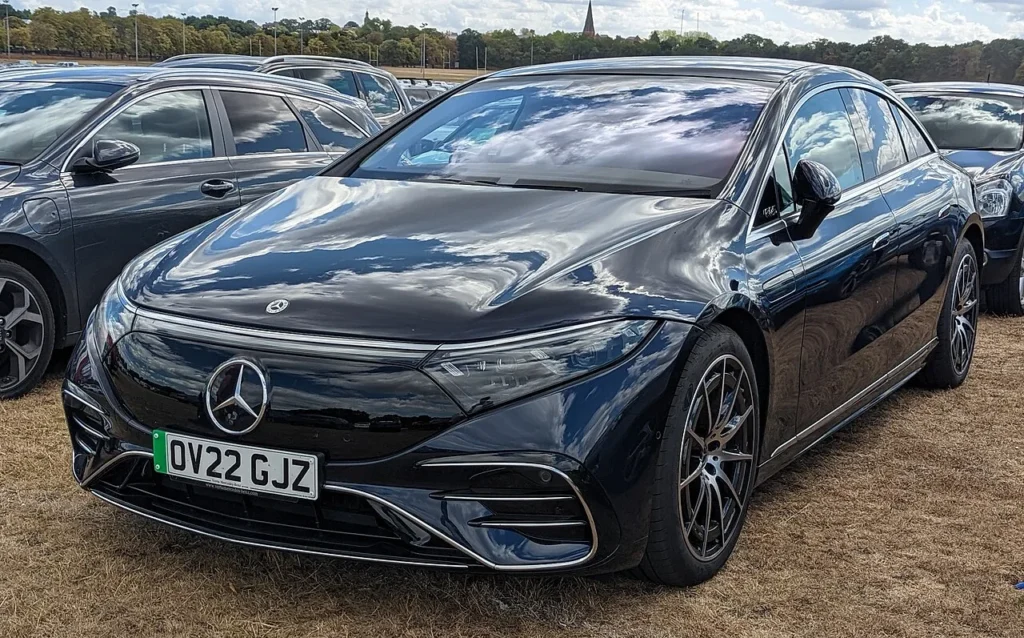
Mercedes went for the subscription anyway. In the US and Canada it launched Acceleration Increase On-Demand for the EQE 350 4Matic and EQS 450 4Matic, sedan and SUV: $600 a year for the EQE, $900 for the EQS. In return, the EQE 350 went from 288 to 348 hp and the EQS 450 went from 265 to 330 kW, roughly 355 to 443 hp. The EQE SUV cut a full second off its 0-60 time.
Tesla, for its part, sells a $2,000 Acceleration Boost for the Model Y that, according to InsideEVs, shaves half a second off 0-60.
Think about what that means. The motor in your car can already make that power. So can the inverter. So can the battery. All that hardware rides along with you, you paid for it and you maintain it. What you buy with the upgrade isn’t parts. It’s permission. In a gas car, finding 68 more horsepower meant working on the engine. In an EV you just pay and wait for the car to update.
What OTA actually gives you
It wouldn’t be fair to tell only half the story. Updates also improve EVs already on the road, and some of the best ones hit exactly what matters most: charging.
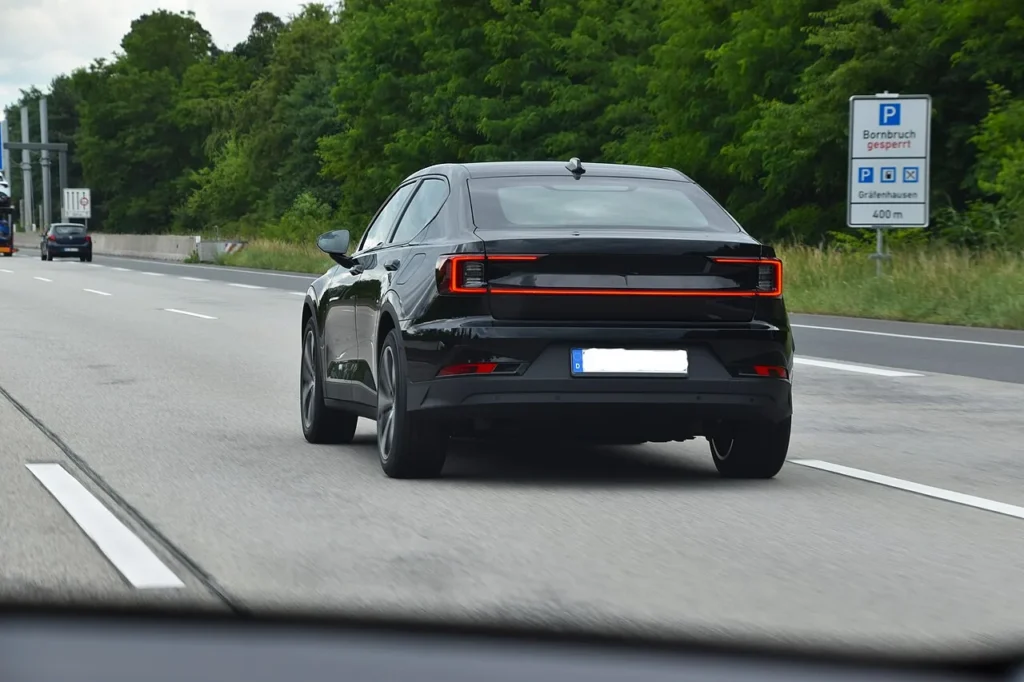
In February 2021, Polestar announced an update that let the Polestar 2 hold its 150 kW peak charging rate for longer without raising the peak, while squeezing out a few extra miles of range. It’s the point we made in our charging curve piece: the peak number barely matters, what counts is how long the car holds it.
In 2025, Ford rolled out an update that let 2022 and 2023 F-150 Lightnings charge at 500 amps instead of 450. In a test by the YouTube channel State of Charge, reported by Ford Authority, a 2022 Lightning went from about 43 to 45 minutes for a 10-80 percent session on a 350 kW charger to about 39.5 minutes. Three to five minutes saved at every stop, and no trip to the dealer.
That’s OTA at its best in an EV: a car that doesn’t freeze in time the day it leaves the lot. Battery management gets smarter, the charging curve gets tuned, and bugs get fixed without anyone being recalled. For a century, a car was the same the day you bought it and the day you sold it.
The car that needs a server
And then there’s the scenario nobody wants to picture at signing: the automaker disappearing.
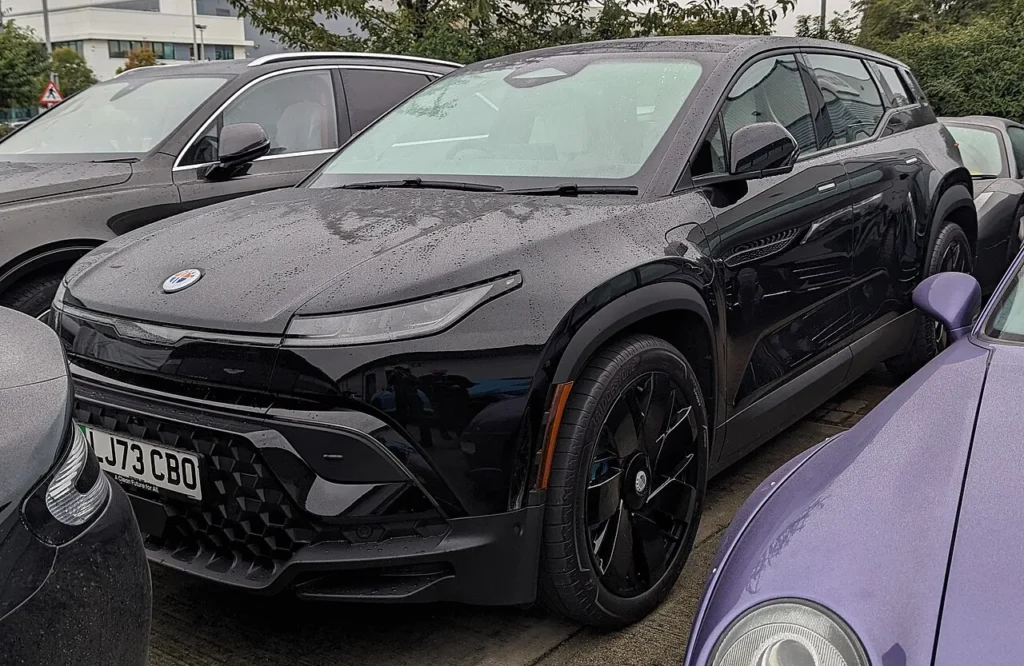
Fisker filed for Chapter 11 bankruptcy in June 2024, with more than $1 billion in debt. It had sold about 11,000 Oceans, electric SUVs priced roughly $40,000 to $70,000. With the company gone, owners lost updates, connected services and the warranty. And the problem wasn’t the infotainment: according to Electrek, subsystems including brakes, airbags, shifting, battery management and door locks periodically connected to Fisker’s cloud, so when servers went dark, cars lost critical functions.
In October 2024, American Lease bought Fisker’s remaining inventory, including access to the source code and cloud services, and paid an extra $2.5 million for that software access. The deal to extend services to private owners was never formally signed; it rested on a handshake. It fell apart when American Lease asked the owners’ group to cover 58 percent of connectivity, cloud and tooling costs. The result: owners lost remote connectivity and a pending software recall was blocked.
Owners organized as the Fisker Owners Association, which grew to 4,000 members. They hired experts to reverse-engineer the patches, learned to flash firmware themselves, ran group buys for parts and key fob pairing events, with fobs that cost about $1,000 each, and set up a mobile repair network in Europe. A brand-new EV kept alive by its owners like a classic car.
That’s the hidden side of a car that updates itself. If your EV needs a server to work, the automaker didn’t sell you a whole car. It sold you a car and a relationship. And relationships end.
What the rules say
In Europe, since July 1, 2024, every new vehicle sold in the EU has to comply with two UN regulations: R155, on cybersecurity, and R156, on software update management. R156 requires automakers to run a system that ensures updates are carried out safely and legally, to test and validate them before rollout, to document them, and to tag every type-approval-relevant software version with a code called an RXSWIN that can be read through the diagnostic port. If an update touches approved functions like the brakes, those functions must remain safe and legal afterward.
It’s a safety and traceability rule. The question owners actually care about, who decides how much of the battery you can use and how fast you charge, has been settled case by case by a court in California and another in Norway.
Ask before you sign
OTA is the best and most dangerous thing that has happened to the electric car. The best, because an EV can charge faster, manage its battery better and fix bugs years after leaving the factory. The most dangerous, because the same hands that hand you miles can take them back, and the same hands selling you horsepower had it tucked away from day one.
Buying an EV is no longer just reading the kWh and horsepower on the spec sheet. It’s asking how many of those kWh you’re allowed to use, whether the horsepower is standard or paid, and what happens to your car if the company folds tomorrow. If the salesperson can’t answer, you have your answer.
The battery is yours. The permission to use it, for now, isn’t.
Would you buy an EV knowing the automaker can change its range remotely?
Unplug and enjoy.
Images: SirAsdof (CC BY-SA 4.0) · Jeremy/Flickr (CC BY 2.0) · Kevauto (CC BY-SA 4.0) · Vauxford (CC BY-SA 4.0) · Calreyn88 (CC BY-SA 4.0) · Charles/Flickr (CC BY 2.0), via Wikimedia Commons.
1 thought on “EV over-the-air updates: the battery you own and the battery you’re allowed to use”