EV transmission: why almost every electric car has one gear, and who dares to use two
The electric car killed the transmission. Now some automakers are paying engineers to bring it back as software.
Ask at any dealership how many gears an EV has and you’ll usually hear “none.” Wrong. Almost all of them have one. A single fixed gear that never changes. A few have two. A 44-tonne (97,000-lb) electric semi has four. And there are electric performance cars that fake eight, complete with shift kicks, pops and a rev limiter, even though underneath there’s just one gear ratio and a piece of code lying to you so you have more fun.
The transmission is the most forgotten part of an EV. Nobody puts it in the commercial. Yet it explains why an EV launches the way it does, why Tesla nearly didn’t get its first car out the door, and why Porsche and Rimac, two companies building the same kind of car for the same kind of buyer, reached opposite conclusions.
What a reduction gear does
An electric motor spins very fast. Today’s high-performance EVs are closing in on 20,000 rpm, far beyond what any street gas engine survives. Wheels, on the other hand, turn slowly. Bolt the motor straight to the wheel and either the car would be geared for an absurd speed, or the motor would have to be huge to get it moving from a stop.
The fix is a reduction gear: a gearset that makes the motor turn several times for every turn of the wheel. With a 9:1 reduction, for example, the motor spins nine times per wheel revolution, and the torque reaching the pavement is multiplied by a bit less than nine, because gears have losses too. A reduction gear doesn’t add power. It trades speed for force.
In a gas car, that job belongs to the transmission, with five, six, eight or ten speeds. Why so many? Because a combustion engine only works well in a narrow rpm band. Below it, it bogs down. Above it, it runs out of breath or blows up. The gearbox exists to keep the engine in its happy zone as the car goes from zero to 120 mph. And from a stop, a gas engine can’t even move the car without a clutch or torque converter slipping.
Why one gear is enough for an EV
Electric motors play by different rules. They make torque from zero rpm, so there’s nothing to slip at launch. They run backwards just by reversing current, so there’s no mechanical reverse gear either. And they stay highly efficient across almost their whole speed range: the permanent-magnet synchronous motors the industry uses top 95 percent efficiency at their best operating point, as we covered in our piece on EV motor types.
There’s also a bit of physics almost nobody explains. An electric motor has two zones. In the first, at low rpm, it delivers its maximum torque flat out. A shorter gear there would make you accelerate harder. But past a point engineers call the corner point, the motor switches to constant power and torque drops as rpm climbs. In that second zone, shifting gears gets you nothing, because acceleration depends on power, mass and speed. In most mainstream EVs, that corner point sits around 30 to 40 mph. Above it, a gearbox would only add weight, cost and parts that can break.
That’s why the vast majority of EVs run a single fixed ratio. No shift actuators, no torque interruptions, no clutches to wear out. One gear, one differential, go.
The clutchless gearbox built in Seville
Between the gas car and the pure EV sits the hybrid, and the strangest hybrid gearbox in Europe is built in Spain. In 2022 Renault handed its Seville plant the DB35, the multi-mode transmission in its E-Tech hybrids such as the Clio, Captur, Arkana and Mégane, making the Andalusian factory the group’s global hub for hybrid gearboxes, with units bound for Valladolid, Palencia, Bursa and Busan.
What makes it odd is what’s missing. No clutch, no synchronizers. It uses flat dog clutches, the kind found in Formula 1 gearboxes, and lets an electric motor match gear speeds before each shift. The car always pulls away on electric power, so the gas engine never has to slip a clutch to get moving. It’s EV logic grafted onto a combustion car: the electric motor does the dirty work a clutch and synchro rings used to do. Toyota solved the same problem a different way in the Prius, with a planetary gearset that splits power between the engine and the electric motors with no fixed gears at all. Renault doesn’t sell cars in the US, so most American drivers have never touched one.
The two-speed gearbox that nearly sank Tesla
If you think everyone figured this out from day one, you don’t know the story of the original Tesla Roadster.
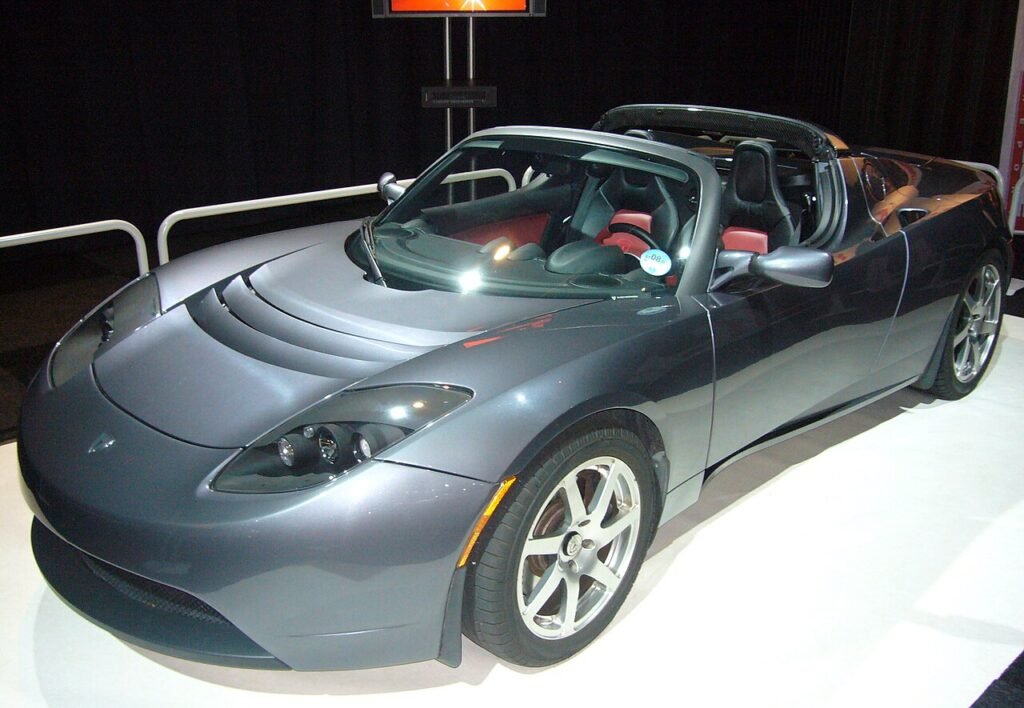
The plan was a two-speed transmission. It failed. In January 2008, Tesla admitted it had dropped that design over longevity problems. The first production Roadsters shipped with an interim transmission that limited 0-60 mph to 5.7 seconds, against a target of about 4. Series production started on March 17, 2008, at a limited rate, with a promise to upgrade early buyers for free once the permanent powertrain was ready.
The fight ended up in court. In April 2008, Magna, the Canadian parts giant, sued Tesla in California for about $5.6 million in development fees it said it was owed for work on that transmission. According to The Truth About Cars at the time, Magna’s position was that Tesla should have gone with a single-speed solution from the start.
Which is exactly what Tesla ended up doing. In September 2008 it announced BorgWarner would build a single-speed gearbox designed by Tesla’s own engineers. Making it work took a more powerful inverter and an improved motor: peak torque rose from 211 to 280 lb-ft, and EPA combined range went from 221 to 244 miles, roughly 10 percent more. Then-CTO JB Straubel put it bluntly: the two-speed transmission from the previous supplier “proved not to be durable,” and the new setup was “superior in almost every way.”
Watch the order of events. The single-speed box didn’t happen by magic. It happened once the power electronics and the motor could carry the load. Same lesson as our inverter piece: in an EV, what happens in the gears depends on what happens in the silicon.
Porsche goes for two
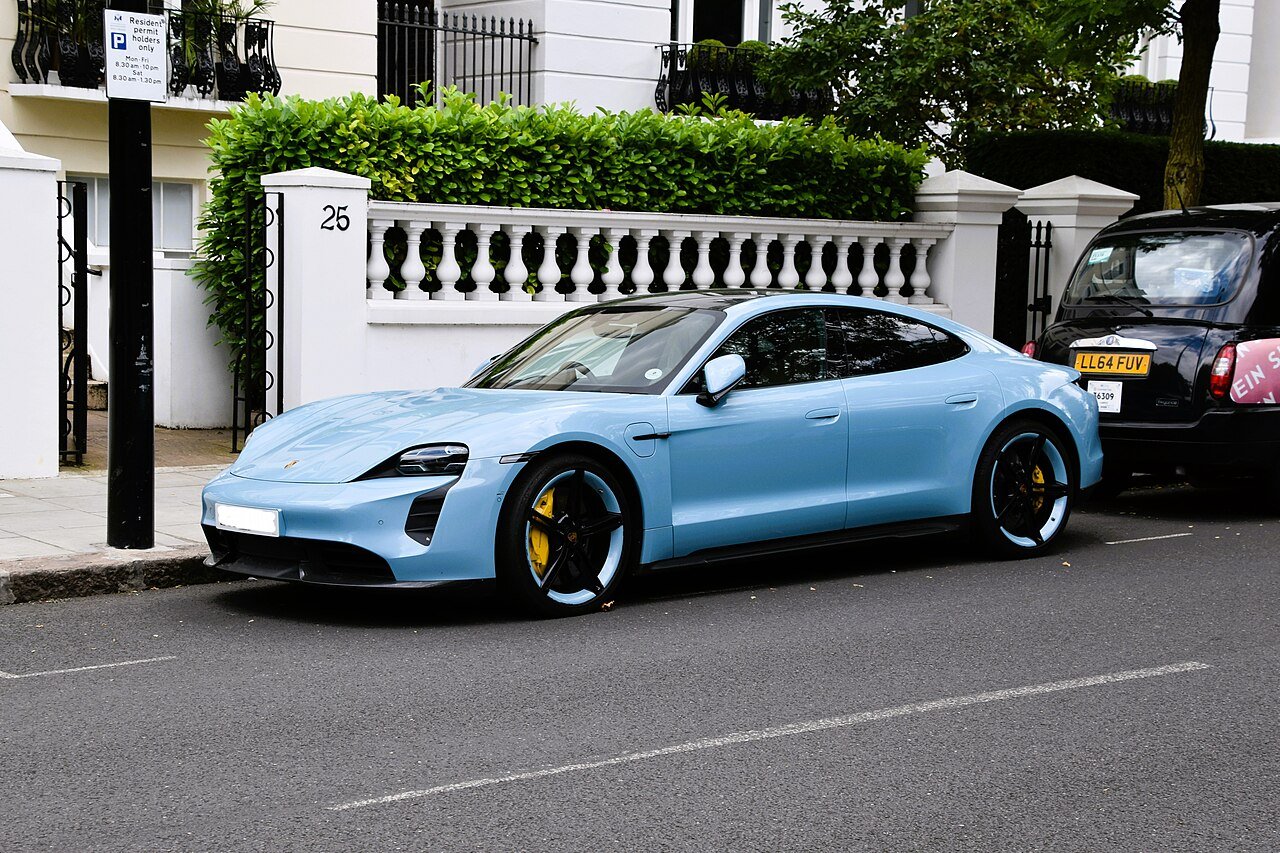
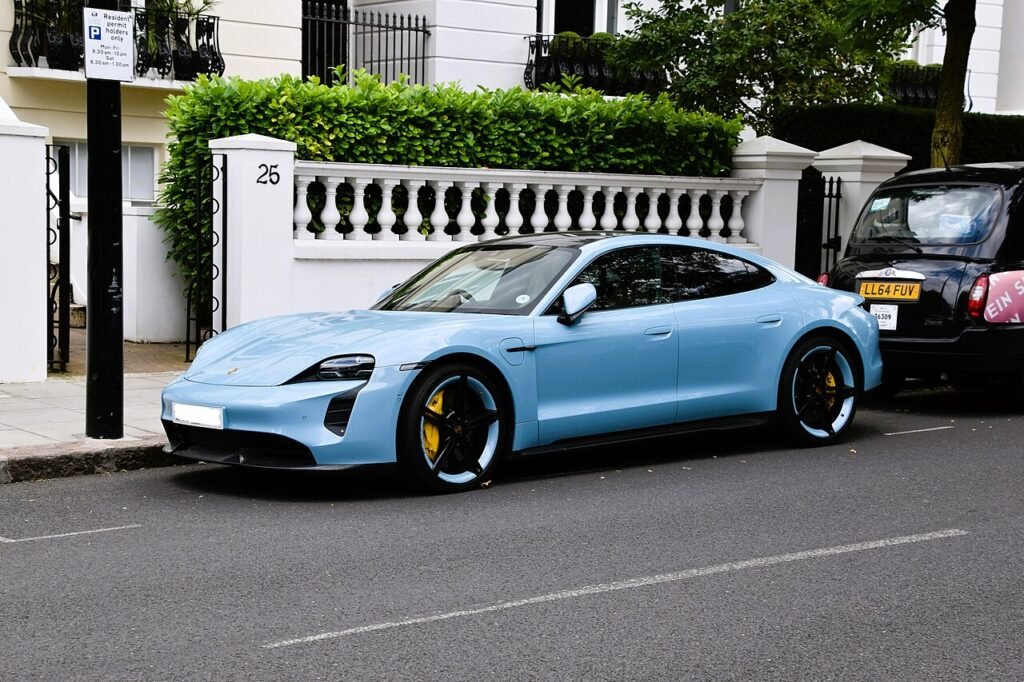
Eleven years later, Porsche did what Tesla had walked away from. The Taycan, launched in 2019 and the same car we used to explain regenerative braking, has a two-speed transmission on the rear axle. Up front, a fixed single-speed reduction of roughly 8:1.
The rear box uses three shafts: two spur-gear stages give second gear its ratio, also around 8:1, and a shiftable planetary set adds extra reduction for first. Porsche quotes almost 12,000 Nm of torque at the wheels, close to 8,850 lb-ft. The logic is twofold. A very short first gear adds even more punch off the line. A tall second gear keeps efficiency up and leaves power in reserve at autobahn speeds, on a car that could hit 162 mph. In Sport and Sport Plus the car mostly runs in first, and Launch Control holds it there as long as possible before shifting.
Its technical cousin, the Audi e-tron GT, uses the same solution. And the Taycan update unveiled in 2024 keeps it: Porsche still pitches the two-speed as a way to accelerate harder and, on the highway, to slot into the tall gear for extra range.
But here’s the tell. When Porsche developed its next EV, the electric Macan, it shelved the two-speed and fitted a single gear. If the two-speed were clearly better, it would have repeated it.
Rimac tried it and called it complex, heavy and inefficient
Mate Rimac has spent years arguing the opposite of Porsche, and he knows what he’s talking about because he tried it too.
His first supercar, the Concept_One, used two-speed dual-clutch gearboxes, and Rimac never liked them. While developing the C_Two, the car that would become the Nevera, Tesla announced its new Roadster with a claimed 1.9-second 0-60. The Croatian team’s reaction was to put a two-speed gearbox back in. A year later they pulled it out. “The gearbox became super-heavy, again we had two speeds, which I didn’t like,” Rimac explained in one of his videos.
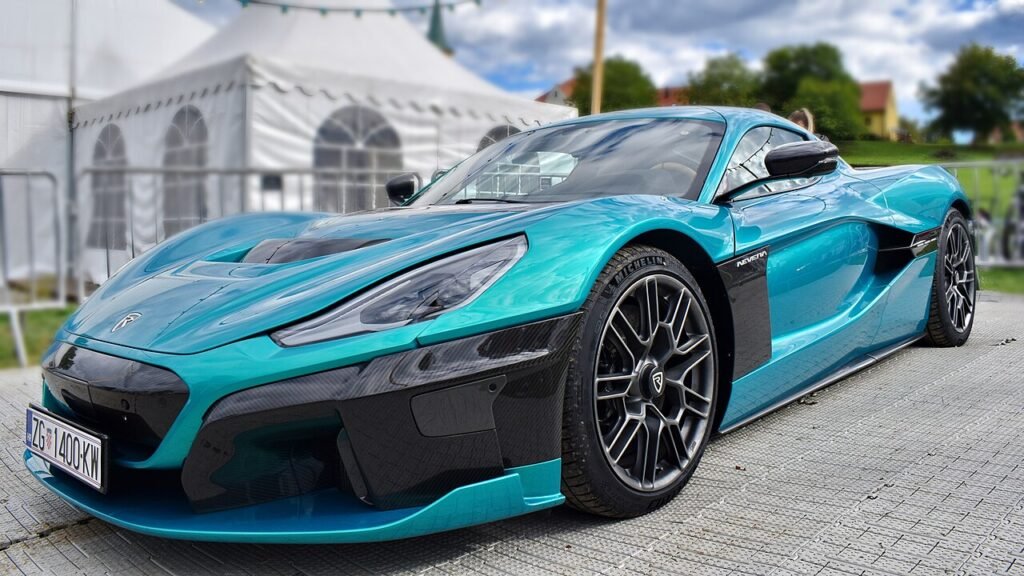
The fix was to redesign the motor. In the final C_Two, maximum motor speed went from 12,000 to 17,700 rpm and torque from 700 to 900 Nm, on a single gear. The rear axle dropped 60 kg, about 132 lb. Rimac summed up the two-speed in three words: complex, heavy, inefficient. In a car already lugging a huge battery, every pound of gears is a pound you have to accelerate, stop and haul around.
The surprise: Mercedes brings two speeds to a regular car
Until recently, two-speed EV transmissions were a six-figure-sedan thing. Mercedes has brought one to the mainstream.
The new electric CLA, the first model on Mercedes’ MMA platform, uses a two-speed gearbox on its rear motor, the 200 kW (268 hp) EDU 2.0 unit. First gear, an 11:1 ratio, handles launches. Second, at 5:1, takes over at higher speeds, with a 130 mph top speed. Shift points take into account the driving situation and the selected drive mode. Mercedes doesn’t sell it on performance. It sells it on efficiency. Its inverter, for the record, is silicon carbide.
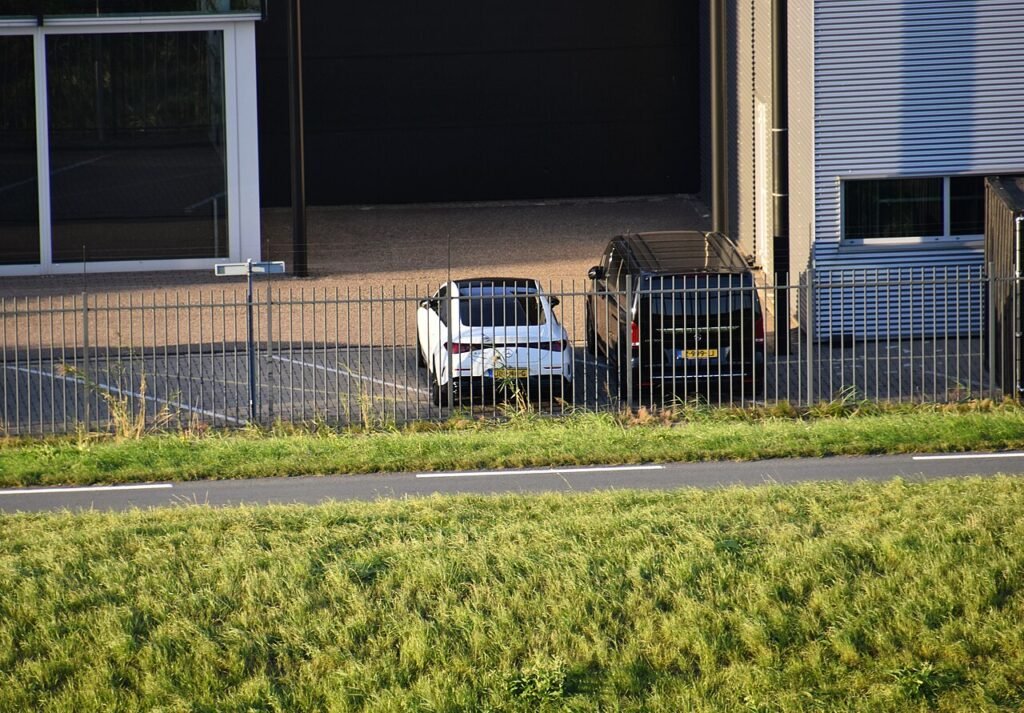
The CLA has a second trick. On all-wheel-drive versions, the 80 kW front motor runs a single-speed reduction plus a disconnect unit that decouples it from the wheels when it isn’t needed. Mercedes says that cuts front-axle losses by 90 percent. That’s the other side of transmissions: sometimes the most efficient move isn’t shifting gears, it’s cutting the motor loose and letting the wheel spin free.
Now put it together. Automakers can’t even agree on the basics. Porsche added a second gear for performance and then dropped it on the Macan. Rimac dropped it for weight. Mercedes adds it to a compact for efficiency. When an entire industry can’t agree, the answer depends on the vehicle, not on dogma.
Where you really need gears: trucks
To find an EV that genuinely needs multiple gears, climb into a truck cab.
The Mercedes-Benz eActros 600, Daimler Truck’s long-haul electric tractor, uses an in-house electric axle with two motors, 400 kW continuous and 600 kW peak, on an 800-volt system. And it has a four-speed transmission. It makes sense: it moves up to 44 tonnes of gross combination weight, roughly 97,000 lb, with three battery packs totaling 621 kWh gross that weigh 4.5 tonnes on their own. Pulling away with that much mass on a grade and then cruising the highway for hours is a range of work a single ratio can’t cover well without an oversized motor.
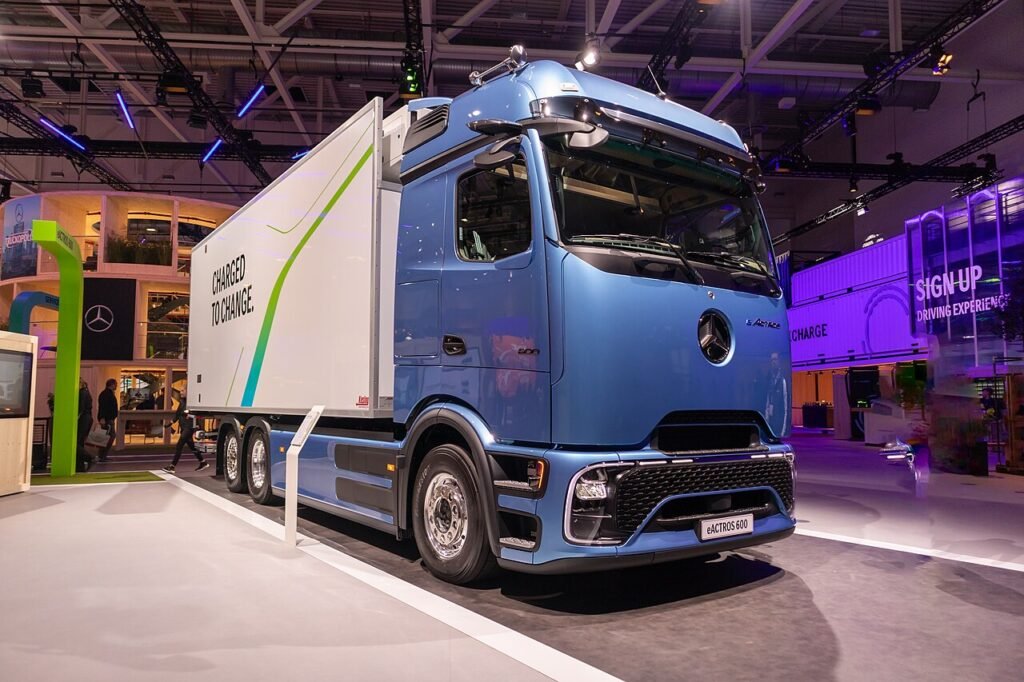
The underlying rule is the same as in a gas car: the wider the gap between maximum effort and maximum speed, the more gears make sense. In an electric passenger car, that gap fits inside one ratio. In a fully loaded semi, it doesn’t.
And then there are the fake gears
This is where the story gets the most fun, and the most debatable.
The Hyundai Ioniq 5 N, revealed in 2023 with 641 hp in N Grin Boost mode, comes with a system called N e-Shift. There is no gearbox. There’s one ratio, same as any Ioniq 5. But the software simulates an eight-speed dual-clutch, modeled on the one in Hyundai’s gas-powered N cars. Pull the paddles and you change “gears,” the car plays with power delivery so you feel the shift, it simulates engine braking, and if you don’t upshift in time it lets you bounce off a digital rev limiter. All of it paired with N Active Sound+, which can imitate the company’s 2.0-liter turbo or, if you’re feeling creative, a fighter jet.
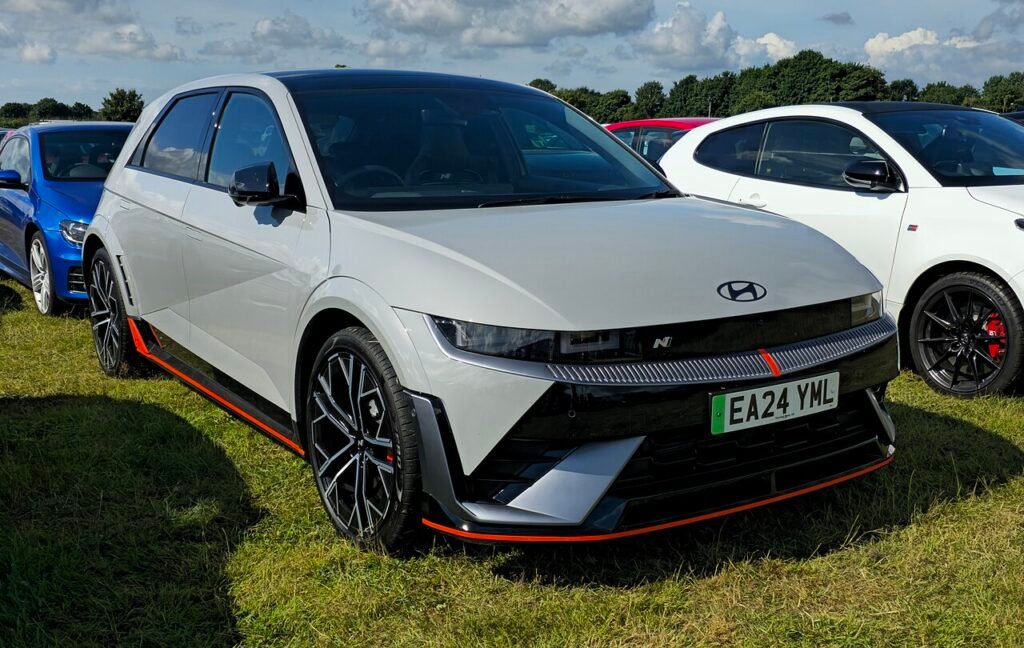
Hyundai isn’t stopping there. The company has said the system is coming to the Ioniq 6 N, in a milder form to the Ioniq 9, as an option on other Ioniq 5 models, and to Genesis vehicles.
Lexus went even further with a prototype. In late 2022 it explained how a modified UX 300e with a shifter, a clutch pedal and a tachometer worked. Neither the shifter nor the pedal was mechanically connected to anything. They were digital inputs: software decided which virtual gear you’d picked and adjusted motor response to match, half-clutch included. Lexus’ Takashi Watanabe even admitted the car could simulate stalling. “You wouldn’t actually stall, because there’s no engine.”
Does it make sense? Technically, none at all: you’re bolting a combustion engine’s limitation onto a machine that doesn’t have it. From the driver’s seat, it’s another story: people who try it on track tend to climb out grinning. Even so, buying an EV so it can act like a gas car is like buying a smartphone so it can play you a rotary dial sound.
Where NEB stands
The single-speed reduction gear is one of the EV’s biggest advantages, and almost nobody gives it credit. Fewer parts, less weight, zero clutches to replace and a response no automatic transmission can match. Tesla needed a year and a lawsuit to accept it. Rimac accepted it by shedding pounds.
Two gears have their place, but it’s a small one: a Porsche that wants to win off the line and on the autobahn, a Mercedes squeezing every kilowatt-hour, a 97,000-lb semi. For everyone else, a second gear is a brochure bullet point.
And fake gears are something else entirely: pure theater. Well-made theater, sure. But don’t let anyone sell you an EV pretending to have a clutch as technical progress. The progress is in the motor. In an electric car, the gearbox is programmed nostalgia.
Would you pay for an EV that fakes its gearshifts, or is that exactly what you wanted to leave behind?
Unplug and enjoy.
Images: Charles/Flickr (CC BY 2.0, CC0) · Rutger van der Maar (CC BY 2.0) · Miroslav Vajdić (CC BY-SA 4.0) · Celestinesucess (CC BY-SA 4.0) · Calreyn88 (CC BY-SA 4.0), via Wikimedia Commons.
1 thought on “EV transmission: why almost every electric car has one gear, and who dares to use two”