
GMC Hummer EV: four tons sold as saving the planet

America loves a comeback story, and GMC bet $110,000 a copy that you’d love this one. The Hummer — the Humvee-spawned land yacht that defined 2000s excess, the truck the whole world pointed to when it wanted to say “this is what’s wrong with America” — is back. Bigger. Faster. And, this time, electric. GMC calls it a quiet revolution. What it actually is: the single heaviest, least efficient way to burn a clean electron that money can buy, wearing a halo it did nothing to earn.
Here’s the thing a red-blooded truck fan and a climate hawk can finally agree on. The GMC Hummer EV is a genuine engineering triumph. It’s also a four-ton monument to missing the point. Both are true, and the glossy launch coverage only told you the first half.
What the Hummer meant in America
No vehicle was more American than the Hummer, and not in a flattering way. It started as the Humvee, the Army’s Gulf War workhorse, until Arnold Schwarzenegger badgered AM General into building a street version and the H1 hit the road in 1992. GM bought the brand in 1999 and turned it into the H2 and H3 — the official uniform of 2000s excess. For a few years the Hummer was everywhere American money wanted to be seen: rap videos, Cribs, stretched Hummer limos pulling up to Vegas clubs, the driveway flex of the housing-boom nouveau riche. It also became the thing to hate: keyed in parking lots, torched by activists, slapped with “FUH2” bumper stickers, the rolling shorthand for a country that confused size with success.
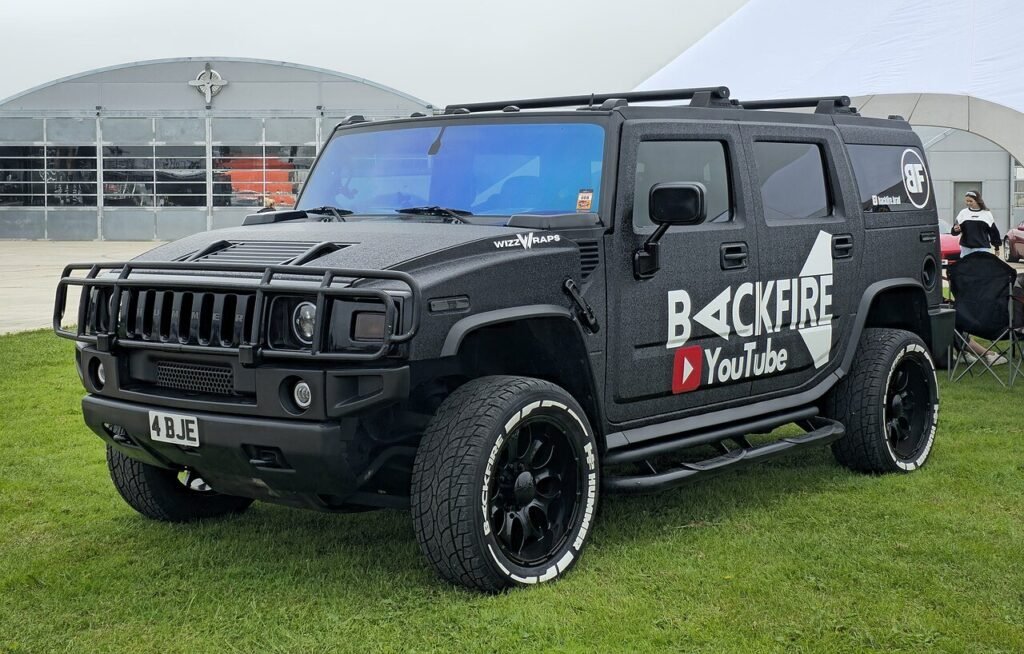
Then 2008 happened. Gas spiked, the economy cratered, GM went bankrupt, and the Hummer brand was quietly euthanized in 2010 after a failed sale to a Chinese buyer. Good riddance, said just about everyone. Which is what makes the 2020 resurrection so brazen: GM didn’t just revive the most discredited nameplate in its history, it rebranded the national symbol of waste as the national symbol of the clean future, without shrinking it an inch.

The LeBron ad told you everything
Cast your mind back to Super Bowl LIV, February 2020. GMC rolls out the reborn Hummer with LeBron James and the tagline “Quiet Revolution.” The loudest nameplate in the country, the one environmentalists used to torch at protests, relaunched as a whisper of rebellion in the most expensive advertising real estate in America, fronted by one of the most famous athletes alive. Marketing did the lifting that physics never could: revolution, quiet, clean, new. The parts that don’t test well — weight, mining, efficiency — stayed off the teleprompter.
And then there’s your tax dollar. The whole American EV push runs on public incentives meant to get cleaner vehicles into driveways. A six-figure, four-ton, 1.5-mile-per-kWh land barge is close to the last thing those programs were written for, yet for a stretch the Hummer EV and its buyers skated around the edges of exactly those perks, leasing loopholes and all. Policy built to reward efficiency ended up, at least in part, subsidizing the least efficient EV on the lot. Detroit didn’t write those rules, but it cashed the narrative without blinking.
A battery that weighs more than a Civic
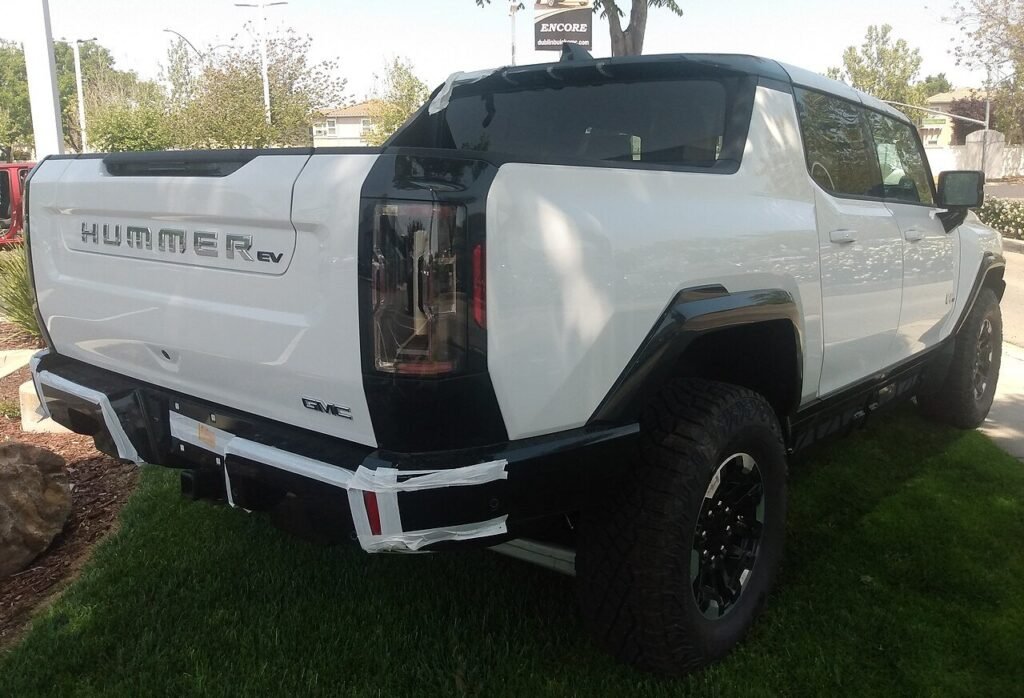
Now the number that ends the argument, and it needs no spin. The Hummer EV’s Ultium pack holds about 212 kWh usable — 246 gross — and weighs roughly 2,900 pounds. The battery alone outweighs a whole Honda Civic. It outweighs a complete Chevy Spark, the lightest car GM itself sold. You are hauling an entire dead car in the floor just to move the truck sitting on top of it.
Total curb weight lands around 9,046 pounds in pickup form — put it next to a 2,877-pound 2022 Civic sedan and you’re looking at more than three of them. It’s so heavy the feds classify it as a Class 3 medium-duty truck, the same bracket as a box truck. And because it clears 8,500 pounds, GMC isn’t even legally required to post an efficiency label — a loophole written for commercial haulers that a personal luxury toy now hides behind.
An efficiency figure from the Carter administration
When you see the number GMC didn’t have to show you, the hiding makes sense. The Hummer EV returns about 47 MPGe combined — roughly 1.5 miles per kWh in the real world. A Hyundai Ioniq 5, a normal EV, does about 3.3. More than double. The same clean electron that carries an Ioniq 5 three miles drags the Hummer barely past one.
The gut-punch comparison for a country that spent the 2000s arguing about this exact thing: the Hummer EV — the “future” — is less energy-efficient than a gas-hybrid Toyota Prius. A Rivian R1T, also a big electric pickup, beats it by nearly 50% on MPGe. The Hummer isn’t inefficient for an EV. It’s inefficient, full stop, engineered against the one virtue that makes plugging in worth the bother.
And savor the history here, because it’s pure Americana. In the mid-2000s a rigged study called “Dust to Dust” tried to convince the country a Prius polluted more over its life than a gas Hummer. Junk science, duly debunked. Two decades on, GM finally built a Hummer that genuinely loses to the Prius — the electric one, the model that was supposed to fix everything, sipping more energy per mile than the hybrid the propaganda cast as the villain. The hoax came true through the service entrance, and GM signed the delivery slip.
The tailpipe is clean. The mine isn’t.
Here’s what the “zero emissions” tailgate sticker buries. No tailpipe, sure. But every kWh of lithium-ion demands mining, refining and shipping that carry a carbon debt and a very physical mess, and the Hummer doesn’t ask for a little — it asks for roughly triple. With one Hummer’s 212 kWh you could build the packs for nearly three Tesla Model 3s or three Ioniq 5s and move three families as far or farther. The lithium, nickel and cobalt in one of these would power three sensible EVs. In a world where battery chemistry isn’t infinite, a four-ton EV isn’t neutral: it spends for three to move one. Clean tailpipe, dirty ledger.
And the weight keeps taking. Nine thousand pounds grinds through tires and brakes fast, and the particulates they shed — non-exhaust emissions — are now one of the traffic-pollution problems researchers flag hardest, the one an EV doesn’t fix. Heavier car, more of it. The Hummer sits near the bottom of that class too.
A four-ton truck that hits 60 in three seconds
There’s a problem past the environment that U.S. safety researchers have been shouting about. A 9,000-pound vehicle that reaches 60 mph in about 3 seconds is, in crash terms, a guided missile. Impact energy scales with mass and the square of speed, and the Hummer brings a surplus of both. Hit a sedan, a cyclist or a pedestrian and the person in the Hummer is cocooned while everyone outside pays. The mass that protects you is the mass that kills them — a live debate as American driveways keep super-sizing.
It didn’t have to be this, even among electric trucks. The F-150 Lightning runs around 6,500 pounds, the Rivian R1T about the same, the Cybertruck near 6,600. Big, heavy haulers, all of them — and the Hummer still out-masses the lot by well over a ton. This isn’t the unavoidable cost of electrifying a pickup. It’s the cost of deciding bigness beats everything. GMC chose the excess on purpose, because excess is the whole product.
And the Hummer lands on a specifically American nerve. This is the country where vehicles have been bloating for two decades, where the pickup and full-size SUV ate the sedan alive, and where pedestrian deaths have climbed to levels the rest of the rich world left behind years ago — a trend safety researchers tie directly to taller, heavier front ends that strike people in the torso instead of the legs. A lot of that bloat is a regulatory accident: decades of fuel-economy and “light truck” rules that leaned on a vehicle’s footprint quietly rewarded automakers for building bigger, so they did. The Hummer EV isn’t a break from that story. It’s the boss level — the heaviest expression of the exact incentive structure that made American roads the deadliest in the developed world for the people walking beside them.
Give it this much
NEB doesn’t swing blind, and the Hummer has a face that’s objectively jaw-dropping. Up to 1,000 hp in top trims, 0-60 near 3 seconds — a four-ton truck launching like a supercar — four-wheel steering with the CrabWalk party trick that walks it diagonally, air suspension that stands it up and drops it down, real trail ability. Nobody steps out of one calling it junk. It’s fast, capable, theatrical and finished to a seriously high standard — the kind of thing American engineering does better than anyone when it decides to show off.
The problem was never the build quality. It’s superb. The problem is the brief, and the truck answers it itself: 9,000 pounds, 1,000 hp, and a payload of barely 1,300 pounds, a joke for something this size. It isn’t built to work or to sip. It’s built to impress. A six-figure toy in a tool’s costume, christened as progress.
The verdict
Here’s NEB’s read.
The Hummer EV is proof that electrifying and improving are not the same word. Take the vehicle that defined oil-age excess, yank the V8, drop in a battery the size of three cars, and sell it as absolution. Physics doesn’t read ad copy: a four-ton truck drinks like a four-ton truck, mines like three cars, and pounds the pavement, the tires and the brakes like exactly what it is. A plug doesn’t make it responsible. It makes it a different problem wearing a nicer story and a cleaner conscience, which is somehow worse.
And the irony is signed by GM itself. The company that built the EV1 — small, light, actually clean — then force-repurchased it and crushed it, is the one now selling you four plugged-in tons as its great green bet. GM didn’t take the efficiency lesson from the EV1. It learned that “electric” sells, and it stuck the badge on the heaviest, priciest, most profitable thing on the showroom floor, then dared you to call it anything but progress.
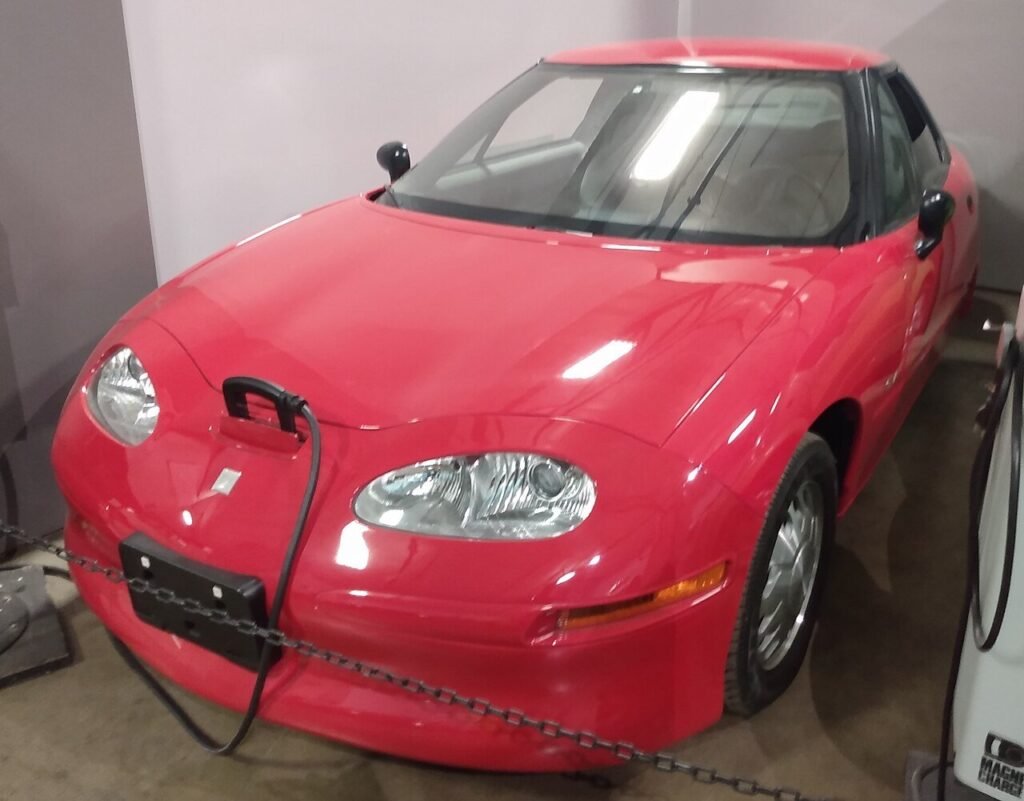
The electric car was born, more than a century ago, to be cleaner and more sensible than the alternative. The Hummer EV is what happens when that idea meets the market that actually runs this country: the one that’ll pay $100,000 to feel green without surrendering an inch. It’s not the future of the EV. It’s the caricature, and it weighs four tons — the car that proves electrifying is worthless if nobody stops to ask what the thing is even for.
Unplug and enjoy.
Images: Elise240SX, Wikimedia Commons (CC BY-SA 4.0) · Calreyn88, Wikimedia Commons (CC BY-SA 4.0) · Adam Schultz, The White House, 2021 (public domain) · DestinationFearFan, Wikimedia Commons (CC BY-SA 4.0) · DestinationFearFan, Wikimedia Commons (CC BY-SA 4.0)