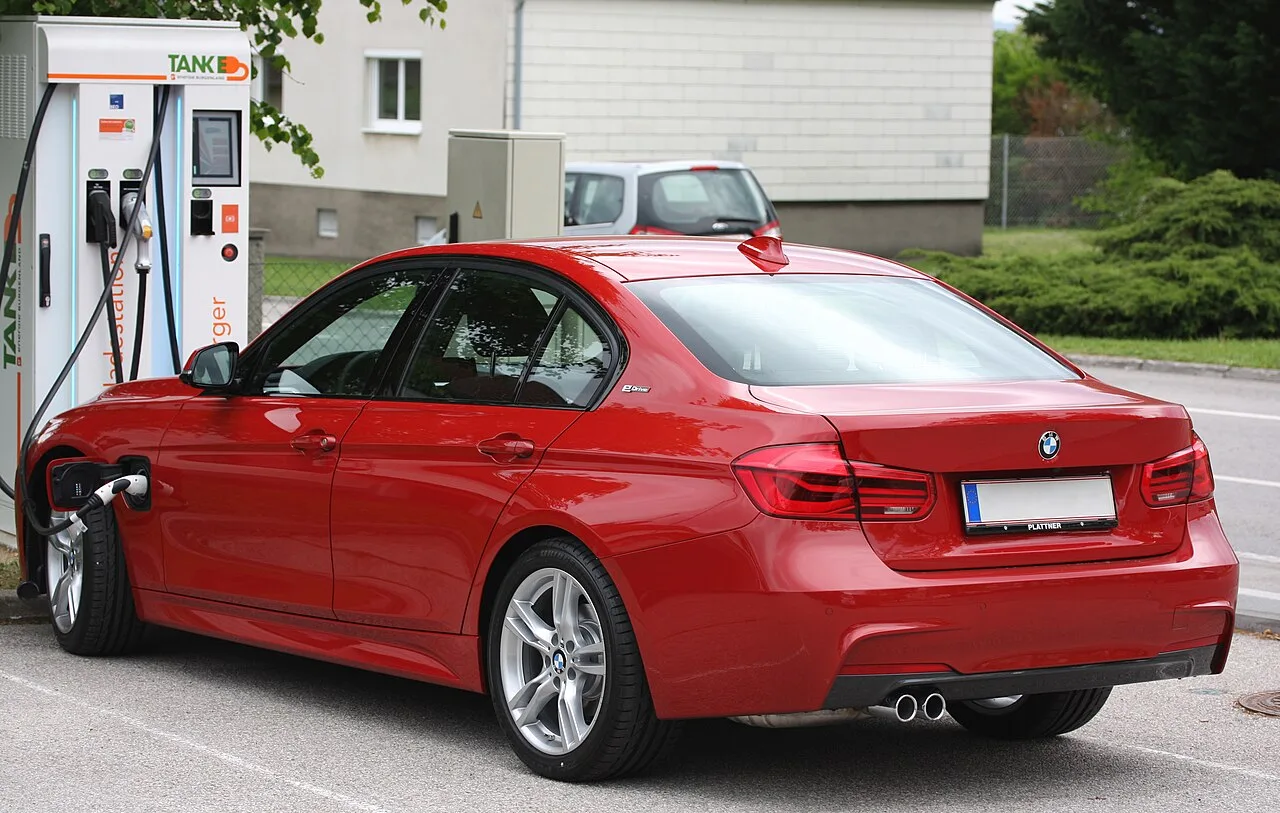
EV AC Charging: Why Your Car Won’t Pull 22 kW Even When the Charger Says So
The charger says 22 kW. Your car takes 7.4. And neither one is broken.
It’s one of the most common and worst-explained frustrations in the EV world. You roll up to a charger bragging about 22 kilowatts, plug in full of hope, and the car settles in at a third of that like it’s nothing. It’s not a fault, it’s not the cable, it’s not the station shortchanging you. It’s that the big number on the charger and the speed your car actually charges at on alternating current are two different things, and almost nobody explains why. There’s a hidden piece inside your car that rules all of this, and today we drag it into the light.
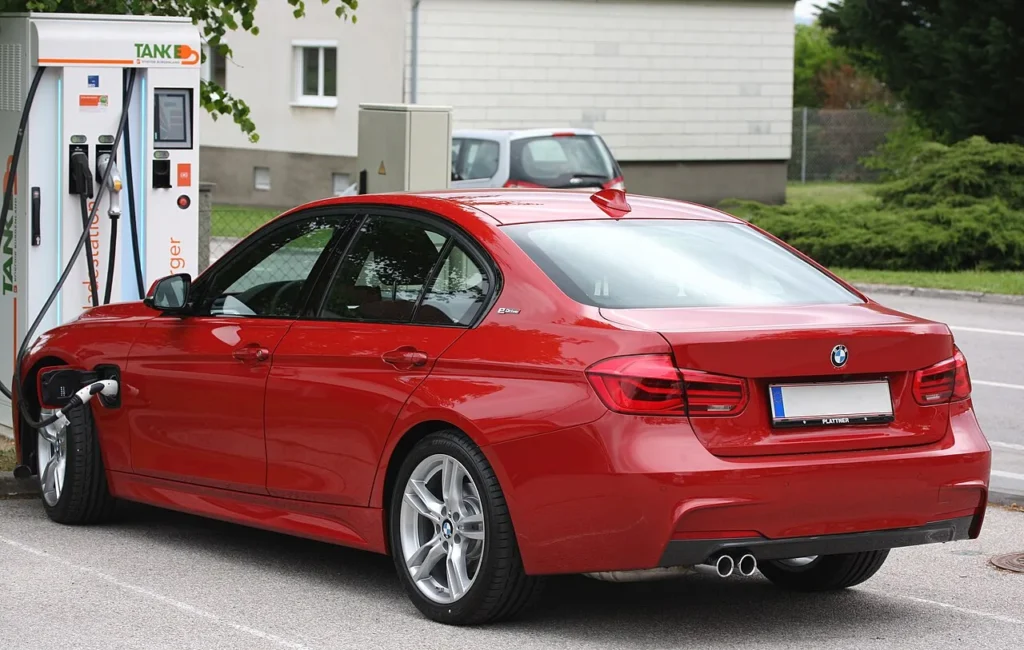
AC and DC: two worlds people mix up that aren’t the same
First, a basic thing that causes half the confusion. Your EV charges in two completely different ways, and it pays not to mix them.
There’s DC fast charging, the highway stuff at 50, 150, or 350 kW. That’s the one with the charging curve, the peak and the average, the one that sorts out a road trip in twenty minutes. We covered that one at length in our piece on the EV charging curve.
And then there’s AC charging, alternating current, the kind you get at home, at work, in the mall parking lot, at the curbside post. The slow, hours-long charge you do while you sleep or while you work. And it’s the one almost everyone uses 90% of the time, because the reality of an EV is that it charges parked, not on the road. This whole story is about AC, because that’s where the biggest misunderstanding lives and where a spec-sheet number nobody checks decides your daily life. And it’s the charging that defines ownership: the DC curve matters a few times a year on trips, but the AC rate is what you live with every single night. Get it wrong and you’re the person whose car isn’t ready in the morning.
The hidden piece that actually rules: the onboard charger
Here’s the key that explains everything, and it’s a component you’ve probably never heard of: the onboard charger, the OBC.
Your car’s battery only stores direct current, DC. But the electricity coming into your house, to the curbside post, to any outlet, is alternating current, AC. So something has to convert that AC from the grid into the DC the battery can swallow. In DC fast charging, that converter is huge and lives inside the highway charger itself, which is why it pushes so much power. But in AC charging, the converter rides inside the car. It’s the onboard charger, a close cousin of the inverter that feeds the motor (both are power electronics bending current to their will), and it’s small, because it has to fit under the floor and weigh little. That’s exactly why it can’t swallow the hundreds of kilowatts of a highway charger: that tiny converter would melt. Which is why fast charging happens outside the car, in DC, skipping the onboard charger entirely.
And here’s the crux: that onboard charger has a maximum power limit, and nothing can push past it. It doesn’t matter if the post offers you 19.2 kW; if your onboard charger is 7.7 kW, your car never charges above 7.7. But careful, because that sets the ceiling, it doesn’t guarantee you always hit it: the power that actually flows in also depends on the circuit, the breaker, the cable, your home’s electrical panel and even the battery’s temperature, which the thermal management system watches and will throttle for. The onboard charger is the ceiling; those other things are bottlenecks that can pull you below it. The ceiling, though, is the box, which is why it’s the component that decides your charging speed at home, and almost no automaker puts it in big letters in the ad. They’ll shout the DC fast-charge peak from the rooftops, because 250 kW sounds like the future. The onboard charger, the number that governs 90% of your charging, gets buried in a footnote on page forty of the spec sheet, if it’s listed at all.
Level 1 and Level 2: the American setup
In the U.S., home AC charging comes in two flavors, and the difference between them is night and day.
Level 1 is plugging into a regular 120-volt household outlet, the same one your toaster uses. It trickles in at around 1.4 kW, which buys you 3 to 5 miles of range per hour. For someone with a 20-mile commute and a parking spot, that can genuinely be enough, and for a tiny battery it’s all you need: the Citroën Ami fills its 5.5 kWh pack in three hours from a plain European outlet, and plenty of people get by on it for years. But there’s a safety angle worth flagging: drawing current for many hours straight from an ordinary household outlet can overheat the plug, the contacts or the wiring if the circuit isn’t rated and protected for it. A kitchen outlet wasn’t built to deliver power for eight hours at a stretch. Regular charging belongs on a dedicated, properly protected circuit, not an extension cord off the wall. And for a bigger battery it’s slow going regardless: a 100 kWh pack can take the better part of three days to fill from near-empty on Level 1.
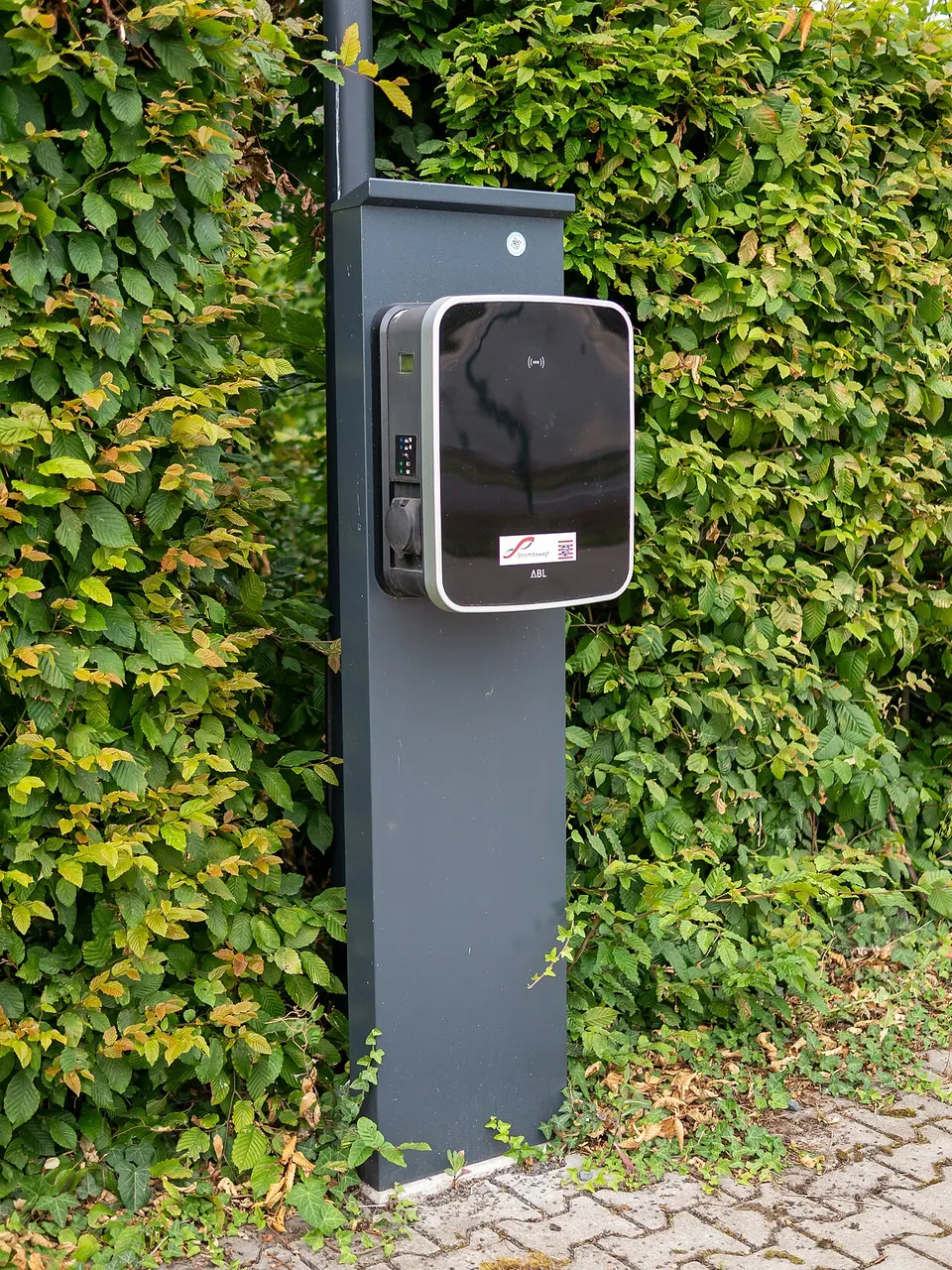
Level 2 is the real home setup: a 240-volt circuit, the kind your dryer or oven runs on, feeding a wall-mounted charger. Depending on the unit and your car’s onboard charger, it delivers anywhere from 7.2 to 11.5 kW, and in the U.S. up to 19.2 kW on a beefy circuit, recovering 25 to 40 miles of range per hour. This is what fully charges a car overnight, and it’s what almost everyone installs in the garage. The number to check is your car’s onboard charger rating in kW, and whether it can even use the full output of the Level 2 unit you’re eyeing. Why does the circuit matter so much? Because heat in a wire grows with the square of the current, the same math behind the 400V vs 800V fight in fast charging. A rough rule: multiply the kW by about 3.5 to 4 and you get the real-world miles of range added per hour. An 11.5 kW car on a matching circuit claws back roughly 40 miles an hour; the same car stuck on Level 1 gets a tenth of that. Over a year of overnight charging, that gap is the difference between never thinking about range and constantly babysitting the plug.
The number you have to check and nobody shows you
Onboard chargers come, in the U.S., in a handful of ratings, and knowing which one your car has is worth more than any other charging figure on the sheet.
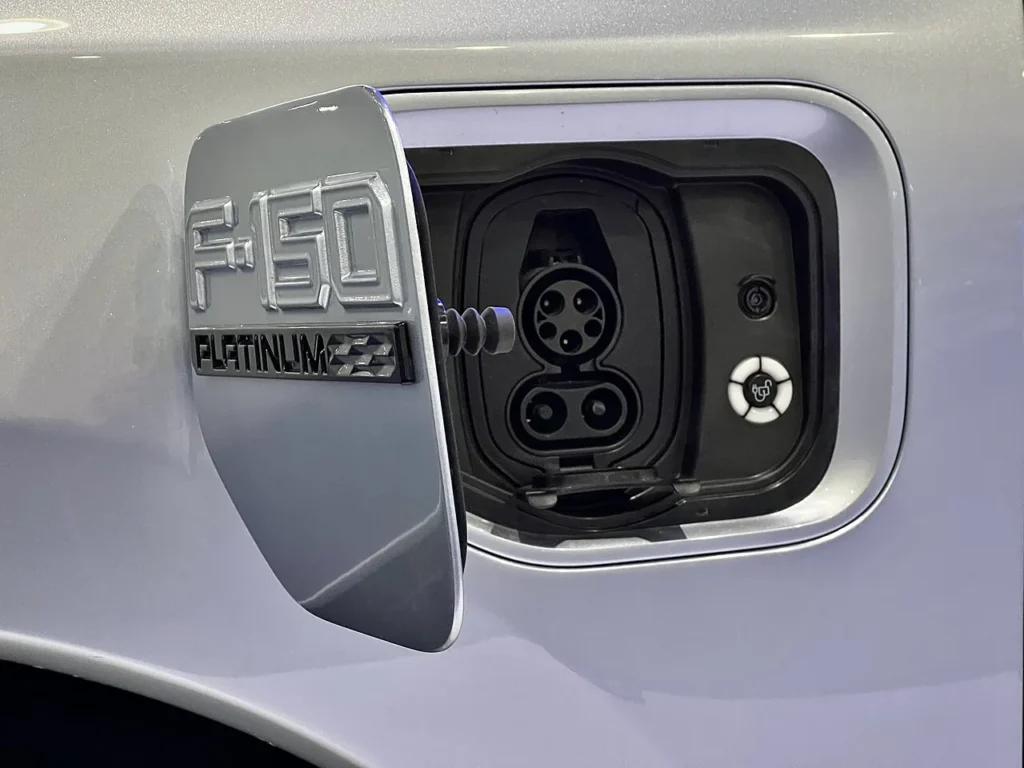
Most mainstream EVs land between 7.2 and 11.5 kW. Some cheaper or older models crawl in at 3.6 kW, which is a manufacturer’s cheapskate move you’ll pay for in whole nights plugged in. A few premium models go higher, and a rare handful of commercial or heavy-duty EVs reach into the high teens. The Tesla Model 3 and Model Y, for example, cap at 11.5 kW on AC, and the Ford F-150 Lightning tops out around 19.2 kW with the right onboard charger and circuit, which is part of why it can also run your house in a blackout. So when you see a car brag about “fast charging,” check whether they mean DC (the genuinely fast kind) or AC, because they are nowhere near the same thing. A car that DC-charges at 250 kW might still crawl at 7.7 kW in your garage, and both numbers are true at once.
Why two cars on the same charger finish at different times
Here’s a wrinkle that trips people up. Plug two different EVs into the identical Level 2 charger and one finishes hours before the other, even with similar battery sizes. The charger isn’t playing favorites. The car with the beefier onboard charger (say 11.5 kW) pulls the full output, while the car capped at 7.7 kW leaves power on the table it physically can’t use. The wall unit advertises what it can offer; the car decides what it takes. This is why a spec war over wall-charger kilowatts is mostly theater: past a certain point, you’re paying for power your car will never draw.
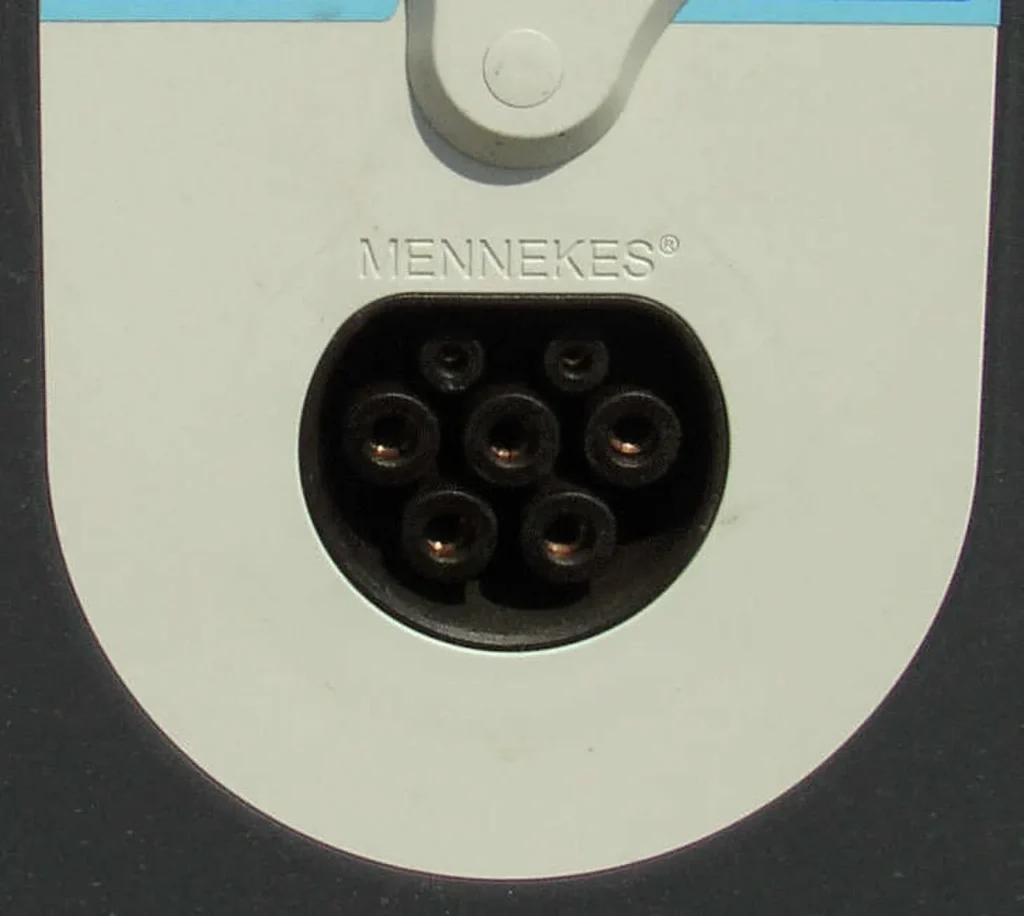
There’s a second-order version of this in apartment buildings and workplaces with many chargers on one electrical panel. They use load management, splitting the building’s available power across whoever’s plugged in. So the 11.5 kW charger in the garage might quietly hand you 6 or 7 kW at 7 p.m. when every neighbor is charging too, then ramp up at 2 a.m. when they’ve unplugged. Nothing is broken; the panel is rationing. It’s one more reason the number on the unit is a ceiling, not a promise.
Made in Spain: the box from Zaragoza and the charger that skips it
That 22 kW in the headline is a European number: in Europe, public AC posts and home units run on three-phase power, and the top rating is 22 kW. Most European homes, and nearly all Spanish ones, only get single-phase, which caps a home charge at about 7.4 kW. Spain is where this story gets its sharpest example, on both sides of the plug.
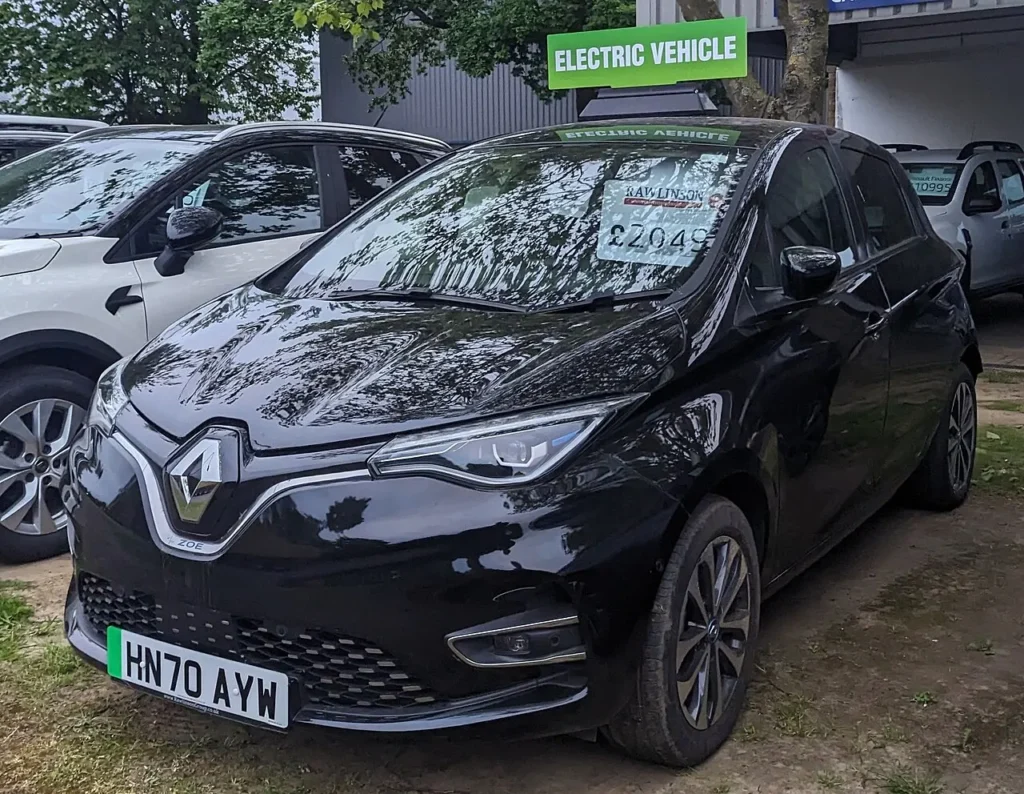
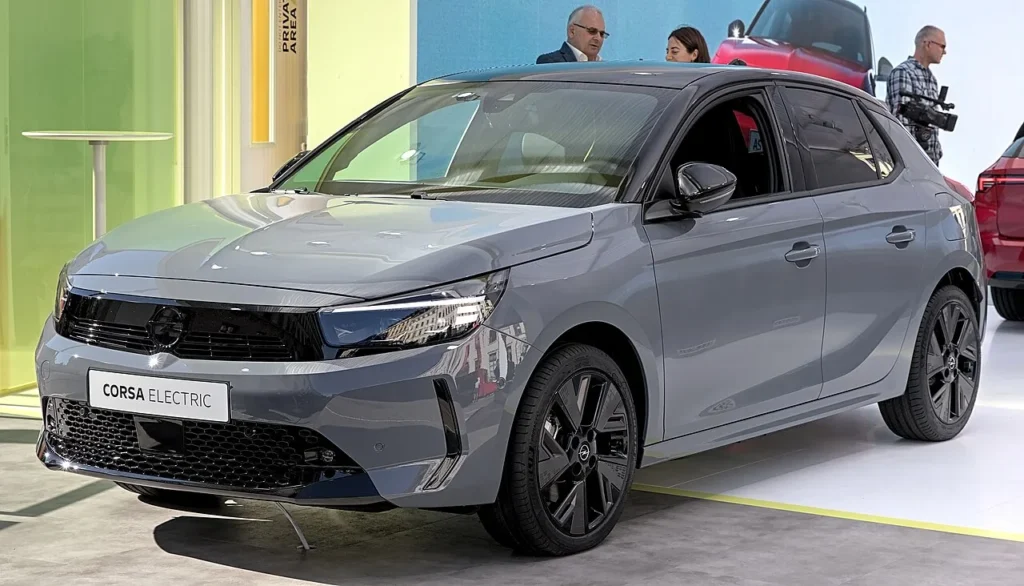
On the car side, look at Figueruelas, near Zaragoza, where series production of the Opel Corsa-e, the first electric Corsa, started on February 21, 2020, on the same line as the gas and diesel versions. Opel built it with a 7.4 kW single-phase onboard charger as standard on the entry trim for markets like Spain, and the 11 kW three-phase unit as a 900-euro option plus a 330-euro cable. In Germany, where three-phase homes are normal, the 11 kW charger came standard from the Edition trim up. Same car, same Spanish factory, a different box depending on the wiring in the country where you’ll plug it in. Opel knew perfectly well that an 11 kW charger in a Spanish apartment would never show up on the meter.
On the wall side, the bigger move came from Barcelona. Wallbox, founded there in 2015 by Enric Asunción and Eduard Castañeda and listed on the New York Stock Exchange since October 2021, showed the Quasar at CES in Las Vegas, billed as the first bidirectional DC charger for the home: 7.4 kW, a CHAdeMO plug and a price around $4,000. Why does that matter here? Because a DC charger at home skips the onboard charger, exactly like a highway station: the AC-to-DC conversion happens in the box on the wall, not the box in the car, and the power can flow back from the car into the house. The original Quasar never went on sale in North America, but its successor, the CCS-equipped Quasar 2 at around 11.5 kW, opened pre-orders in March 2025 for Kia EV9 owners in the U.S., with the pitch of keeping a house running for up to three days in a blackout. A Spanish company moving the box so the ceiling stops living inside your car.
The connector mess the U.S. is living through right now: NACS
And here’s the part that’s a genuine headache in America specifically: the connector switch. For years the U.S. standard was the J1772 plug for AC (Level 1 and 2) and CCS1 for DC fast charging, while Tesla ran its own proprietary plug. Then, starting in 2023, the dam broke: Ford, GM, Rivian, Hyundai, and nearly everyone else announced they’d adopt Tesla’s connector, now standardized as NACS (the North American Charging Standard, SAE J3400).
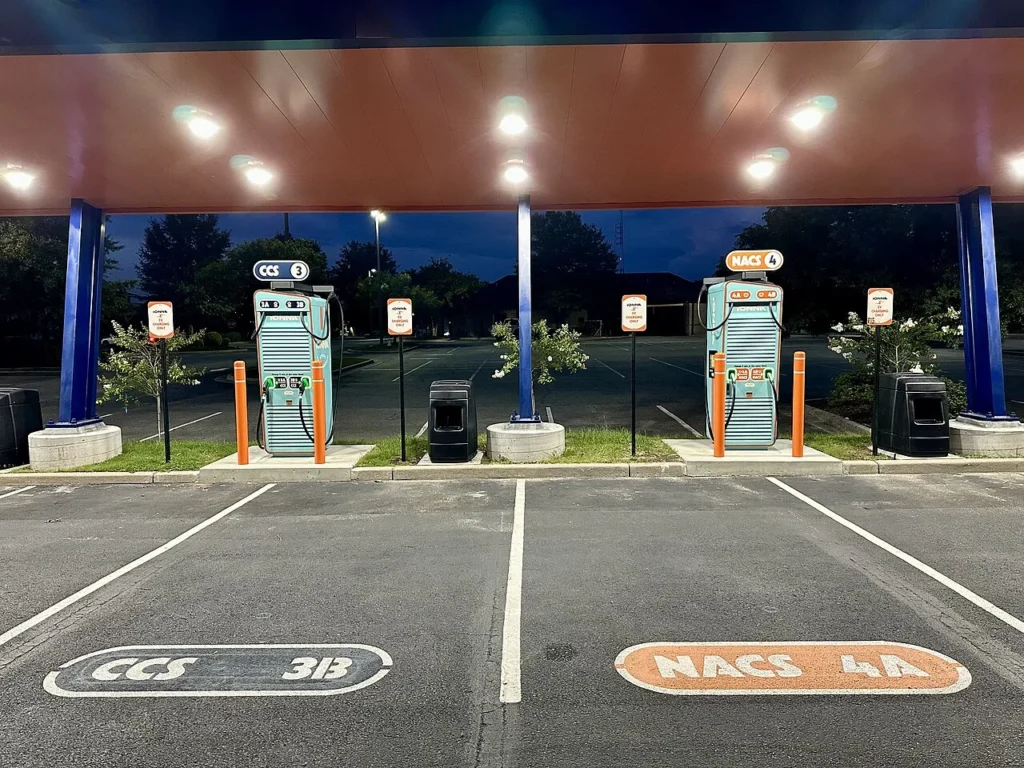
What does that mean in practice for you? A transition period that’s genuinely confusing. New cars are shipping with NACS ports, older ones have CCS or J1772, adapters are flying around, and whether a given charger works with your car depends on which plug, which adapter, and which network. If you’re buying now, the single most practical question is which connector the car has and what adapters come with it, because getting that wrong means standing at a charger that won’t talk to your car. Europe dodged this mess by standardizing on Type 2 and CCS2 years ago; the U.S. is sorting it out in real time, on your dime. The upside, once the dust settles, is real: NACS is a smaller, lighter plug, and it hands every adopting brand access to Tesla’s Supercharger network, the one piece of U.S. charging infrastructure that consistently works. The pain is the two or three years of adapters and incompatibility in between, which is right now.
So what do you check before buying?
A small number almost nobody shows you, worth more than the big one on the brochure: your car’s onboard AC charger rating, and the connector it uses.
If you charge at home on a Level 2 setup, an onboard charger of 7.7 to 11.5 kW fills the battery overnight with room to spare. Don’t overpay for an 11.5 kW onboard charger if your home circuit or your habits will never use it, and don’t accept a 3.6 kW one on a car you’ll live with daily, because that’s a cheapskate spec you’ll feel every night. And nail down the connector and adapter situation before you sign, because in today’s NACS transition that’s the difference between charging smoothly and standing there locked out. And if the real question is whether to trade your old car for an EV at all, our sister site Not Enough Cylinders ran those numbers in Electric Cars vs Old Cars.
We’ve been taught to read the kilowatts on the wall charger as if they’re what flows into the car, and it’s a lie. The post doesn’t rule. A little box hidden inside your car rules, one the automaker never shows you, and the circuit you have at home rules. Next time someone tells you their car “charges at 19 kW,” ask the two questions that cut through it: is that AC or DC, and what’s the onboard charger rated at? That’s where the brochure ends. And if the salesperson can’t tell you how many kilowatts the car takes on AC, you know exactly how much they care about how you’ll charge it: about as much as the automaker that can trim your charging with an over-the-air update whenever it suits them.
Unplug and enjoy.
Images: D-Kuru (CC BY-SA 4.0) · Calreyn88 (CC BY-SA 4.0) · Matti Blume (CC BY-SA 2.0) · GoeggiSams (CC0) · Alexander-93 (CC BY-SA 4.0) · WMrapids (CC0) · GA Kevin (CC0), via Wikimedia Commons.