Better Place: $850 Million, One Car and No Key Fobs in Hawaii
In July 2013, electric car drivers in Hawaii without a key fob could not use the free public chargers Better Place had installed.
The fobs belonged to Better Place, an Israeli-American startup that had raised about $850 million to swap batteries in electric cars. Better Place was bankrupt. Its fobs had gone down with it. A Honolulu Civil Beat report on July 23, 2013 counted about 800 to 900 customers who had gotten fobs and roughly 100 more still waiting for one.
That is how a company with a billion-dollar vision left its American customers: with chargers that needed a tag from a bankrupt firm.
Hawaii, the part of the story nobody tells
Better Place was formally based in Palo Alto, California, and run largely from Israel. Its swap stations, the robots that exchanged a drained battery for a full one, existed in only two countries: Israel and Denmark. Jalopnik’s obituary of the company says it built a few dozen of them, all there, and gave up on similar efforts in Australia and the United States.
What America got was chargers. In Hawaii, Better Place put in more than 70 free charging stations across Oahu, Kauai, the Big Island and Maui, using about $580,000 in federal stimulus funds, per Civil Beat. Hawaii’s EV Ready Program had first allocated $854,000, then cut the money because Better Place couldn’t recruit enough property owners to host stations. The owners paid $2,000 per station. The Honolulu Star-Advertiser counted 77 charge spots, or 154 charge points, and about 700 members. Better Place had waived the subscription fees but planned to charge eventually.
On March 12, 2013, it sold the Hawaii network to OpConnect, a Portland, Oregon company that then ran 18 charging stations nationally. The price wasn’t disclosed. OpConnect took over the computer systems, the membership agreements and the contracts with the property owners who hosted the stations.
The fobs were the part that didn’t transfer. According to Civil Beat, OpConnect tried to clone them, but the encryption was too hard for some companies, and others would only make them in large orders. Better Place might have spares in Israel; OpConnect hadn’t found them. Statewide there were more than 1,500 EV owners at the time, and many couldn’t use the stations. OpConnect planned to replace the network with its own by the end of 2013, charging about $2 an hour, and to cover the electricity at its stations until then. Its business plan leaned mainly on advertising on 15-inch touchscreens.
The American legacy of a battery-swap company was a charger network that needed a tag nobody could easily produce.
The pitch
Shai Agassi founded TopTier Software in 1992. SAP bought it in April 2001 for $400 million. He joined SAP’s executive board in 2002, ran its products and technology group, wanted the CEO job in 2007, and left when the board extended Henning Kagermann’s contract to 2009.
On October 29, 2007, Project Better Place launched. The pitch was a cell phone plan for your car. You bought the car. Better Place owned the battery, the most expensive part, and charged you a monthly fee by the mile. When you ran low, you drove into a station and a robot swapped the pack while you sat in the seat.
How fast? A Tokyo taxi pilot that began on April 26, 2010, with A123 Systems batteries, averaged 59.1 seconds per swap, according to A123’s presentation. Tablet’s report on the commercial service in Israel talks about five minutes. Fast Company printed an estimate of about $500,000 per station in March 2010, with no source for the number. What a station actually cost, no source documents.
The money was real. Investors included Israel Corporation, HSBC, Morgan Stanley and General Electric. A $350 million round in early 2010 was led by HSBC. By the end, Wikipedia and several news reports put the total at about $850 million.
The car
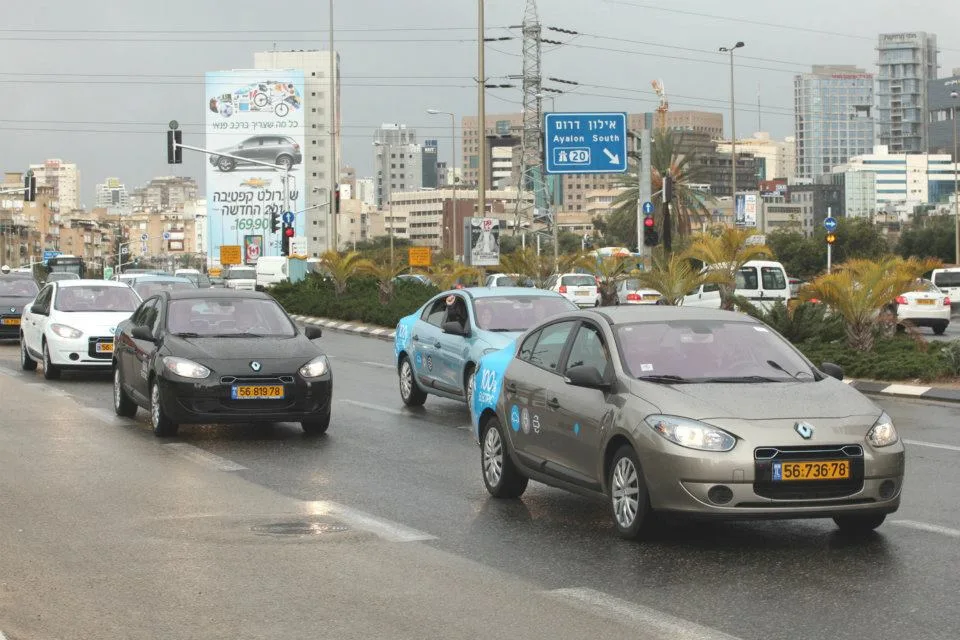
Swapping requires a car you can swap. Renault built one, the Fluence Z.E., and Quartz says it was the only manufacturer that agreed to. The Fluence was a sedan with a 22 kWh pack weighing 250 kg (551 lb), a 70 kW motor and 226 N·m of torque. Rated range was 185 km (115 miles) on the European NEDC cycle. Better Place talked about 160 km as its target.
For scale: the 2011 Nissan Leaf, which reached US dealers in December 2010, listed at $32,780 and was rated by the EPA at 73 miles. Different test cycles, so don’t compare the two numbers head-on. The list of markets Wikipedia gives for the Fluence Z.E. is Europe, Israel, Denmark, South Korea, Turkey, France and the UK. The United States isn’t on it.
Renault and Better Place started working together in 2008. In 2009 they announced a deal to supply 100,000 Fluence Z.E. through 2016. Renault had flirted with this market before: half a century earlier its Dauphine became the Henney Kilowatt, an electric sold in the US.
Spain got the car, never the robot
Spain shows what the Fluence was without the network. On October 9, 2011, Motor.es reported the first Renault Z.E. deliveries in Spain to buyers who had reserved a year earlier. The Fluence Z.E. Expression listed at €19,800 and the Dynamique at €20,900, and the battery was always leased: €82 a month including VAT for 10,000 km a year on a 36-month contract. The report doesn’t say whether that price already took off public incentives.
Not one swap station was ever built in Spain. Spanish buyers got a sedan stretched 13 cm over the combustion Fluence to fit a removable pack behind the rear seats, a 317-liter trunk, no fast charging, 185 km on the NEDC cycle, and six to eight hours on a home outlet. The robot that justified all of it lived in Israel and Denmark. For a contemporary that was sold there, the Opel Ampera, the European twin of the Chevrolet Volt, was announced in Spain in November 2010 from €42,900, more than twice the price, with a gas engine as a backup.
Spanish site Diariomotor reported on May 4, 2013 that Carlos Ghosn had ruled out more Renault EVs with swappable batteries after the Fluence Z.E., and counted about 2,000 Fluence Z.E. sold worldwide against more than 50,000 Leafs. By January 2014, the same outlet reported Renault was dropping the car in Europe with no replacement, and used ones started at €9,900. A Spanish buyer paid for a car designed around a network that never crossed the border, and watched it pulled from sale in just over two years.
What happened in Israel and Denmark
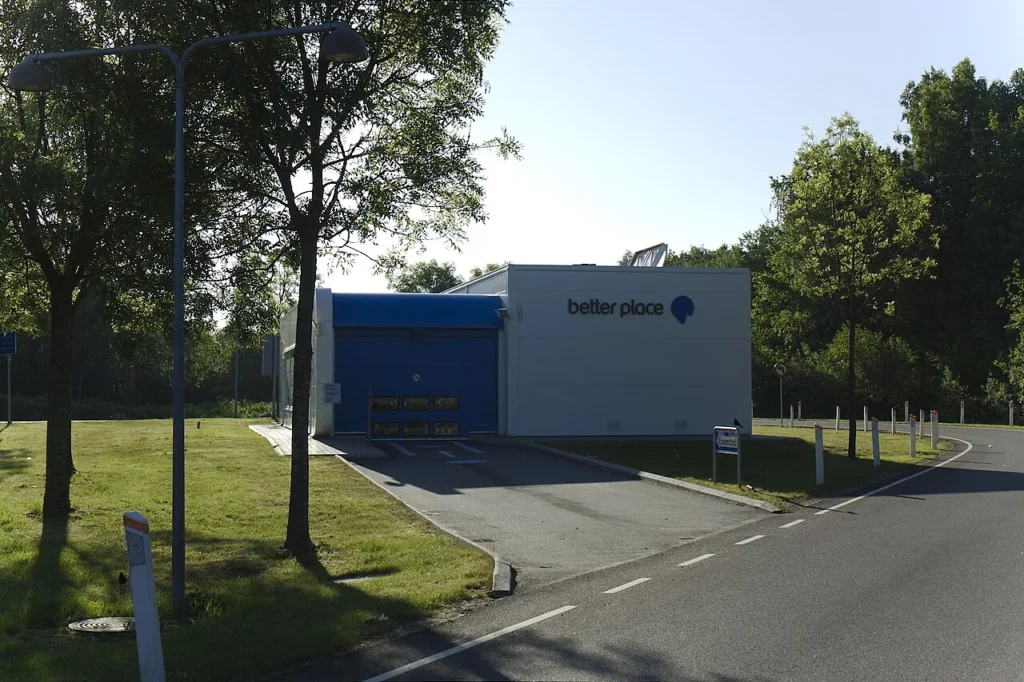
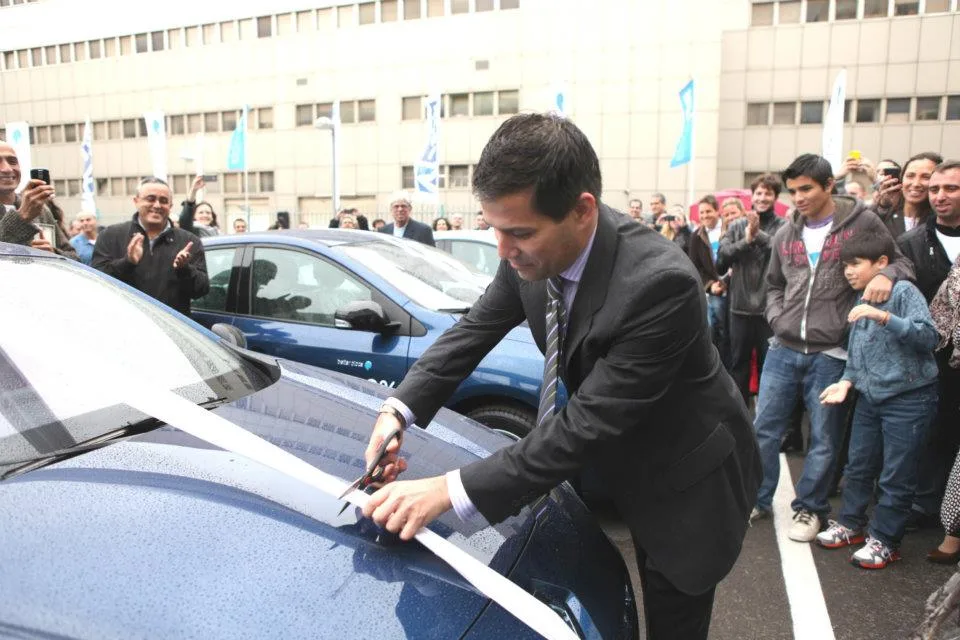
The first swap station in Israel opened in Kiryat Ekron in March 2011. Orders started that July. The first deliveries were on January 22, 2012, to about 100 Better Place employees. In Denmark, the first station opened in Gladsaxe in June 2011, and the car cost 205,000 kroner with VAT, about €27,500, plus a monthly fee.
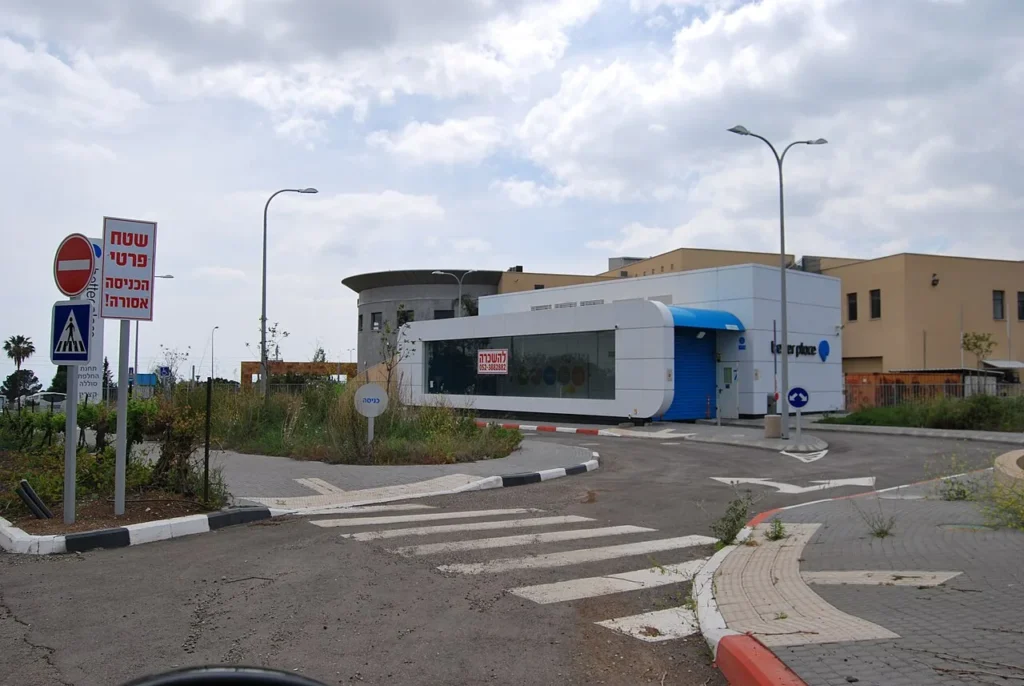
At the end, Globes reported that Better Place had 320 employees, 940 electric cars on Israeli roads, 38 swap stations and 1,804 charging posts. Renault gave its own totals when the company fell: 1,000 Fluence sold in Israel and 240 in Denmark, 1,240 in total. Against 100,000.
Better Place lost $454 million in 2012 on about $7 million in revenue, according to Israel Corporation’s filings as reported by Quartz. Cumulative losses were $812 million. Those are accounting losses, not a count of the cash left; they show scale, nothing more. When it petitioned for liquidation, Globes says, it listed $40 million in debts and $9.5 million in assets.
One more number, from Tablet. Israeli EVs carried a purchase tax of 8 percent, due to expire at the end of 2013, against 83 percent on a conventional car, the story says. With that gap in their favor, 950 to 1,000 Israelis drove a Better Place car in May 2013. That was less than a fifth of what Agassi had forecast for 2012, per the same article. American buyers, by comparison, had a $7,500 federal tax credit.
The end
Agassi left on October 2, 2012. Reports describe it as a forced exit by the board. Evan Thornley, who had run Australia, took over. In January 2013 chairman Idan Ofer fired Thornley and Dan Cohen became acting CEO. That same month the Australian rollout stopped, with fewer than 20 public charge spots installed.
On May 19, per Quartz, the board of Israel Corporation, which held 28.6 percent, declined to put in more money and no other investor would commit a significant amount. Better Place filed for liquidation in an Israeli court on Sunday, May 26, 2013.
On Monday, Reuters quoted Gilles Normand, Renault’s Asia-Pacific chief: “We’re not talking about significant investment at all.” Renault called Better Place a “very minor” part of its total electric investment. On May 28, a court ruled that Better Place would keep running on a limited basis under its liquidators, with the cars already delivered still running nationwide.
The pieces were sold off. In July 2013 the Sunrise group offered 18 million shekels, about $5 million, for the Israeli assets, and 25 million, about $7 million, for the intellectual property; the deal fell through after a missed payment. In August, a court approved a sale to Success Assets for 11 million shekels, about $3 million; it was canceled on October 17, 2013, again over missed payments.
On November 21, 2013, Gnrgy, a small Israeli energy firm, announced it had bought the remaining assets. CEO Ran Eloya told the Associated Press the price was less than $450,000. The AP story says Better Place had been valued at about $2 billion less than two years earlier, without naming a source. Eloya said Gnrgy would run the 1,800 public charge spots and would not sell cars or swap batteries.
Then Tesla tried it
The idea got its American audition anyway, from the company whose Roadster had already shown that an EV could sell on desire. In June 2013, at Tesla’s design studio in Los Angeles, Elon Musk demonstrated a battery swap on a Model S. Each of two cars took slightly over 90 seconds. Swaps were expected to cost about as much as a tank of premium gasoline, $60 to $80, per Wikipedia’s Tesla battery station page, which doesn’t mention Better Place.
The first swap station was due in California in late 2013 and slipped. On December 19, 2014 Tesla launched a pilot at Harris Ranch near Coalinga, by appointment for invited owners only. By the time it opened in March 2015, the price was $80 and swaps took between 5 and 15 minutes, versus a promised 90 seconds. Of 200 invitations, about five owners tried it. Musk said people didn’t care about swapping because Superchargers were fast enough and free. By November 2016 the station had closed.
The numbers that don’t match
- Cars sold. “Just over a thousand” in Israel and Denmark per Reuters; 1,000 in Israel and 240 in Denmark per Renault; about 2,500 per Jalopnik; 940 on Israeli roads when it filed per Globes. This article uses Renault’s numbers.
- Swap stations in Israel. 21 public stations in mid-September 2012 per Wikipedia; 38 at the filing per Globes, Tablet and JTA.
- Capital raised. About $850 million per Wikipedia, Quartz and several reports; $750 million in a May 2013 report on Renault.
- Hawaii stations. “More than 70” per Civil Beat; 77 charge spots per the Star-Advertiser.
- Price of the car in Israel. 123,000 shekels at launch per Wikipedia; 160,000 paid by the buyer quoted in Tablet, with energy and kilometers included.
Where sources conflict, the text says so. What couldn’t be confirmed is left out.
The plug won
In America the plug won. Better Place built chargers in Hawaii, and the people who used them found out the hard way what it means to rely on a company’s hardware. Then Tesla ran a swap pilot in California, the same state where GM had crushed the EV1, and about five of the 200 owners it invited tried it.
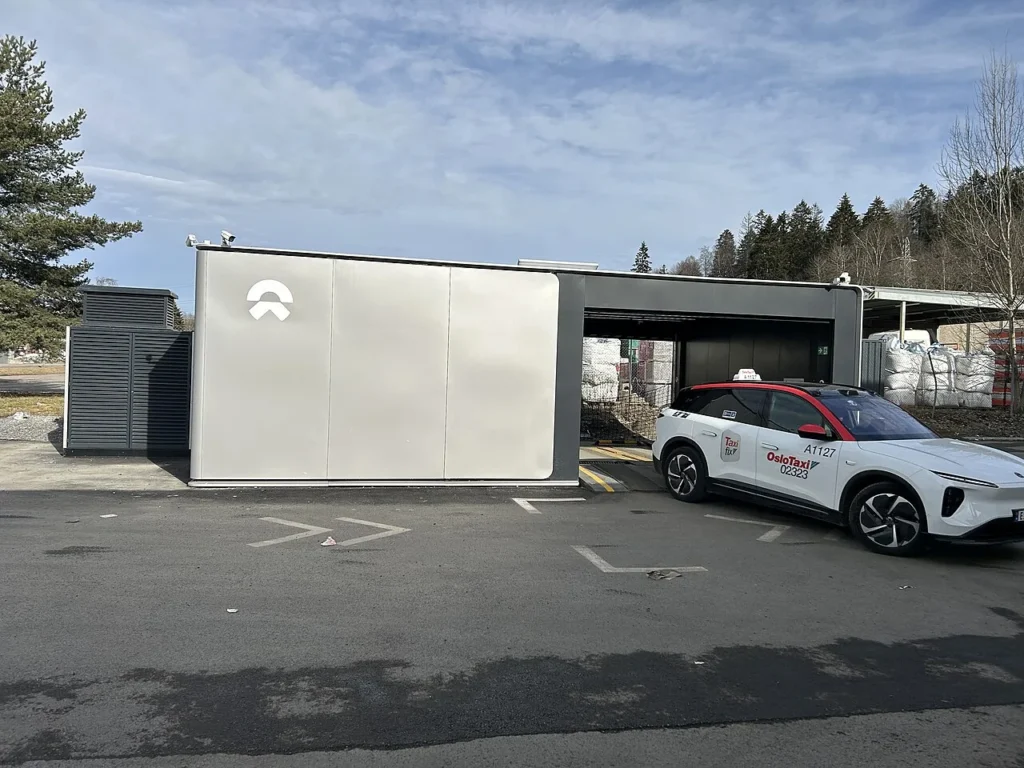
The idea works somewhere else. NIO, a Chinese carmaker, completed its 100 millionth swap on February 6, 2026, according to its own release, with 3,790 swap stations deployed worldwide since 2018. That tells you the service can reach scale. It says nothing about whether the network makes money. And NIO builds its own cars. Better Place depended on a manufacturer that called it a very minor part of its electric investment.
The customer carried the risk. You could keep driving the Fluence and charge it at home, but the swap and the value of the kilometers you’d bought depended on someone else keeping the service up. In Hawaii the stations needed a fob that OpConnect couldn’t easily reproduce.
So here is the question for every subscription, every locked-down charger, every over-the-air update and every app that opens your car: when the company behind it runs out of money on a Sunday, whose car is it?
Unplug and enjoy.
Images: Better Place (CC BY 2.0) · Better Place (CC BY 2.0) · Villy Fink Isaksen (CC BY-SA 3.0) · Eli.berckovitz (CC BY-SA 3.0) · Premeditated (CC BY-SA 4.0), via Wikimedia Commons.