
Spain e-scooter certificate deadline: millions of scooters lose the right to ride on January 22, 2027
Picture this. Your e-scooter now has a license plate. A real one, issued by the national traffic authority, with a number in the format M 1234 ABC, a reflective sheet, anti-forgery features, and a sticker printed by the same shops that make plates for cars. You paid a fee to get it. You bought mandatory liability insurance, the same kind of policy a car needs.
And on January 22, 2027, if your scooter left the factory without a lab certificate, that plate stops meaning anything. The scooter can’t go on a public road again. Not because it broke. Because of a piece of paper it never had.
That’s Spain right now. A country that decided an e-scooter is a vehicle, with everything that comes with the word.
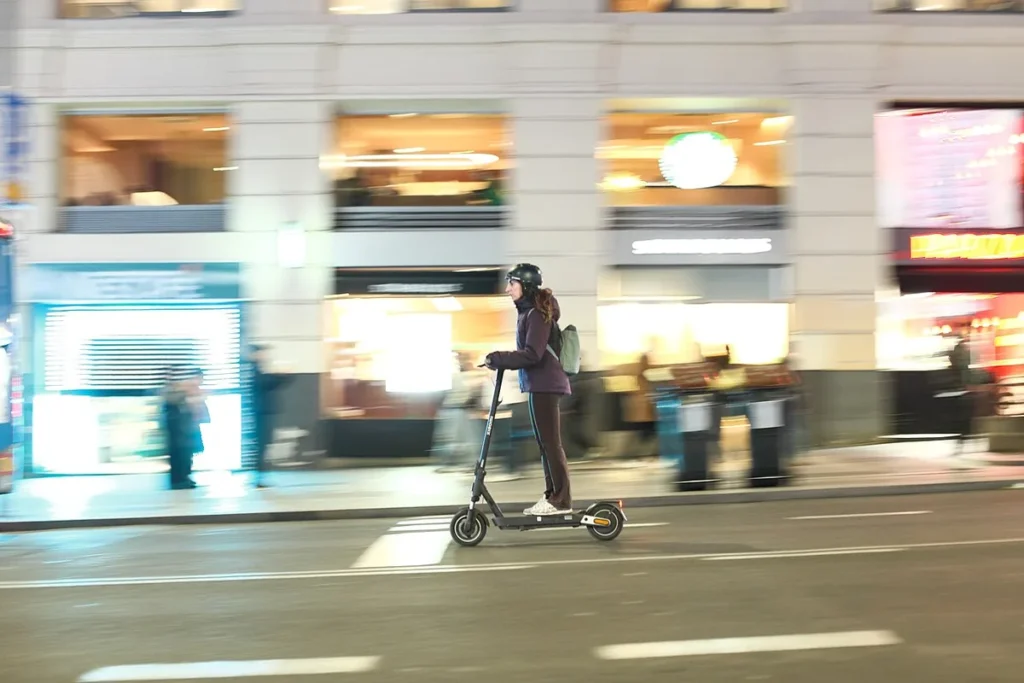
Spain didn’t ban scooters. It turned them into vehicles
Start with the scale. When Spain’s traffic authority, the DGT, published its technical rulebook for personal mobility vehicles in January 2022, it cited estimates of about one million of them in the country. By January 2026, when it launched the national scooter registry, the estimate it gave was more than four million.
Four million scooters, and the government’s answer was to treat every one of them like a car. Registration in the national vehicle registry. An ID plate. Mandatory insurance. A minimum age. A helmet on every rider. Lights. Rules about where they can and can’t go.
None of this happened overnight. It came in layers, and the layers matter, because the deadline at the end of them catches people who think they’re already legal.
The paper trail, in order
November 2020. Royal Decree 970/2020 rewrote Spain’s traffic and vehicle regulations and created a legal category for personal mobility vehicles, which Spain calls VMP. The key line: to ride on public roads, a VMP needs a certificate of circulation proving it meets the technical requirements in its own rulebook.
January 2022. The DGT published that rulebook, the Manual of Characteristics for Personal Mobility Vehicles, in the official state gazette on January 21, 2022. Section 33 set two clocks running:
- Every model sold starting 24 months after the manual took effect had to be certified. That landed on January 22, 2024. Since that day, no uncertified scooter can be sold new in Spain.
- Every scooter sold before that could keep riding for five years from the manual’s entry into force. That lands on January 22, 2027.
July 2025. Law 5/2025, of July 24, extended mandatory liability insurance to these vehicles. It took effect January 2, 2026.
January 2026. Royal Decree 52/2026, of January 28, published January 30, 2026, created the Registry of Light Personal Vehicles inside Spain’s national vehicle registry. It also restated, in its first transitional provision, that uncertified VMPs can ride until January 22, 2027.
June 2026. Royal Decree 518/2026, of June 24, published June 26, rewrote the traffic code again. In force since October 1, 2026, it set a minimum age, made helmets mandatory and tightened where scooters can ride.
Read those dates as one sentence and the trap is obvious. The deadline has been in the official gazette since 2022. Most owners will learn about it in January 2027.

What Spain actually counts as a scooter
The definition is tight, and it decides everything.
A VMP has one or more wheels, a single seat position, an electric motor and nothing else, and a top design speed between 6 and 25 km/h. That’s roughly 4 to 15.5 mph. Above 25 km/h, about 15.5 mph, it’s not a VMP at all. That scooter someone unlocked to go faster doesn’t get the grace period, the registry or anything else in this system. Legally, it’s not a VMP.
Inside that group, Royal Decree 52/2026 carves out “light personal vehicles,” the label the registry is named after:
- Under 25 kg (about 55 lb): top factory speed between 6 and 25 km/h.
- Over 25 kg: the top speed drops to 14 km/h, roughly 8.7 mph.
A heavy, fast scooter, over 25 kg and over 14 km/h, isn’t a light personal vehicle. For insurance purposes, Spanish law treats it as a motor vehicle, and the fines go up. But don’t let the registry’s name fool you. The decree says the rest of the VMPs get registered the same way. Heavy or light, every scooter goes in.
Four layers, four different things

Here’s where most people get lost, Spaniards included. People say “homologated” for everything. The DGT doesn’t. It separates four things.
The certificate. In the ordinary process, it belongs to the model, not your unit. An authorized lab tests the model against the manual. If it passes, every unit leaves the factory with a permanent, unique, legible marking plate listing top speed, serial number, certificate number, year of manufacture, make and model. Certificate numbers from labs follow a letter-plus-four-digits format; the DGT’s public list shows codes like A1009 or B1155.
Registration. The owner does this, online through the DGT’s portal. The fee, known as fee 4.1, is €8.67. For a minor, a legal guardian registers it.
The plate. After registering, you get a digital certificate with your ID number. You take it to a licensed plate maker, the same businesses that make car plates, and they print the sticker. The plate carries the ID number in the center, the lab certificate number on a blue strip at the bottom and the scooter’s serial number on the left edge, so an officer can match it against the factory marking.
Insurance. Mandatory since January 2, 2026, with a staggered start. In December 2025 the DGT said liability insurance for light personal vehicles couldn’t be enforced until the registry was up and running. Heavy scooters, over 25 kg and over 14 km/h, had to be insured with no registration at all, and their grace period ended January 26, 2026.
Until January 22, 2027, an uncertified scooter can still ride if it has the other three layers. After that date, without a certificate, the other three stop letting it ride.
The part that should make you angry
Uncertified scooters have to register too. The DGT accepts an invoice, a spec sheet or a photo instead of certification data. Same €8.67 fee. The plate can go anywhere visible on the scooter. And the owner still has to buy insurance.
Then comes the line the DGT itself put in writing: the registration of uncertified VMPs is temporary and stops having effect on January 22, 2027, after which they can’t ride.
So if you’re regularizing an uncertified scooter today, the state is charging you to register, plate and insure a vehicle whose registration it has already dated to expire in under three months. People who did it back in February got most of a year out of it. Anyone doing it now gets a few weeks.
And paying for registration and insurance only settles those two obligations during the grace period. It doesn’t fix anything else that’s wrong with the scooter.
The fines the DGT has actually published
Plenty of numbers are floating around online. We’re sticking to the ones in the DGT’s January 27, 2026 press release launching the registry. Not having the mandatory insurance carries fines of €202 to €610. Riding without insurance carries €250 to €800, depending on whether the scooter counts as a light personal vehicle or a motor vehicle.
For riding an uncertified scooter after January 22, 2027, we found several figures in the press and none we could confirm from an official source, so we’re not printing one. What is certain: from that date it can’t ride on public roads, and its registration stops having effect. What expires is the right to ride. The law doesn’t force you to get rid of the scooter, and there’s still a way to certify it.
The escape hatch almost nobody mentions
Spain’s vehicle regulation, in section 5 of its annex XIX, added by Royal Decree 52/2026, allows an extraordinary certification for an uncertified scooter. The 2022 manual already had it. The owner, not the manufacturer, requests it through an authorized lab, bringing the scooter and whatever technical documentation exists. The lab runs only non-destructive tests, then issues a technical report and a certificate with a positive or negative result, sent to both the owner and Spain’s Central Traffic Headquarters within a week at most. Individual certificates add a U after the letter in the number.
A positive result isn’t the end. You then have to update the registration and the plate with the new certificate, like any other certified scooter.
The catch: we couldn’t find a single published price for this process, so we’re not guessing one. The owner pays. A missing certificate doesn’t prove an old model fails the rules. It may simply have been sold before certification was required, or nobody ever asked a lab to test it. But if it doesn’t meet the technical requirements, the result comes back negative and the money is gone.
The new riding rules since October 1, 2026
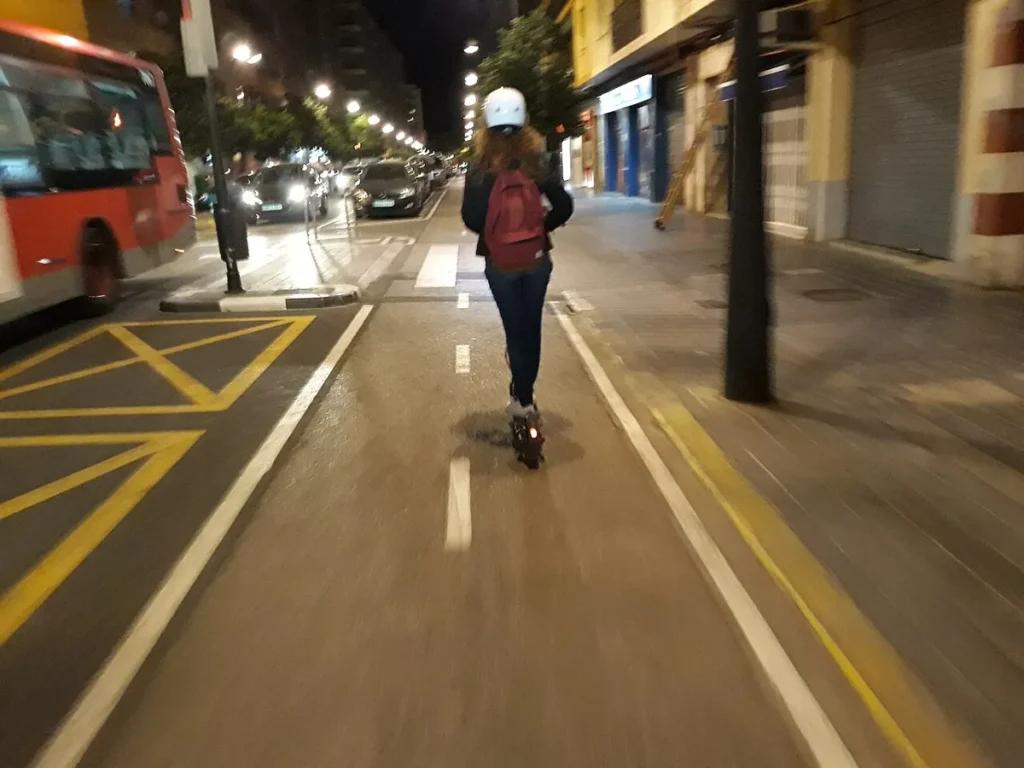
Royal Decree 518/2026 added a whole layer on how you ride:
- Minimum age 15. Article 155.3 says it flatly: people under fifteen can’t ride a VMP.
- Helmet for everyone. Article 118.3 requires VMP riders to wear a homologated or certified helmet, properly buckled.
- Night visibility. At night or in low visibility, riders need at least one light or reflective element visible from 150 meters, about 490 feet. Anyone riding for work, like delivery riders, must wear a high-visibility vest on every type of road.
- Lights. Article 155.5 requires lights to be on at all times. Daytime use becomes enforceable on October 1, 2027.
- Where you can’t go. No highways, no expressways, no through-town stretches of intercity roads, no intercity roads in general, no urban tunnels. Bike paths, bike lanes, shared cycle tracks and roads closed to motor traffic are the exception, unless signs say otherwise. Sidewalks are off-limits. Inside towns, each city council decides through its own ordinance which streets scooters can use.
- Hand signals. Riders must always signal turns with their arm.
- Passing. Drivers overtaking a scooter must leave at least 1.5 meters, roughly 5 feet, and outside towns slow down at least 20 km/h, about 12 mph, below the road’s limit.
The reform also wrote VMP riders into the legal definition of vulnerable road users. The numbers back that up. According to the DGT’s 2025 road-safety report, 21 VMP users died on urban roads in Spain that year, and 13 of them weren’t wearing protection.
If you’re buying a used scooter in Spain
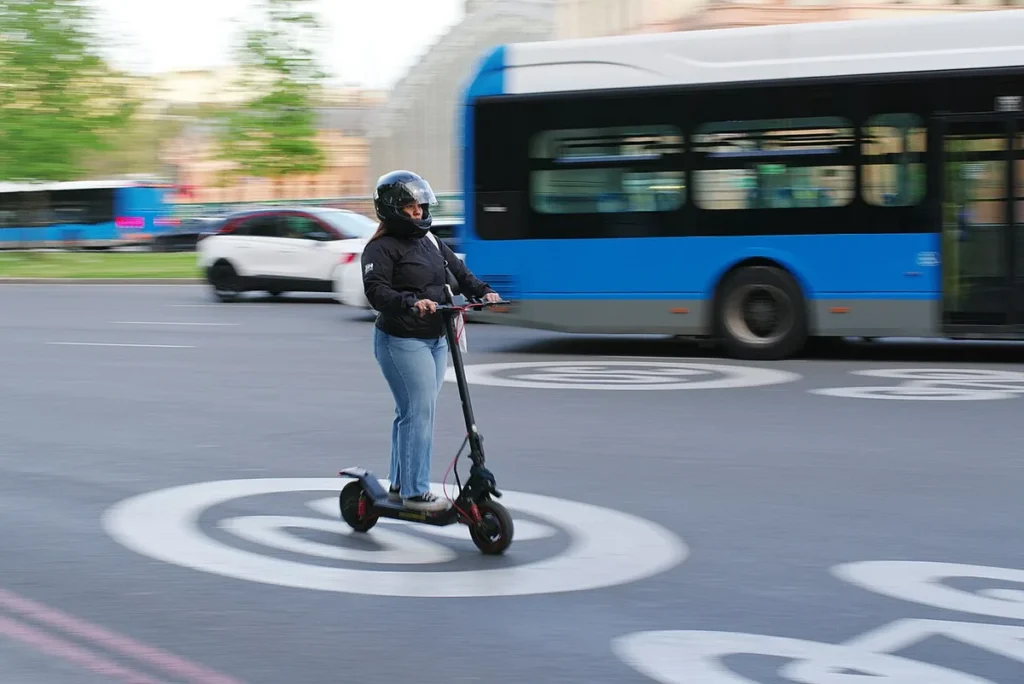
This is the trap that will bite first. As January gets closer, uncertified scooters will flood the secondhand market, cheap and looking perfectly fine. A buyer can register one, pay the fee, buy the plate, buy the insurance and ride it for a few weeks. Then on January 22 they own something that can’t go on the street.
Before you buy:
- Ask to see the factory marking plate and photograph it.
- Check the certificate number and the exact version on the DGT’s public list. One model name can include certified and uncertified versions.
- If it’s already registered, ask for the registration certificate. A change of ownership has to be filed within 30 days, and the buyer pays the fee.
- Ask about the battery: how old it is and how it was charged. What we explained about charging an EV to 80% and battery thermal management applies to a scooter pack too.
No marking plate, no street use. Walk away.
The buyer pays for everything
The rules make sense. A machine doing 15 mph among pedestrians needs brakes that work, lights you can see and someone on the hook when it hits somebody. No argument there.
The order is what’s broken. For years, anything went: shops, big-box stores and websites sold whatever they wanted, all of it perfectly legal. The buyers acted in good faith. Now those buyers carry the whole bill: registration, plate, insurance, the lab test if they want to try, and if it fails, a scooter that never leaves the garage. Whoever sold uncertified stock before 2024 isn’t asked for anything. The buyer is asked for everything.
And the temporary registration is the cherry on top. Charging latecomers to register a vehicle whose registration the state itself has scheduled to die on January 22 isn’t mobility policy. It’s a toll booth on the road to the scrapyard.
If you’ve got a scooter in Spain, look at the marking plate this week, not the night before. No number, and you already know what’s sitting in your hallway.
Unplug and enjoy.
Images: Javier Pérez Montes (CC BY-SA 4.0) · Javier Mediavilla Ezquibela (CC BY 4.0) · VELKEJ LED (CC BY-SA 4.0) · Pacopac (CC BY-SA 4.0), via Wikimedia Commons.