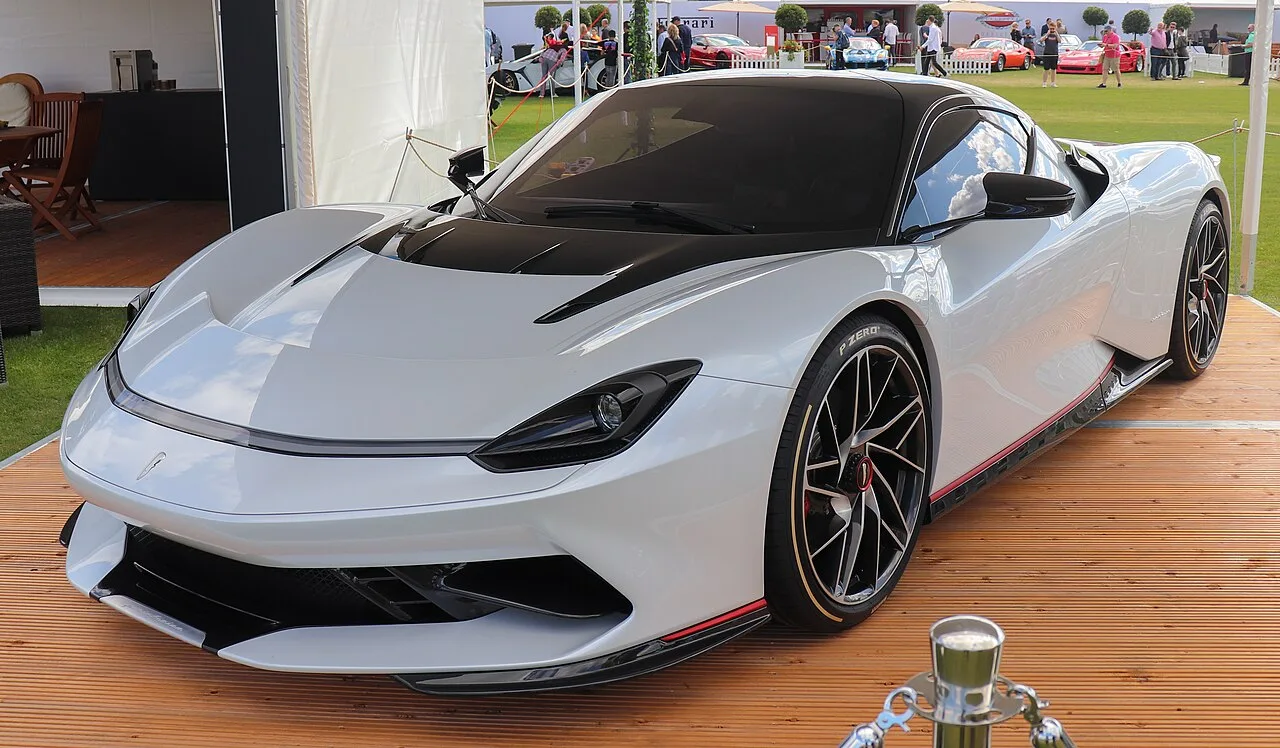
Pininfarina Battista: the $2 million Italian exotic running on Croatian guts, and why America should get it
America invented the beloved mongrel car. The most worshipped American sports car ever built, the Shelby Cobra, was a British AC body with a Ford V8 stuffed in the nose, and nobody has ever docked it a single point of legend for it. So when a two-million-dollar “Italian” hypercar turns out to run on Croatian running gear, built by a company most Americans had never heard of five years ago, the United States should be the first place on Earth to shrug and say: so what, the Cobra did fine. The Pininfarina Battista is the ultimate mongrel: an Italian name, a Croatian heart, an Indian owner and a German corporate address. It forces a question that matters far beyond this one car: in the electric age, with the engine gone, does the badge on the nose still mean anything at all?
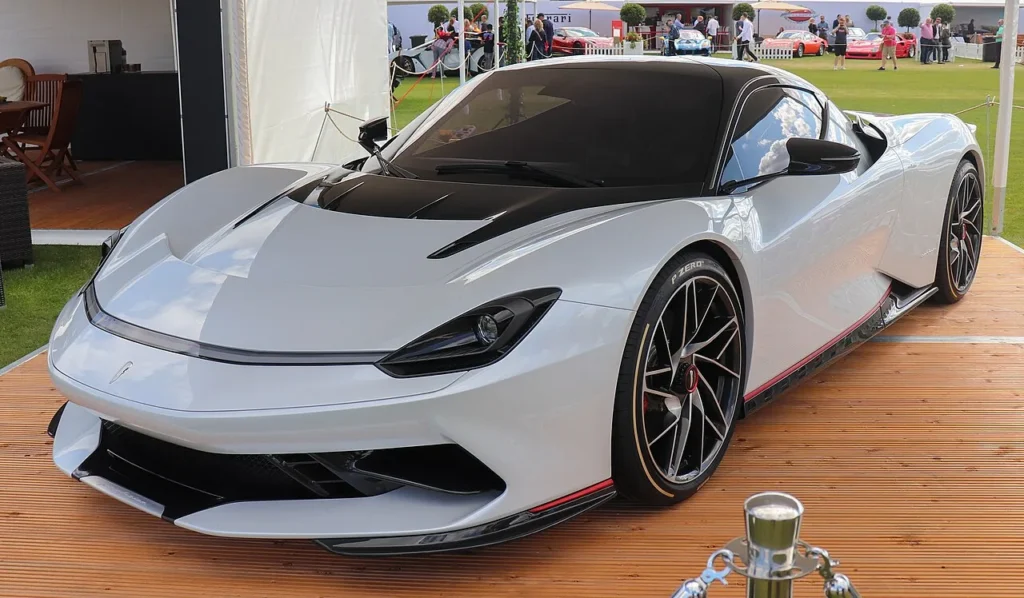
Let’s take it apart, because the story is stranger than the spec sheet.
What it is, straight off the spec sheet
The Battista broke cover at the 2019 Geneva show and entered production in 2022, capped at 150 cars, and the original 2019 allocation earmarked 50 of them, a full third, for North America. Four electric motors combine for 1,417 kW, which is about 1,900 hp (1,927 metric PS), with 2,340 Nm (roughly 1,725 lb-ft) of torque in production trim. The battery is 120 kWh. Pininfarina itself quotes 0–60 mph in 1.79 seconds and 0–100 km/h (62 mph) in 1.86; the commercial top speed is 350 km/h, though a run at India’s Natrax proving ground clocked a measured 358. It weighs 2,302 kg (5,075 lb), is hand-built in Cambiano, Italy, and carries the name of Battista “Pinin” Farina, the founder, as a tribute. Pricing started north of two million dollars.
Line it up against its contemporaries and the picture sharpens. The Tesla Model S Plaid, on sale since 2021, puts out 1,020 hp, claims 0–60 in 1.99 seconds with rollout and weighs about 4,766 lb, for a fraction of the price. The Rimac Nevera, the Battista’s technical twin, reached customers in 2022 with 1,914 hp, the same 120 kWh battery and a claimed 0–60 of 1.85 seconds. The Lotus Evija, delivered from 2024, claims close to 2,000 hp at 1,887 kg (about 4,160 lb). And the Ferrari F80, revealed in 2024, settles for 1,200 metric horsepower from a hybrid V6, weighs 1,525 kg dry and develops its powertrain in Maranello. Of that group, the Battista is the one that buys its muscle from somebody else.
On paper it’s a textbook Italian hypercar: legendary name, sculpted body, deranged numbers. The questions start when you ask where each piece of that recipe actually comes from.
The four flags

Add up the Battista’s geography and you get the most stateless car ever sold as a patriotic one. The name and the design are Italian, out of Turin. The ownership is Indian: Mahindra, the conglomerate that announced the purchase of the historic Pininfarina design house in 2015 (closed in 2016) and launched the carmaker, Automobili Pininfarina, in 2018. That company is registered in Munich, Germany. And the hardware that moves it is Croatian, from Rimac: the Battista shares its battery and powertrain with the Rimac Nevera, and those parts come out of Rimac’s plant in Sveta Nedelja before final assembly by hand in Cambiano. Four countries in one car that everyone, on sight, files as 100% Italian.
Badge engineering is American, and this flips it
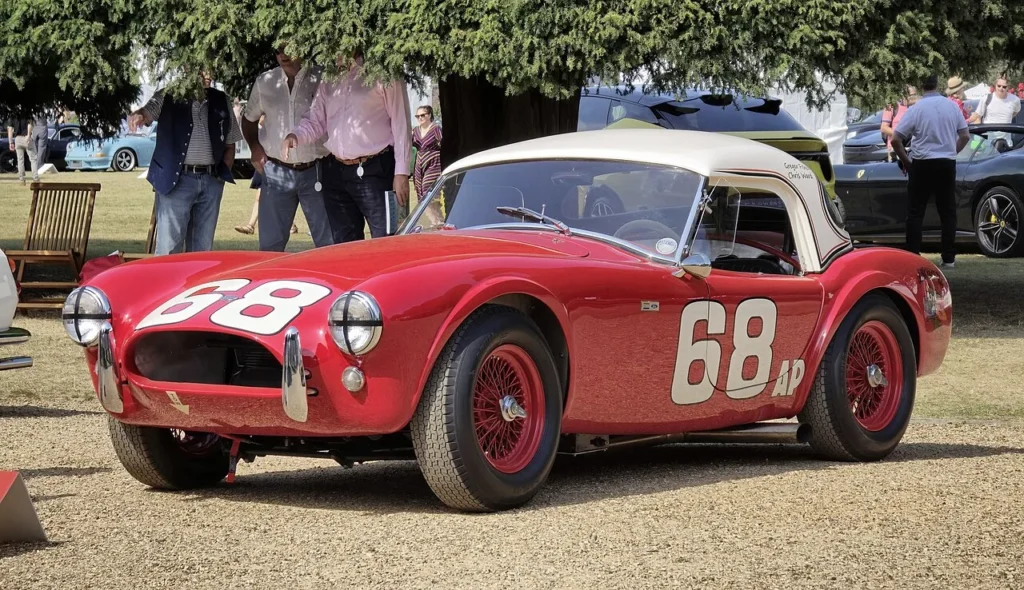
Here’s why America should feel at home with this and uneasy about it at the same time. Rebadging is Detroit’s native tongue: for decades the same car was sold as a Chevrolet, a Pontiac, an Oldsmobile and a Buick, with different grilles and prices. America perfected the art of selling one machine under many names. But that was always badge engineering pointed downward, spreading a cheap platform across brands to save money.
The Battista does the opposite, and that’s what’s new. It takes a Croatian hypercar’s guts and sells them upward, at a colossal premium, under a glamorous borrowed name. It’s reverse badge engineering, aimed at the very top of the market. And the Cobra precedent cuts both ways here. Yes, a borrowed heart can make an immortal. Carroll Shelby proved that bolting someone else’s engine into someone else’s body can birth a legend. But the Cobra never pretended to be a pure-bred anything; its mongrel nature was the whole point and the whole charm. The Battista, by contrast, leans on a century of Italian purebred mystique while quietly running on parts from a Croatian startup. How openly a car owns its mongrel nature is the difference, and it’s worth noticing which side of the Cobra line this one wants to stand on.
Why a legendary name was even for sale
To understand how an Italian icon ended up owned in Mumbai and registered in Munich, you have to know what happened to Italy’s design houses, and it’s a quiet tragedy few in America followed. The great Italian carrozzieri, the independent studios that styled and often built the world’s most beautiful cars, were dying out. Bertone, the house behind countless Lamborghinis and Alfas, went bankrupt in 2014. Italdesign, Giorgetto Giugiaro’s firm, had been absorbed by Volkswagen’s Audi. And Pininfarina, the grandest of them all, was drowning in debt after the collapse of its contract-manufacturing business, until India’s Mahindra announced the purchase in late 2015 and closed it in 2016.
So the Battista isn’t just a vanity project; it’s a survival strategy. A storied name, starved of the carmaker clients that once paid its bills, reinvented itself as a car brand of its own under foreign ownership. The romance of “Pininfarina builds its first hypercar” has a harder story underneath it: a legend that had to be rescued by a conglomerate on the other side of the world, and then handed a Croatian heart, just to have a product to sell. That context doesn’t cheapen the Battista. It explains why it exists, and why it looks the way the modern car business actually looks.
The EV twist America already knows
There’s a second reason this lands differently in the United States. America’s own electric champions went the exact opposite way. Tesla and Lucid built their future on vertical integration: their own battery packs, their own motors, their own software, the whole heart made in-house, because in Silicon Valley owning the hard part is the entire value. Tesla didn’t even start there. Its first Roadster rode on a glider built by Lotus in England, and the company spent the next decade pulling every critical part back under its own roof. The Battista is the anti-Tesla on that count: a famous name that outsourced the hard part entirely and kept the pretty part.
Both approaches are legitimate, and the market will sort them out. But they point at the same awkward truth about electric cars, and here it is in one line: in an EV, the “skateboard”, the flat slab of battery and motors, increasingly is the car, and it comes from a handful of suppliers. Tesla chose to be one of those suppliers to itself. Pininfarina chose to be a customer. When the heart is a component you can buy, the thing left to distinguish a brand is everything wrapped around it.
The startup that became the heart
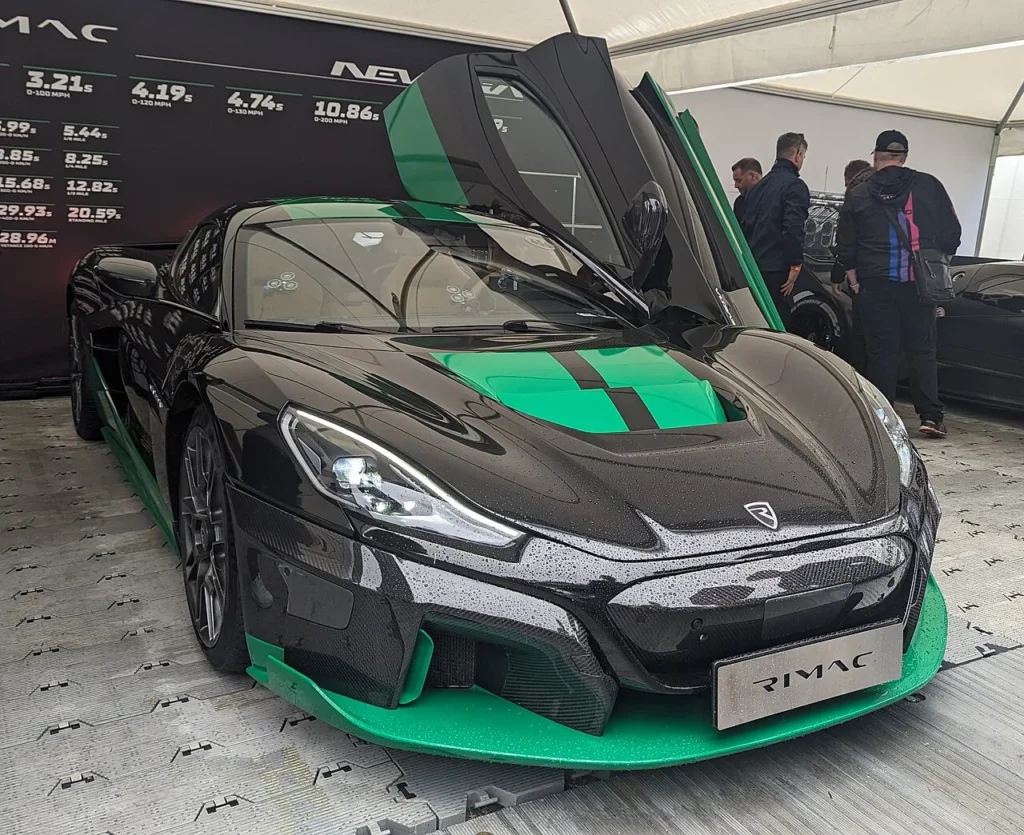
It’s worth knowing who supplies that heart, because it’s the best part of the story. Rimac is no century-old giant. It’s the company Mate Rimac built from a Croatian garage, where around 2007 he started converting an old BMW 3 Series to electric out of sheer stubbornness after its gas engine blew; he founded the firm in 2009, and by 2011 that BMW was setting records. Inside a decade and a half it became the world’s reference for high-performance electric hardware, good enough to sell its batteries and drivetrains to names with far more pedigree. In 2021 it took the controlling 55% of the new Bugatti Rimac, with Porsche holding the other 45%, and in September 2026 Porsche finished selling its stake to a consortium led by New York’s HOF Capital. The Croatians still run Bugatti.
The heart of the car wearing the most Italian name in the business is built by the same outfit that now controls Bugatti, a company that didn’t exist before 2009. That’s the great inversion the electric era has delivered: the century-old house supplies the name and the face, and the garage startup supplies the engineering that actually moves the thing. For an American reader raised on the idea that the badge is the maker, it’s a genuine head-turn: the maker, increasingly, is the supplier you’ve never heard of.
Credit where it’s due
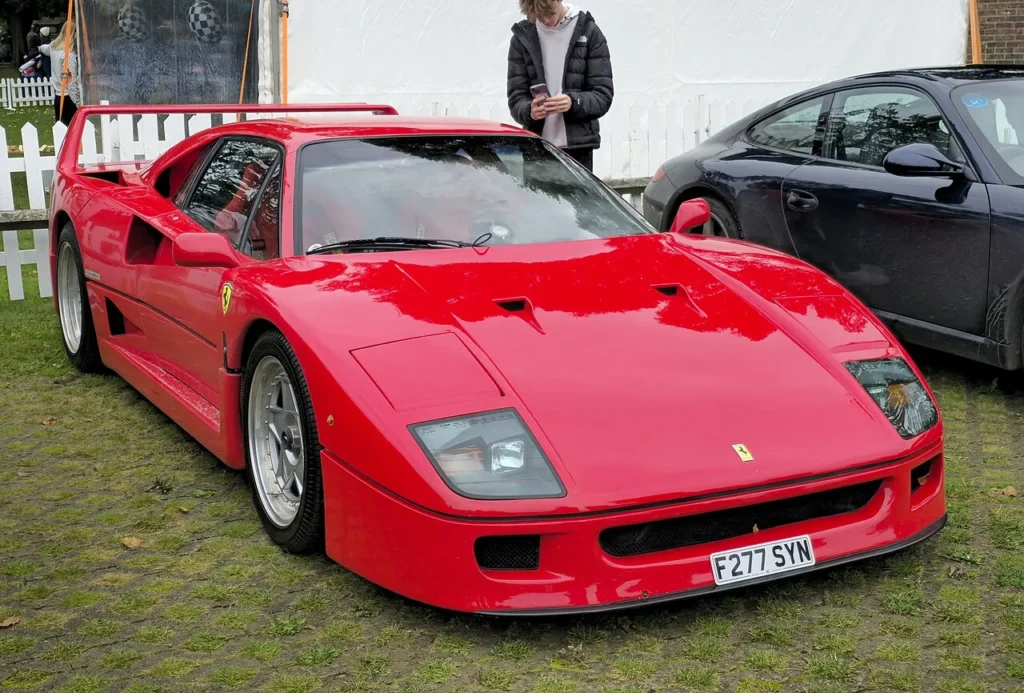
It would be cheap, and wrong, to call the Battista a rebodied Rimac and leave it there. Buying a drivetrain is not a crime: the whole industry shares platforms, and so did the Cobra. Pininfarina owns the design, by Luca Borgogno, which is genuinely the thing this house has done better than anyone for nearly a century. Four of Ferrari’s Big Five, the 288 GTO, F40, F50 and Enzo, came off Pininfarina’s drawing boards; only the LaFerrari of 2013 was penned in-house at Maranello. Our sister site Not Enough Cylinders covers the whole Big Five lineage. Pininfarina also owns the body, the interior, the chassis tuning, the hand assembly, and the integration and calibration of the whole car, including the torque-vectoring tuned by Automobili Pininfarina’s engineers in Italy. Pulling a Croatian powertrain and an Italian body into one coherent, drivable, beautiful machine is real engineering, not decoration. What’s borrowed is the single most important organ. What’s theirs is everything else.
The Spanish footnote nobody connects
The Battista wasn’t the only electric hypercar with a historic name at Geneva in 2019. The same show saw the Hispano Suiza Carmen, the electric return of the Barcelona marque that once built luxury cars to rival Rolls-Royce: 1,019 metric horsepower, an 80 kWh battery, 19 cars planned from €1.5 million before taxes, and assembly in Barcelona. Its powertrain was developed with QEV Technologies, a Barcelona engineering firm founded in 2013 as CR Tech, out of the Campos Racing world. Same year, same stage, same recipe of storied badge plus specialist electric heart, except Hispano Suiza sourced that heart at home.
Here’s the kicker. From the 2015–16 season, the race operations of the Mahindra Formula E team were run by Campos Racing and QEV Technologies, with much of the work done at their facilities near Barcelona. So the Indian group that bought Pininfarina and bankrolled the Battista trusted Catalan engineers with its electric race team for years, and still went to Croatia for its road car’s heart.
The flaws
As an object the Battista is staggering, and flattering it with blanket praise would be a disservice. Two things, though. First, the weight: 2,302 kg is an enormous mass for something sold as a hypercar, the same anchor its Rimac cousin drags around, because 120 kWh of battery weighs what it weighs. Second, and this is the wallet question: for north of two million dollars you are buying a technical core that also exists, with different bodywork and a different badge, in the Rimac Nevera. You are paying a king’s ransom for the design, the hand-finishing and, above all, the name on the nose.
None of that makes it a bad car; as a piece of design and body engineering it’s superb. But the buyer who thinks a Battista is an Italian machine conceived from the ground up in Italy is buying a different thing: an Italian work of art with its heart sourced abroad.
The verdict
The Battista isn’t a fraud, and taking that cheap shot would be lazy. It’s gorgeous, violently fast, and the part Pininfarina signs, it signs beautifully. But it’s the most elegant proof going of how electrification is rewriting what a car brand even is. When the heart is made by a few suppliers and bought off the shelf, the crest on the nose counts more and more for what surrounds it (design, integration, character, history) and less and less for what sits under the skin, which might be the same as the car parked next to it. The brand’s slice of engineering shrinks toward everything that isn’t the drivetrain.
And America, of all places, is the right judge of this, because America has already lived the whole argument. It built the Cobra and loved it precisely for being a mongrel. It built Tesla and Lucid by owning the heart outright. The Battista sits between those poles: a borrowed heart wrapped in borrowed glamour, sold at full purebred price. Whether that’s a worthy heir to a great name or a beautiful badge on someone else’s machine isn’t a question of horsepower, and it never will be again. It’s a question of what you think you’re paying for when the fastest part of your car came out of someone else’s catalogue. The car does 0 to 60 in 1.79 seconds by its maker’s own stopwatch. The real question is who, exactly, built the part that makes it do that, and whether, anymore, that’s supposed to matter.
Unplug and enjoy.
Images: Vauxford (CC BY-SA 4.0) · Alexander Migl (CC BY-SA 4.0) · Calreyn88 (CC BY-SA 4.0) · Calreyn88 (CC0) · Calreyn88 (CC BY-SA 4.0), via Wikimedia Commons.
1 thought on “Pininfarina Battista: the $2 million Italian exotic running on Croatian guts, and why America should get it”