Rimac Nevera R: the man who built the world’s fastest car no longer believes in it
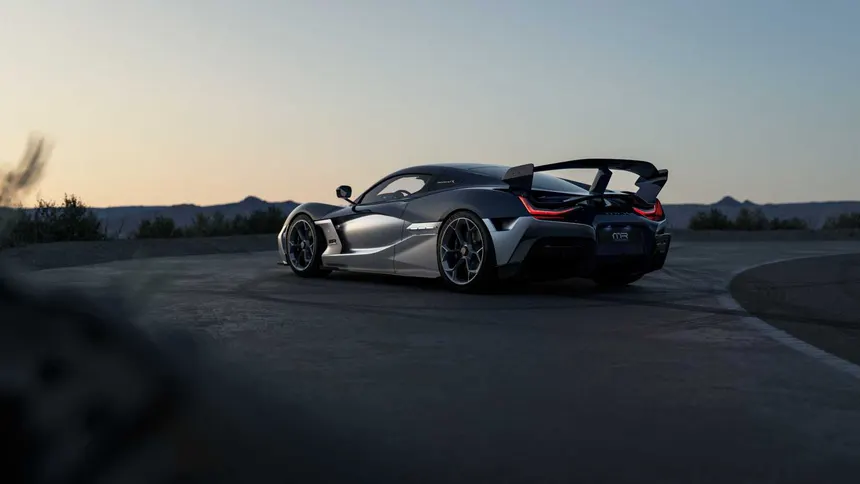
The quickest-accelerating production car ever made didn’t come from Detroit. It didn’t come from Stuttgart, Maranello or Silicon Valley. It came from Croatia, a country with no car industry to speak of, built by a guy who started in a garage. And that same guy, with the record barely cold, has said out loud that demand for high-end electric hypercars is cooling off and that his next car might not even plug in. That’s the story. Not the numbers, which are absurd. The crack the creator left wide open.
For an American reader raised on the idea that horsepower is a national birthright, the Rimac Nevera R is an uncomfortable object. It is faster than anything Ford, Chevrolet, Tesla or Hennessey has put on the road, and it makes that speed look easy. Which turns out to be exactly the problem. Let’s take it apart.
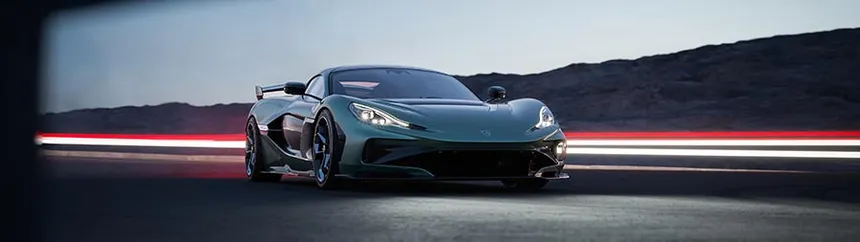
Croatia didn’t build cars. Now it sells the guts to Porsche
Mate Rimac started by electrifying an old BMW 3-Series E30 in a garage because his gas engine kept blowing up on track. From there to half the premium industry knocking on his door for batteries and power electronics is a leap the press releases file under “talent.” What it really was: years of grinding while the entire industry assumed an electric car could never be a real driver’s car.
Croatia had no carbon-fiber chassis suppliers. No electric-motor supply chain. Not a single engineer with hypercar experience. Rimac built all of it from zero and ended up controlling Bugatti through the Bugatti Rimac venture, with Porsche as a heavyweight shareholder. The garage kid now runs the most aristocratic name in gasoline. Hold onto that, because the ending needs it.
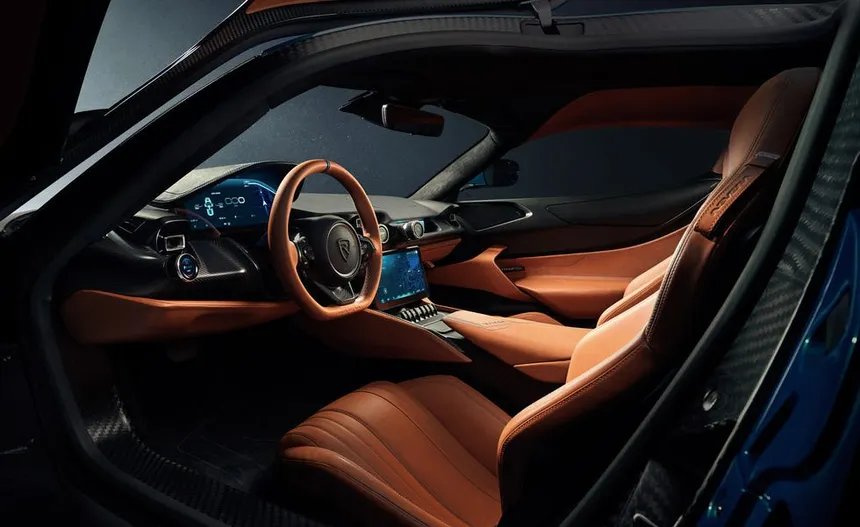
The Nevera was born with a deliberately contradictory brief: a car that would smash lap records across Europe and still cross a continent without wrecking your back. A grand tourer with the soul of a missile. They pulled it off, which is the hard part.
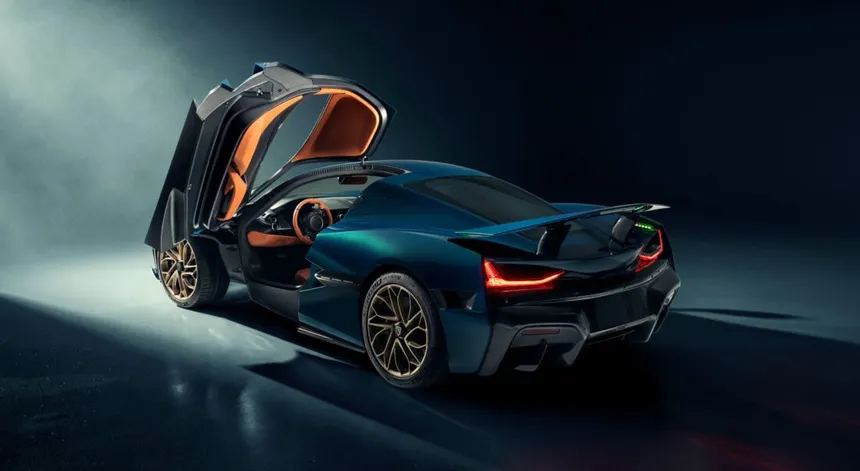
Nevera (2021): records to spare as the comfortable one
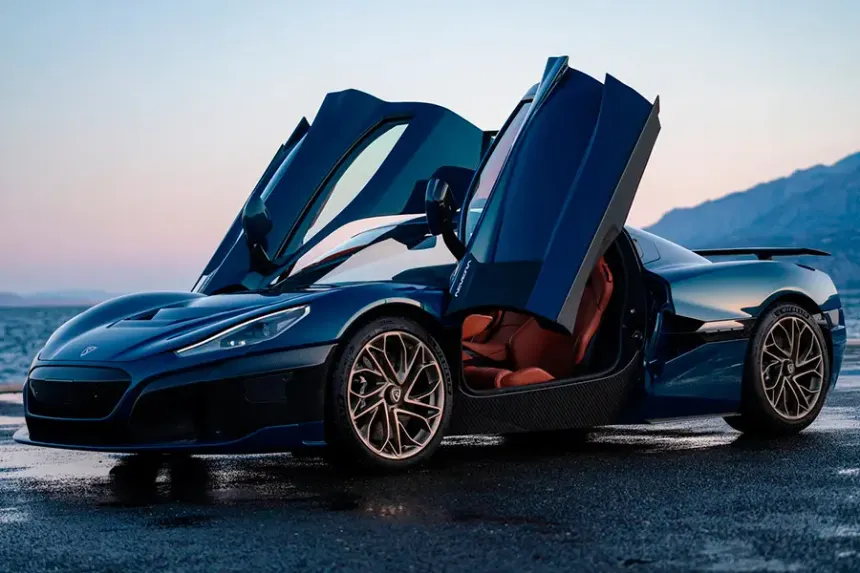
The road Nevera launched with four electric motors, 1,914 hp and orders to be livable. Rimac sold it as a grand tourer, not a track weapon. It broke records anyway.
In a single day in May 2023, on the four-kilometer straights of the Automotive Testing Papenburg facility in Germany, the Nevera set 23 performance records, including 0–60 mph in 1.74 s and the quarter mile in 8.25 s. Earlier, in November 2022, it had nailed its top speed: 412 km/h (258 mph), which by Rimac’s own account made it the fastest production EV in the world. Engineers had fixed that number as a target back when the car was still the C_Two concept shown in Geneva in 2018; it took years and 1.6 million development hours to verify.
It also took the production-EV hillclimb record at the Goodwood Festival of Speed, at 49.32 seconds, and the fastest EV lap at the Nürburgring Nordschleife, 7:05.298. All of it, again, with the comfortable member of the range. The one built to carry luggage.
Here’s the read almost nobody underlines. The “world’s fastest” bar was set by a car that wasn’t even designed to be as extreme as possible. The record was almost a byproduct of getting the engineering right. Put it against its contemporaries: when the Nevera set those times, gasoline’s benchmarks were the Bugatti Chiron and the Koenigsegg Jesko, mid-engine machines with seven- and nine-speed gearboxes fighting over tenths. The Nevera walked past them in acceleration with no gearbox at all, just the flat brutality of electric torque. That was the 2021 novelty: not that it was fast, but that it was fast without any of the mechanical theater that used to define a hypercar.
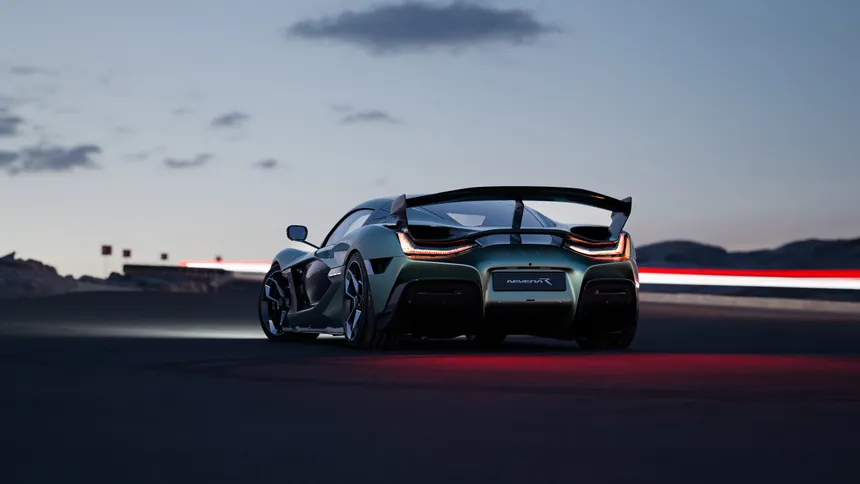
Nevera R (2025): gloves off
Five years later, at Monterey Car Week, the R arrived. Rimac parked the comfort and went straight for the throat. The numbers, independently verified by Dewesoft, are dizzying.
The R climbs to 2,107 hp from the original’s 1,914. Per Rimac, it reclaimed the 0–400–0 km/h title with a time of 25.79 seconds, 2.04 seconds quicker than the previous holder, the Koenigsegg Jesko Absolut. In pure acceleration, the Nevera R does 0–60 mph in 1.66 seconds and hits 300 km/h in 7.89 seconds, against the standard Nevera’s 9.22. And its recorded top speed: 431.45 km/h (268.2 mph), a new production-EV record.
It’s capped at 40 units worldwide, starting at 2.3 million euros. Each one carries, in the brand’s own words, the badge of the most comprehensively record-breaking hypercar ever built. The re-engineering was total: fixed rear wing, larger diffuser, redesigned nose adding 15% more downforce, Michelin Cup 2 tires and a recalibrated torque-vectoring system that cuts understeer by 10%.
Mate Rimac summed it up with a line that reads like brochure copy and isn’t: he said it’s the only car in the world that brakes harder than it accelerates. Looked at properly, that line is a confession. I’ll break it down, because it’s the key to everything.
What this does to the American hypercar story
For a US audience, the Nevera R lands on a sore spot. America has spent a decade telling itself two speed stories at once. One is Tesla: the second-generation Roadster, unveiled in 2017 with a promised sub-2.0-second 0–60 and a base price around 200,000 dollars, a car that was going to make Detroit and Stuttgart look slow. Years later it remains a promise, not a product. The other is the boutique top-speed chase — Hennessey’s Venom, SSC’s Tuatara — American outfits fighting for a number in the desert.
Rimac walked into both stories and settled them without raising its voice. It built the quickest-accelerating production car on earth, electric or otherwise, and did it while Tesla’s halo car stayed on a slide. It didn’t need a promise or a disputed radar run; it brought Dewesoft, logged the times and moved on. The uncomfortable takeaway for the home crowd is that the definitive electric performance statement of the decade wasn’t made in California or Texas. It was made by 40 hand-built cars from a country most Americans couldn’t place on a map. And the man who made it is the first to say the whole chase may be running out of road.
The detail nobody puts at the center: the electric king loses to his own Bugatti
First slap to the official story.
The Nevera R does not hold the outright top-speed record. No EV does. A gasoline car from 2019 holds it: the Bugatti Chiron Super Sport 300+, which reached 490.48 km/h. Which means the fastest production EV on earth runs, flat out, nearly 60 km/h short of a seven-year-old Bugatti.
Now the juicy part: Rimac controls Bugatti. The most advanced electric brand on the planet owns the combustion car that still beats it in the one figure the mainstream press can recite from memory. The king of the plug owns the king of gasoline, and gasoline wins. If any outlet has built its Nevera coverage around that paradox, I haven’t seen it.
There’s a technical reason worth stating, or it looks like witchcraft. For an EV, acceleration is cheap and sustained top speed is expensive. The instant torque of four motors launches you off the line like no V12, but holding 490 km/h for the seconds a record demands is a war of gearing, cooling and energy density that the battery, for now, still loses to a full tank of gas. That’s why the Chiron holds up top and the Nevera fades first. It isn’t about power; it’s about how long you can sustain it.
Mate Rimac’s confession
Now the crack.
With the record freshly set, Mate Rimac didn’t sell hype. He sold the opposite. He admitted the Nevera’s development began in 2016 on the belief that electric cars would soon be desirable, but that demand for very high-end EVs is now fading in favor of more analog, traditional alternatives. He used a cutting comparison: an Apple Watch does many things better and more precisely than a mechanical watch, but nobody would pay 200,000 dollars for one. And he closed by admitting Rimac is not an exclusively electric company and will chase whatever is most exciting at any given time, with its next car perhaps not being fully electric.
Read it twice. The man who built the most savage EV in history is saying, with his own numbers still in the air, that the market for desirable EVs is cooling and that he himself might not run the play again. There’s more: as of May 2025, Rimac still hadn’t sold all 150 units of the standard Nevera. The most technically impressive car on the planet doesn’t sell out. For a hypercar in this league, that’s an enormous tell.
That’s why “brakes harder than it accelerates” isn’t a slogan. It’s the admission that the challenge is no longer going fast in a straight line — that’s solved and it bores people — but everything else: braking, cornering, holding a hot lap without cooking the battery, being a car a man with 2.5 million actually wants and not just respects from a distance. The R chases that because raw speed stopped selling.
The verdict
Here’s NEB’s read, and it isn’t the industry’s.
The Nevera won the speed war so completely that the war lost its point. When 40 cars at 2.3 million each break two dozen records in an afternoon, what they prove is not that electric is the glorious future of the hypercar. They prove the stopwatch is dead as a measure of prestige. The next 3,000-hp EV will beat these marks and nobody will look up, because we already know a big electric motor and four driven axles crush any acceleration figure. The number stopped telling a story.
And Mate Rimac smells it. That’s why he leaves the door open on his next car. That’s why he flirts with the analog. The founder of the most important electric brand in the world senses that the buyer at this money doesn’t want the most precise watch: he wants the watch with noise, with vibration, with mechanics he can touch and talk about. The Nevera R is a masterpiece of engineering landing exactly as its own creator doubts that engineering is what gets paid for.
It’s not the car of the future. It’s the summit of a mountain that turned out easier to climb than it looked, planted by the one team with the real merit of getting there first and getting there well. What comes next won’t be “faster.” It’ll be “now what.” The Nevera is, most likely, the last car in which being the fastest in the world still meant something — crowned by a man already looking the other way.
Unplug and enjoy.