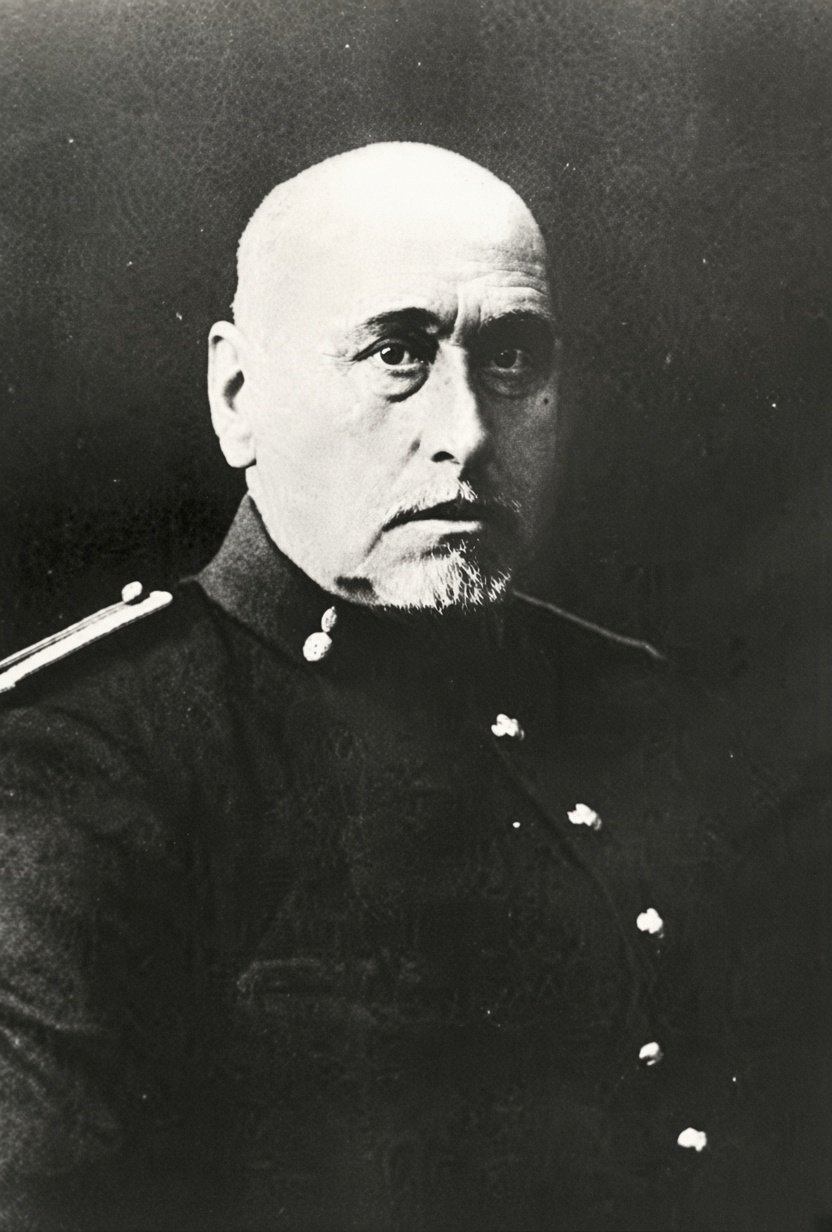
Emilio de la Cuadra: The Artillery Captain Who Built Spain’s First Car Factory
He brought electric light to a Spanish provincial city, founded the first automobile manufacturer on the Iberian Peninsula, hired a Swiss kid named Marc Birkigt, lost everything inside three years, and finished his career running a government stud-horse depot. Along the way he designed an electric bus with a gasoline engine on board whose only job was to recharge the battery while the thing was moving. Barcelona, 1900. A hundred and twenty-five years later the industry is selling that exact idea as a fresh new segment and has given it four letters: EREV.
Hispano-Suiza came out of all this. He got nothing.
If you follow this stuff in the United States, you already know the argument. Buyers want the electric drive but not the charging math, so manufacturers bolt a small combustion engine to the car as a generator and call it a range extender. Every one of those press releases is a rerun. A Spanish soldier ran the same play in 1900, and it went so badly that the country’s entire auto industry changed course because of it.
The soldier who found electricity first
Emilio de la Cuadra Albiol was born in Sueca, in the province of Valencia, on May 13, 1859. He entered the Artillery Academy in Segovia on September 1, 1877, and came out a lieutenant on July 23, 1881.
That academy matters more than it sounds. Spanish artillery officers of that generation were trained heavily in the sciences, and a royal decree in September 1895 formally recognized their qualification as industrial engineers for civilian work. De la Cuadra left Segovia knowing machinery, not just ballistics.
His garrison record was unremarkable, and the Spanish military academy that holds and publishes his service file says so plainly. He made captain on July 15, 1887, and was posted to Lérida to command a battery there.
Then he did something no serving officer would get away with today. On June 16, 1893, he requested reserve status of his own accord, stayed in Lérida, and built the city its first electric power station. It made him money and made him locally famous. Note the location, because almost everything published about him gets it wrong: the plant was in Lérida, in Catalonia, not on the Andalusian coast.
Why electricity and not gasoline? Because of the 1889 Paris Exposition. He went, and so did Francesc Bonet Dalmau, the Catalan who had already run a motorized tricycle through Barcelona. Two internal-combustion brands were showing cars. Thomas Edison was there too, with the most ambitious electrical display Europe had seen. Bonet walked out of Paris a gasoline man. De la Cuadra walked out an electricity man. An American inventor is the reason Spain’s first carmaker went electric.
The 1895 Paris-Bordeaux-Paris race, 1,200 kilometers of horseless carriages, finished the job. He sold the power station in 1898, got himself formally excused from active duty on July 20 of that year, and moved to Barcelona.
A factory on Calle Diputación
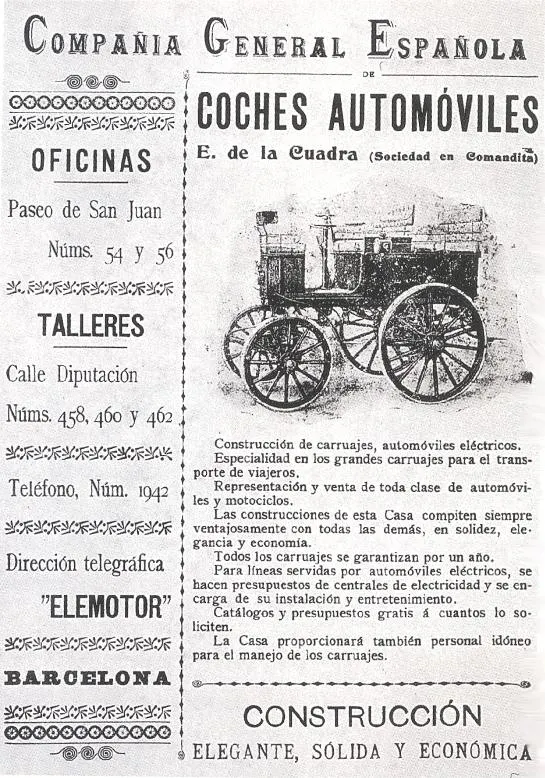
In September 1898 he founded the Compañía General Española de Coches Automóviles E. de la Cuadra, Sociedad en Comandita, at the corner of Calle Diputación and Paseo de San Juan. Much of the money came from his father-in-law, Joaquín Escrivé de Romaní. It was the first automobile manufacturing brand on the Iberian Peninsula.
His partner was a Swiss engineer, Charles Vélino, who signed his name Carlos Vellino in Barcelona and already ran an electric accumulator factory in the city. A merchant marine pilot named Domingo Támaro was also involved. For cash flow while the real products were developed, the company took the peninsular franchise for Benz through the German brand’s Barcelona agent.
The plan was three prototypes: a truck, an omnibus, and a car. All three electric. Two reasons are given for that, and both probably hold. One is De la Cuadra’s own background in power generation. The other is that Bonet had secured an exclusive right in 1894 to build combustion-engined vehicles in Spain, which meant the gasoline route was, at least on paper, closed.
The electric prototypes ran. The problem was how far. Four or five kilometers on a good day before the batteries emptied and the vehicle stopped where it stood. There is no business in that.
The Hotel Oriente omnibus: a 1900 EREV
The flagship project had a paying customer. The Hotel Oriente on Las Ramblas wanted a vehicle to collect guests from the França railway station, and ordered a luxury omnibus for twenty passengers.
The project figures, as they have come down to us: more than 5.5 meters long, 2.2 wide, 3 tall. Curtains on the glass, netting for small items, interior and exterior electric lighting, covered space for 500 kilograms of luggage. Total weight around 7,000 kilograms, roughly 15,400 pounds. Two electric motors of 15 kilowatts each, 43 horsepower combined, targeting 20 km/h and 12 percent grades. A Vellino-designed battery rated at 450 amp-hours and 110 volts, built from plywood plates coated with a thin layer of lead specifically to avoid the mass of a conventional accumulator. Projected sale price, 30,000 pesetas.
And the part that changes the story: the design called for an onboard generator set driven by a conventional 15-horsepower engine, whose only function was to recharge the batteries on longer runs.
That is a range extender. In 2026 vocabulary, that is an EREV, sketched out in a Barcelona workshop in 1900.
Put it next to what the rest of Europe was doing at that precise moment, because the comparison is the point. Ferdinand Porsche showed the Lohner-Porsche Elektromobile at the Paris Exposition on April 14, 1900, a pure electric with hub motors whose lead battery reached 1,800 kilograms in some versions. Facing that wall of weight, Porsche built the Semper Vivus in late 1900, using two 2.5-horsepower De Dion-Bouton engines purely as generators, and demonstrated it publicly at the Paris Motor Show in January 1901. Guinness recognizes it as the first hybrid vehicle. It weighed about 1,200 kilograms and managed roughly 40 kilometers on battery, up to 160 with the engines running.
In Barcelona, a Spanish artillery captain on leave was planning the same trick to move a seven-ton bus.
One caveat, and nobody makes it. The available sources describe that generator set as part of the design. None of them confirms it was actually installed on the day of the demonstration. The idea being on the table in Barcelona in 1900 is documented. The bus running with it is not.
August 1900: a few meters, then a tow rope
Vellino’s lightweight accumulator never worked, not even after the company’s new engineer took a run at it. They fitted conventional batteries knowing exactly what that meant: more weight and worse performance than promised.
The press was invited in August 1900. The plan was to present the omnibus outside the factory and then run a demonstration trip along the Vic road. It started, pulled out, covered a few meters and stopped. Nothing would restart it. It was towed back to the workshop in front of every motoring reporter in Barcelona.
Vellino quit. The Spanish electric project died that afternoon.
The omnibus itself was destroyed by fire along with the ship carrying it to Valencia. The electric truck and car were scrapped. Not one piece of Spain’s first EV program survives.
The 21-year-old Swiss
The man who rebuilt the company out of the wreckage was Marc Birkigt, born in Geneva on March 8, 1878. De la Cuadra did not discover him. Vellino suggested him, and the 21-year-old showed up in Barcelona in August 1899. English-language sources sometimes date his hiring to 1898; Spanish sources say 1899, and the discrepancy is worth flagging rather than smoothing over.
Birkigt had one advantage over everyone else in that workshop: he had taken apart the Benz cars the company was reselling. He knew exactly what a combustion engine could do and exactly what a lead-acid battery could not. When the omnibus came home on a rope and Vellino walked, De la Cuadra made him technical director and got out of his way.
That is the moment the company changed religion. The founder, who had built an entire career around electricity, accepted that his 21-year-old was right and that the future burned gasoline. It cost him three years of prototypes, an incinerated bus, and a business partner.
The Centauro, the car that actually worked
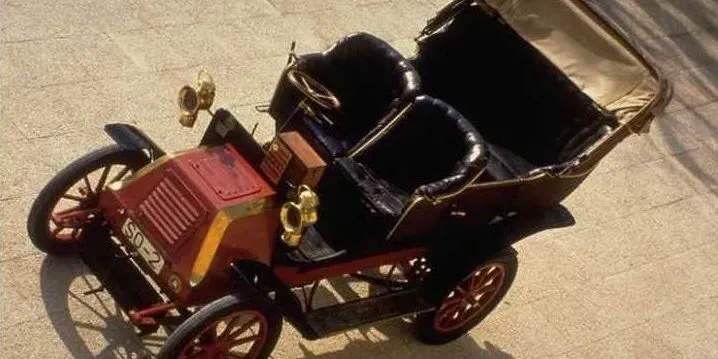
Birkigt designed two engines and, around them, the first gasoline passenger car developed entirely in Spain. It was called the Centauro, and La Cuadra was among the first manufacturers anywhere to run four wheels of equal size.
The essentials:
- Small engine: 905 cc (80 x 90 mm), 4.5 hp
- Large engine: 1,106 cc (80 x 110 mm), 7 hp
- Cooling: water, with pump and coil radiator
- Fuel and ignition: Longuemare carburetor, contact breaker and induction coil
- Drivetrain: single chain to the rear axle with differential, cone clutch, three speeds plus reverse
- Chassis: 2,100 x 720 mm, 40 mm angle iron reinforced with wood, semi-elliptic leaf springs, wooden spoke wheels
Sources disagree on the smaller engine. Spanish technical listings describe both as parallel twins. Other sources, including English Wikipedia and academic work on early Spanish carmakers, say the 4.5 hp was a single. That one is not settled.
What is documented is how the car behaved. The magazine El Automovilismo Ilustrado reported that the 4.5 hp Centauro had done what six-horsepower carriages could not, on bad roads and on climbs, with 1,108 kilometers covered and not a single stop or incident. The first example won a race with Stahel driving.
For scale, take a same-season rival. The 1901 Renault Type D ran a 4.5 hp single-cylinder De Dion-Bouton, reached about 40 km/h, and sold for 4,500 francs. Identical market rung. The difference was industrial: in 1901 Renault was delivering its sixtieth car with sixty workers at Billancourt. La Cuadra planned a run of six and, according to the Spanish military academy’s account, finished around half a dozen vehicles in total.
The strike everybody gets wrong
Virtually every account of La Cuadra says the company was finished off by “the general strike of May 1901.” There was no such thing.
What Barcelona had in May 1901 was a streetcar workers’ strike, serious enough that martial law was declared in the city. The metalworkers’ strike, by the mechanical locksmiths pushing for a nine-hour day, broke out in December 1901. The actual general strike, the one that shut Barcelona down with around 80,000 workers out and ended in deaths and mass arrests, came in February 1902, by which point La Cuadra was already gone.
The streetcar detail is better than the myth. Barcelona had opened its first electrified tram line on January 26, 1899, a year before the Hotel Oriente omnibus. The city’s electric transport walked off the job and took down, among other things, the company trying to sell electric transport.
With the treasury drained by prototypes, Benz sales going nowhere because the German cars were too complex for the Spanish buyer of the day, and more capital needed to build Centauros, De la Cuadra filed for suspension of payments in November 1901.
What grew out of it
One of the main creditors, José María Castro Fernández, took the plant and everything in it, including the technical staff. Birkigt stayed. J. Castro, Sociedad en Comandita, Fábrica Hispano-Suiza de Automóviles was formed in late 1902, where Birkigt built a 10 hp twin and a 14 hp four-cylinder. The money ran out again.
Out of that second failure came La Hispano-Suiza Fábrica de Automóviles S.A. on June 14, 1904, financed by Damián Mateu, Salvador Andreu, Tomás Recolons, Martín Trias, and Francisco Seix. Hold on that last name: a Francisco Seix also appears among La Cuadra’s first customers, the buyer of a 4.5 hp Centauro he reportedly used with excellent results. It looks like the same man. No source states it outright, so it stays where it is, too neat to ignore and too thinly documented to assert.
Within two decades, Hispano-Suiza was building cars that competed directly with Rolls-Royce, and Birkigt’s aviation engines went to war. All of it traces back to a bankrupt electric bus company.
Ceuta, horses, and a farewell promotion
De la Cuadra went back to the army, and the sequence is sharper than the summary version.
While on leave he was promoted to major on October 9, 1899, and assigned to the artillery garrison at Ceuta, on the North African coast. He never reported. He took voluntary reserve status in Moncada instead so he could keep building cars. Four years later, broke, he asked to return to active duty. It was granted on November 7, 1903, and on December 23 he was posted to the artillery garrison at Ceuta. The exact assignment he had dodged.
There were no Moroccan campaigns, whatever you may read elsewhere. He served as head of instruction, then as secretary of the Ceuta artillery command, and on July 15, 1904, traveled to Madrid on temporary duty to present a project to the artillery board: electric street lighting for Ceuta. Electricity had ruined him and he was still installing it.
After that, professor at the Artillery Academy from March 29, 1906, lieutenant colonel in February 1907, colonel in March 1916, command of the artillery in Mallorca. Then the posting that finishes the biography: director of the stud horse depot at Hospitalet de Llobregat from September 18, 1918. The founder of Spain’s first car factory spent his late career managing breeding stallions. He mediated a construction-industry dispute there and the town made him an honorary citizen for it.
He went into the reserve on May 14, 1921, and settled in Valencia. The rank of brigadier general came on May 16, 1923, honorary and in the reserve, backdated to the 14th because he had hit mandatory retirement age the day before. It was not a promotion. It was a going-away present with stars on it. He died in Valencia on February 1, 1930, at seventy.
One survivor
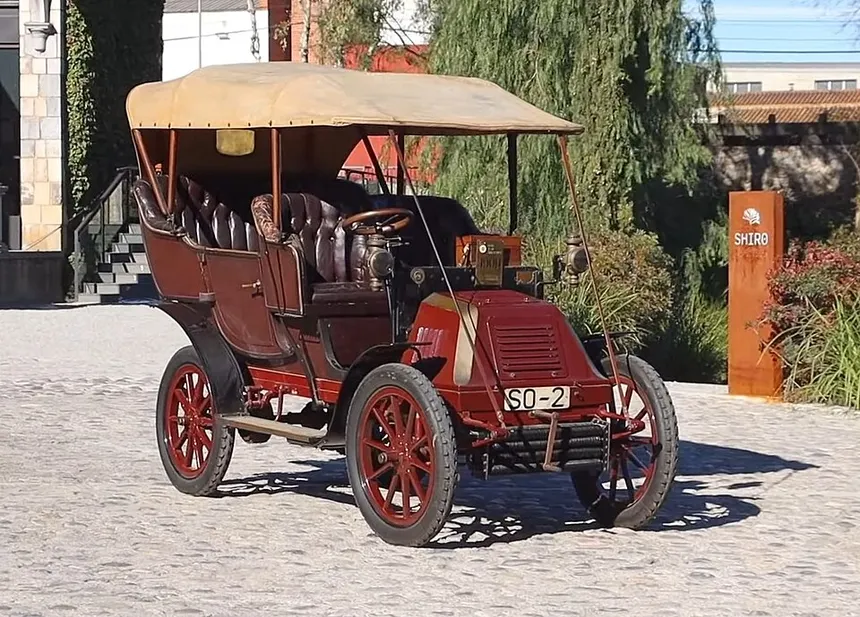
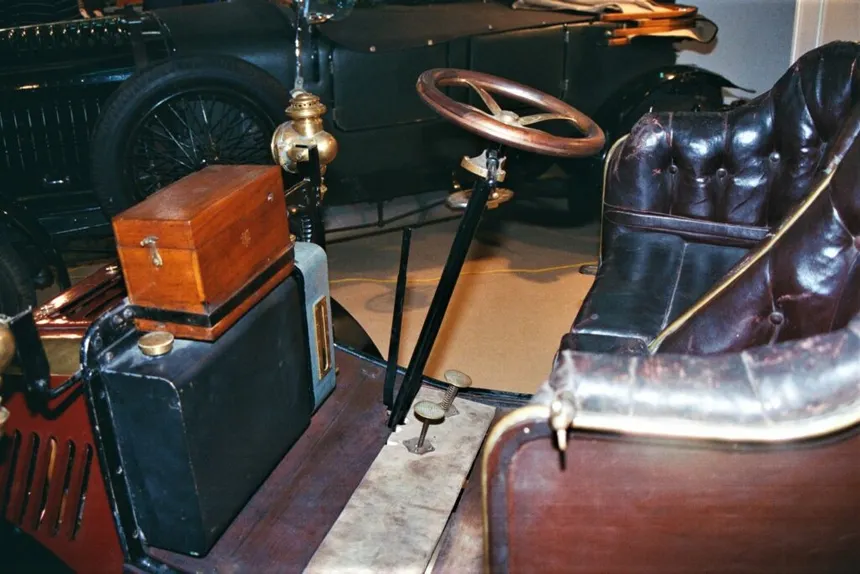
One Centauro is still with us: a 7 hp car with the 1,106 cc engine, still unsold in September 1904, eventually bought by Javier Olozábal Ramey and registered as the second vehicle in the province of Soria. In the 1920s a young Miguel Mateu, son of Hispano-Suiza’s financier Damián Mateu, spotted it at a village festival in Soria and rescued it. It has run the Sitges Rally regularly. The only change ever made was a carburetor swap, and the original was kept.
It is the only physical object left from any of this. The omnibus burned, the electric truck and car were scrapped, and the one surviving car runs on gasoline. The electric half of the story exists only on paper.
That car proves Birkigt knew how to build automobiles. What it does not answer, and no history of the Spanish motor industry has answered either, is why De la Cuadra ended up in a stud-horse depot while his European contemporaries, working with the same bad batteries and the same bad roads, ended up naming entire industries.
The NEB take
Here is what I think, and it will not go down well everywhere.
The standard line is that De la Cuadra failed because lead-acid batteries in 1900 could not move seven tons. True, and not enough. Porsche had the same problem with the same lead and also failed commercially, with roughly 300 vehicles built on the entire Lohner-Porsche system across five years. What separated a man who ends up in the history books from a man who ends up running a stud farm was not chemistry. It was capital.
FIAT was incorporated in Turin on July 11, 1899, ten months after De la Cuadra’s company, with 800,000 lire from a syndicate of aristocrats and bankers and a plant that put 24 cars out the door in 1900 with 35 workers. De la Cuadra had his father-in-law and a workshop. When the money ran out, there was nobody standing behind him. When Castro’s money ran out two years later, Damián Mateu appeared with real metallurgical muscle, and Hispano-Suiza is what came of it. The engineering talent was identical in all three companies, and the same man signed it: Birkigt. The only variable was who was funding the room.
That is not a story about 1901. It is the same failure mode killing electric startups today, in Europe and in the United States alike. The engineering exists. The patience of the money does not. Then the brand gets bought by somebody overseas, or it disappears, and twenty years later we write nostalgic articles about what could have been.
A hundred and twenty years later, the same problem with a bigger bank account
Nobody engineered the final irony. The company born out of De la Cuadra’s bankruptcy came back in 2019 under Miguel Suqué Mateu, great-grandson of Damián Mateu, with a fully electric hypercar. The Hispano Suiza Carmen: 1,019 horsepower, an 80 kWh battery, 19 units planned for 2019 to 2021, 1.5 million euros before tax. Then came the Carmen Boulogne, 1,114 horsepower, five units planned. And in June 2024, for the brand’s 120th anniversary, the Carmen Sagrera: four electric motors, 1,114 horsepower, zero to 100 km/h in 2.6 seconds, a 103 kWh pack, an Italdesign interior, hand-built in Barcelona.
It is a serious car and it has an Achilles heel the international press keeps pointing at. Car and Driver, which has driven it, notes that peak charging tops out at 100 kW, slower than what a mainstream EV costing a twentieth as much will accept, and that the claimed 300-mile WLTP range would look considerably thinner on the EPA cycle. With the earlier 80 kWh pack the ceiling was 80 kW, and the criticism was harsher still. A 1.5-million-euro electric hypercar that charges slower than an economy hatchback is a sentence that follows the brand around.
There is something else that appears in no press release: seven years after the relaunch, Hispano Suiza publishes no delivery figures. We know how many units were planned. We do not know how many have been sold. For a hand-built car at this price, that silence says as much as a number would.
Miguel Suqué Mateu, the man who decided to resurrect the marque, died in June 2025 at 63. The story once again depends on whether the family keeps the account open.
Same movie. A Spanish electric manufacturer with the engineering solved, the product on the road, and one open question: how long the money lasts. In 1901 it lasted three years. Then an artillery captain spent the following three decades handing out drill, street lighting, and breeding stallions across half of Spain while the Swiss kid he had hired became a legend.
The question is whether anyone will fund the room long enough this time.
Unplug and enjoy.